
North Korea
-
Knowing North Korea
Thursday, May 14, 2015 | 6:00 PMKnowing North Korea is a multi-part, multi-year series, showcasing social science research and scholarly findings to better understand the complexities surrounding North Korea. The Korea Society has hosted analysts, academics, journalists, aid workers, and refugees discussing North Korea. Read More -
Opening Pyongyang
Thursday, May 14, 2015 | 6:00 PM- Youtube Video:
In 2011, Jean Lee became the first American reporter granted permission to work as a journalist in North Korea, and a year later opened AP's Pyongyang bureau, making the news agency the first and only U.S. news outlet with an office in the North Korean capital. Lee, who now serves as a Public Policy Fellow at the Wilson Center in Washington, D.C., shares photos and videos of homes, factories, schools and farms typically off-limits to foreigners, and offers her personal insights on daily life in North Korea. The... Read More -

People with Disabilities in a Changing North Korea
Thursday, April 30, 2015 | 12:00 PM- About the Speaker Title: People with Disabilities in a Changing North Korea
- About the Speaker: 2015-04-30 12:00:00
- Event Name: $10 Members | $20 Guests | Explorer and YPN Members are FREE but must register
- Event Time: ../tickets/2015/2015_04_30__disabilities-north-korea__ticket.html
- Event Link: <p style="text-align: justify;"><span style="color: #000000;"><span style="font-weight: bold;">Katharina Zellweger</span> is currently a Visiting Fellow at the Center for International Security and Cooperation at Stanford University. Prior to that she was the Pantech Fellow in Korean Studies at the Walter H. Shorenstein Asia-Pacific Research Center, in residence at Stanford University from November 2011 to August 2013. Most recently at Stanford she gave a course entitled “An Insight into North Korea Society” for graduate and undergraduate students. She is a frequent presenter on the topic of the situation of the North Korean people, to audiences in the U.S. and abroad. Zellweger has also made significant contributions in this field through her participation in workshops, seminars and conferences about humanitarian, as well as security, issues on the Korean peninsula, more specifically regarding North Korea.</span></p> <p dir="ltr" style="text-align: justify;"><span style="color: #000000;">Zellweger is a senior aid manager with over 30 years of field experience in Hong Kong, China and North Korea. She was based in Pyongyang for five years (2006-2011) as North Korea country director for the Swiss Agency for Development and Cooperation (SDC), an office of the Swiss Ministry of Foreign Affairs. The focus of her work was on sustainable agricultural production in order to address food security issues, income generation to improve people’s livelihoods, and capacity development contributing to individual and institutional learning.</span></p> <p dir="ltr" style="text-align: justify;"><span style="color: #000000;">Before joining SDC, Zellweger worked from 1978 to 2006 for the Catholic agency Caritas in Hong Kong in a senior post; she played a key role in pioneering Caritas involvement initiatives in China and in North Korea. Zellweger received the Bishop Tji Hak-soon Justice and Peace Award in 2005 from a South Korean foundation established to promote social justice, and in 2006 the Dame of St. Gregory the Great from the Vatican for her work in North Korea. Upon the invitation of The Korea Society of New York she organized a (still on-going) travelling exhibition of her collection of North Korean socialist posters.</span></p> <p dir="ltr" style="text-align: justify;"><span style="color: #000000;">Zellweger has a Master’s in International Administration, School for International Training in Brattleboro, Vermont.</span></p>
- Custom HTML field content: About the Speakers
- Third Tab Title: Join The Korea Society
- Custom HTML field 3 title: <p><img width="237" height="102" alt="JoinTKS" src="images/photos/JoinTKS.jpg" /></p> <p><strong style="color: #000; text-transform: uppercase; font-size: 15px;">Become a Member</strong><br /> • <a style="color: #045fb4;" href="index.php? option=com_k2&view=item&layout=item&id=271&Itemid=432" target="_blank">Individuals</a><br /> • <a style="color: #045fb4;" href="index.php? option=com_k2&view=item&layout=item&id=186&Itemid=440" target="_blank">Corporations</a></p>
- Registration Form: Studio Korea @ The Korea Society
- Summit External URL: <p><img src="images/icons/2013/studio_korea-logo.jpg" alt="studio korea-logo" height="142" width="238" /></p> <p>Be part of a live audience for special recording sessions. Delve into the day’s headlines, dialogue with special guests from policy, finance, research, academe, international organizations, and the media, and determine new trends, priorities, and approaches in and toward East Asia and the Korean Peninsula.</p>
Katharina Zellweger, former North Korea country director for the Swiss Agency for Development and Cooperation, discussed current research on the issue of people with disabilities in North Korean society. Ms. Zellweger, who first visited the DPRK over 20 years ago, worked in North Korea from 2006-2011 on humanitarian aid and development assistance. People with Disabilities in a Changing North Korea with Katharina Zellweger, former North Korea Country Director for the Swiss Agency for... Read More -
Human Rights and Diplomacy on the Korean Peninsula
Wednesday, February 25, 2015 | 12:00 PM- About the Speaker Title: Human Rights and Diplomacy on the Korean Peninsula
- About the Speaker: 2015-02-25 12:00:00
- Event Name: $10 Members | $20 Guests | Explorer and YPN Members are FREE but must register
- Event Time: ../tickets/2015/2015_02_25__human-rights__ticket.html
- Event Content: itms://itunes.apple.com/us/podcast/human-rights-diplomacy-on/id210903888?i=336348428&mt=2
- Event Link: <p style="text-align: justify;"><span style="color: #000000;">Professor <strong>Victor</strong><b> Cha</b></span><span style="color: #000000;"> (Ph.D. Columbia, MA Oxford, BA Columbia) is director of Asian Studies and holds the D.S. Song Chair in the Department of Government and School of Foreign Service at Georgetown University. In 2009, he was named as Senior Adviser and the inaugural holder of the new Korea Chair at the Center for Strategic and International Studies in Washington, DC.</span></p> <p style="text-align: justify;"><span style="color: #000000;"></span><span style="color: #000000;">He left the White House in May 2007 after serving since 2004 as Director for Asian Affairs at the National Security Council. At the White House, he was responsible primarily for Japan, the Korean peninsula, Australia/New Zealand and Pacific Island nation affairs. Dr. Cha was also the Deputy Head of Delegation for the United States at the Six Party Talks in Beijing, and received two Outstanding Service commendations during his tenure at the NSC. </span></p> <p style="text-align: justify;"><span style="color: #000000;"></span><span style="color: #000000;">He is the author of five books: 1) <em>Alignment Despite Antagonism: The United States-Korea-Japan Security Triangle</em> (Stanford University Press) (winner of the 2000 Ohira Book Prize), 2) <span>Nuclear North Korea: A Debate on Engagement Strategies </span>(Columbia University Press, 2004 with Dave Kang), 3) <span>Beyond the Final Score: The Politics of Sport in Asia</span> (Columbia, 2009); 4) <span>The Impossible State: North Korea, Past and Future</span> (HarperCollins, 2012); and 5) <em>Powerplay: Origins of the American Alliance System in Asia</em> (Princeton University Press, forthcoming). He has written articles on international relations and East Asia in journals including <em>Foreign Affairs, International Security, Political Science Quarterly, Survival, International Studies Quarterly</em>, and <em>Asian Survey</em>. Professor Cha is a former John M. Olin National Security Fellow at Harvard University, two-time Fulbright Scholar, and Hoover National Fellow, CISAC Fellow, and William J. Perry Fellow at Stanford University. He holds Georgetown’s Dean’s Award for teaching in 2010 and the Distinguished Research Award for 2011. </span></p> <p style="text-align: justify;"><span style="color: #000000;">He serves as an independent consultant, and has testified before Congress on Asian security issues. He has been a guest analyst for various media including CNN, ABC Nightline, NBC Today Show, CBS Morning Show, Fox News, MSNBC, CNBC, BBC, ESPN, Sports Illustrated, and National Public Radio. He has a cameo role (as himself) in the upcoming action film “Red Dawn” (Contrafilm, MGM, Vincent Newman Entertainment) scheduled for release in November 2012. His newest book, <em>The Impossible State: North Korea, Past and Future</em> (released April 2012 by HarperCollins Ecco), was selected by Foreign Affairs as a best book of 2012 on the Asia-Pacific.</span></p> <p style="text-align: justify;"><b style="color: #000000; font-size: 12.1599998474121px; line-height: 1.3em; background-color: transparent;"> </b></p> <p style="text-align: justify;"><b style="color: #000000; font-size: 12.1599998474121px; line-height: 1.3em; background-color: transparent;">Lindsay Lloyd </b>is the <span style="color: #000000; font-size: 12.1599998474121px; line-height: 1.3em; background-color: transparent;">Program Director at Freedom Collection, and is responsible for setting a vision for and managing the content of the Freedom Collection, overseeing the Freedom Collection website, building the physical archive, and identifying audiences and developing strategies to reach those audiences. </span></p> <p><span style="color: #000000;">Lindsay comes from the International Republican Institute (IRI), where he served for 16 years, most recently as Senior Advisor for Policy. Previously, he was IRI’s Regional Director for Europe and Co-Director of the Regional Program for Central and Eastern Europe, which is based in Bratislava, Slovakia. At IRI, Lindsay organized and delivered numerous trainings in Slovakia, Azerbaijan, the Czech Republic, Croatia, Hungary, Lithuania, Macedonia, Romania, Slovenia and Turkey. He also conducted assessment missions to Argentina, Azerbaijan, Colombia, the Czech Republic, Estonia, Latvia, Lithuania, Paraguay, Slovenia and Vietnam and worked on get-out-the-vote campaigns for the 1997 Slovak referendum and parliamentary elections in Bulgaria, Slovakia and Slovenia. He has observed 15 elections and overseen polling and political consultation projects in Romania and Bulgaria.</span><br /><span style="color: #000000;"></span></p> <p><span style="color: #000000;">After graduating from Georgetown University’s School of Foreign Service, Lindsay spent 12 years working in American politics. He worked for several members of the U.S. House of Representatives, as political director for a political action committee, and for Jack Kemp’s 1988 presidential campaign.</span></p>
- Custom HTML field content: About the Speakers
- Third Tab: http://traffic.libsyn.com/koreasociety/2015-02-25_HumanRightsAndDiplomacyOnTheKoreanPeninsulaWithVictorChaAndLindsayLloyd.mp3
- Third Tab Title: Join The Korea Society
- Custom HTML field 3 title: <p><img width="237" height="102" alt="JoinTKS" src="images/photos/JoinTKS.jpg" /></p> <p><strong style="color: #000; text-transform: uppercase; font-size: 15px;">Become a Member</strong><br /> • <a style="color: #045fb4;" href="index.php? option=com_k2&view=item&layout=item&id=271&Itemid=432" target="_blank">Individuals</a><br /> • <a style="color: #045fb4;" href="index.php? option=com_k2&view=item&layout=item&id=186&Itemid=440" target="_blank">Corporations</a></p>
- Registration Form: Studio Korea @ The Korea Society
- Summit External URL: <p><img src="images/icons/2013/studio_korea-logo.jpg" alt="studio korea-logo" height="142" width="238" /></p> <p>Be part of a live audience for special recording sessions. Delve into the day’s headlines, dialogue with special guests from policy, finance, research, academe, international organizations, and the media, and determine new trends, priorities, and approaches in and toward East Asia and the Korean Peninsula.</p>
Marking a year since the release of the United Nations Commission of Inquiry (COI) Report on North Korea, Dr. Victor Cha, Senior Advisor and Korea Chair at the Center for Strategic and International Studies (CSIS) and Director of Asian Studies, Georgetown University, speaks to the significance of the report and steps forward. Dr. Cha will be joined by Lindsay Lloyd, Program Director at the Bush Institute, in conversation with The Korea Society SVP Dr. Stephen Noerper. Human Rights and Diplomacy on the... Read More -
Confronting the Human Rights Challenge in North Korea
Monday, June 23, 2014 | 12:00 PM- About the Speaker Title: Korea and the Politics of Identity III: Essays and Identity
- Event Name: Please register here to attend the program.
- Event Time: https://docs.google.com/a/koreasociety.org/spreadsheet/viewform?usp=sharing&formkey=dG1tdUE5c3hDbktTREhaTXo4X2x1Tmc6MA#gid=0
- Event Content: itms://itunes.apple.com/us/podcast/confronting-human-rights-challenge/id210903888?i=315309721&mt=2
- Event Link: <p style="text-align: justify;"><span style="color: #000000;"><strong>Lee Jung-hoon</strong> is South Korea’s Ambassador for Human Rights. He is also Director of the Center for Modern Korean Studies and Center for American Studies at Yonsei University. He serves as a senior member of South Korea’s National Unification Advisory Council and chair of the Ministry of Unification’s Advisory Committee for Humanitarian Affairs. He also is Co-Chair of Save NK, an NGO dealing mainly with North Korean human rights; Chair of the ‘Committee for the Establishment of Refugee Camp for the North Korean Defectors’; and Vice-Chair of the Supporter’s Group for the ‘House of Sharing’ where several remaining “comfort women” are housed.</span></p>
- Custom HTML field content: About the Speaker
- Third Tab: http://traffic.libsyn.com/koreasociety/2014-06-23_ConfrontingTheHumanRightsChallengeInNorthKoreaAmbLeeJung-hoon.mp3
- Registration Form: Studio Korea @ The Korea Society
- Summit External URL: <p><img src="images/icons/2013/studio_korea-logo.jpg" alt="studio korea-logo" height="142" width="238" /></p> <p>Be part of a live audience for special recording sessions. Delve into the day’s headlines, dialogue with special guests from policy, finance, research, academe, international organizations, and the media, and determine new trends, priorities, and approaches in and toward East Asia and the Korean Peninsula.</p>
During Kim Jong-un’s rule, North Korea’s unrelenting deprivation of fundamental human rights has, if possible, gotten even worse. North Koreans seek to flee the regime ruled by political prisons, torture, hunger, and public execution, completely void of fundamental rights or an adequate standard of living. The UN Commission of Inquiry condemned Pyongyang for “systemic, widespread, and gross violations of human rights” of such a monumental scale as to constitute crimes against humanity. What will it take for the... Read More -
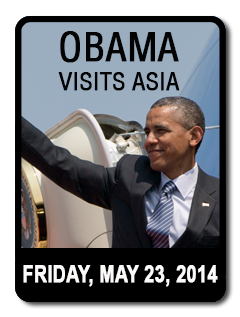
Obama visits Asia: State of the Rebalance
Friday, May 23, 2014 | 12:00 PM- Custom HTML field content: About the Speaker
- Registration Form: AUDIO
- Summit External URL: <p><iframe width="270" height="54" scrolling="no" src="//www.thetakeaway.org/widgets/ondemand_player/#file=http%3A%2F%2Fwww.thetakeaway.org%2Faudio%2Fxspf%2F335726%2F;containerClass=takeaway"></iframe></p>
State of the Rebalance Thomas Hubbard, US State Department/Korea Society/McLarty AssociateMay 23,2014 President Obama’s recent trip to Asia was a timely, perhaps necessary, reminder that the “rebalance” to Asia remains an important pillar of US foreign policy despite the distraction of immediate crises elsewhere in the world. During an unusually lengthy eight-day trip, Obama visited three treaty allies—Japan, Korea, and the Philippines—and a long-neglected friend, Malaysia. Reacting to the first stop... Read More -
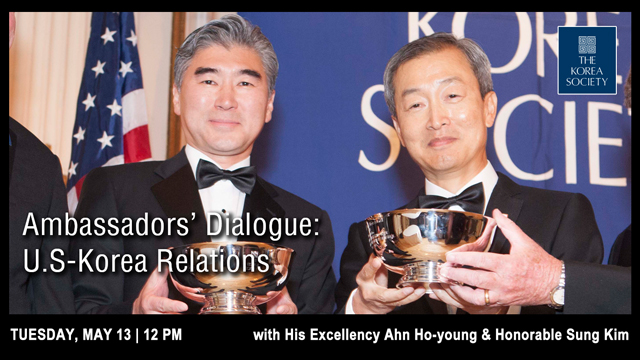
Ambassadors’ Dialogue: U.S.- Korea Relations
Tuesday, May 13, 2014 | 12:00 PMAs part of the Korea Economic Institute of America's Ambassadors' Dialogue Series, American Ambassador Sung Kim and Republic of Korea Ambassador Ahn Ho-young address current Peninsular economic and security issues, as well as the state of U.S.-Korea relations. Ambassadors’ Dialogue: U.S.- Korea Relations Tuesday, May, 13, 2014 11:30 AM | Registration & Luncheon 12:15 PM | Discussion Join our membership program here! E-News sign-up May 13, 2014 - Ambassadors Ahn Ho-young and Sung... Read More -
Inside North Korea
Monday, April 14, 2014 | 5:30 PM- Event Time: Monday, April 14, 2014 | 5:30 PM
- Event Content: $10 Members | $20 Guests | $5 Students
- Event Link: #
- Youtube Video:
In December 2011, Kim Jong-un took over for his father as supreme leader of North Korea. More than two years into Kim Jong-un’s reign, many North Koreans still suffer severe economic privation, as well as strict social and political controls. Though North Korea remains largely closed to the international media, North Korean citizen-journalists have managed to secretly record many aspects of daily life inside the DPRK, providing some of the only uncensored images from inside the country. Japanese journalist Ishimaru... Read More -
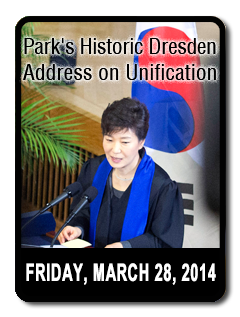
Park's Historic Dresden Address on Unification
Friday, March 28, 2014 | 12:00 PM- Podcast URL: <p style="text-align: justify;"> </p> <div style="text-align: justify;"><span style="color: #000000;"><i>An Initiative for Peaceful Unification on the Korean Peninsula:</i></span></div> <div style="text-align: justify;"><span style="color: #000000;"><i> </i></span></div> <div style="text-align: justify;"><span style="color: #000000;"><i>Dresden,Beyond Division, Toward Integration</i></span></div> <div> <p style="text-align: justify;"><span style="color: #000000;"> </span><br /><span style="color: #000000;">Professor Hans Mueller-Steinhagen, former Prime Minister Lothar de Maiziere, students and faculty members of the Dresden University of Technology, ladies and gentlemen.</span></p> <p style="text-align: justify;"><span style="color: #000000;"> It is my great pleasure to visit this esteemed German institute of higher learning. It is also a unique privilege to receive an honorary doctorate from a university where the presence of history and tradition can be felt. </span></p> <p style="text-align: justify;"><span style="color: #000000;">As the fastest-growing region in former East Germany, Dresden is an iconic community that has moved beyond division and toward integration. The German people have transformed Dresden into a city brimming with hope - where freedom and abundance suffuse the air. </span></p> <p style="text-align: justify;"><span style="color: #000000;">Those who reach beyond the confines of reality and dream of a better world can draw strength and inspiration from this city. </span></p> <p style="text-align: justify;"><span style="color: #000000;">As I ponder on where a united Germany stands today and where the Korean Peninsula seems headed next year -- namely 70 years of division -- I find myself overwhelmed by the sheer weight of history. </span></p> <p style="text-align: justify;"><span style="color: #000000;">We have a saying in Korea that the impact of education lasts for generations and beyond. Looking around your campus today, I am reminded of how a nation's future is often charted and shaped from the likes of Dresden University of Technology. </span></p> <p style="text-align: justify;"><span style="color: #000000;">The words 'Knowledge builds bridges, education binds people' represent the educational vision of this university. And I am sure it is a vision that will be lived out through the passionate strivings of its students and faculty alike, and will help usher in a brighter future. </span></p> <p style="text-align: justify;"><span style="color: #000000;">As one who studied electronic engineering in college, I hold dear the belief that science and technology are the key to unlocking a nation's advancement. </span></p> <p style="text-align: justify;"><span style="color: #000000;">This is why I established the Ministry of Science, ICT and Future Planning early in my presidency and have been highlighting the importance of building a creative economy. </span></p> <p style="text-align: justify;"><span style="color: #000000;">Ours is an era when the ingenuity and innovation of a single individual can move the world. As we enter this new age, I am seeking to generate new business opportunities and jobs through creative endeavors and innovation; to breathe greater vitality and dynamism into the economy by marrying science and technology and ICT to existing industries. </span></p> <p style="text-align: justify;"><span style="color: #000000;">This is what a creative economy is all about. </span></p> <p style="text-align: justify;"><span style="color: #000000;">We will also strengthen collaboration among academia, industry and local communities -- very much like what the City of Dresden has been doing -- and provide the kind of support that enables a creative economy to spur local renewal and development. </span></p> <p style="text-align: justify;"><span style="color: #000000;">I believe that in our efforts to make Korea's economy more creative, we will continue to find much to draw upon from the future evolution of Dresden and its colleges. </span></p> <p style="text-align: justify;"><span style="color: #000000;"><i>Miracle on the Rhine, Miracle on the Han</i></span></p> <p style="text-align: justify;"><span style="color: #000000;">Ladies and gentlemen.</span></p> <p style="text-align: justify;"><span style="color: #000000;">Korea and Germany have long been bound by special links. Fifty years ago, Korea was among the poorest nations in the world, with a per capita income of 87 dollars. Many young Koreans fresh out of college came here to Germany to earn money. They came as miners and nurses and dedicated themselves to working in the service of their homeland. </span></p> <p style="text-align: justify;"> </p> <p style="text-align: justify;"><span style="color: #000000;"> As much as Korea sought to lift its economy out of poverty, no country was willing to offer loans to a small nation in the northeast corner of Asia, let alone to a divided one. </span></p> <p style="text-align: justify;"><span style="color: #000000;">It was in those difficult and forlorn times that Germany stepped up and provided 150 million German Marks in loans, while also offering advanced technology and vocational training programs.</span></p> <p style="text-align: justify;"><span style="color: #000000;">Germany's help would prove to be a huge boost to Korea's subsequent modernization and economic development. </span></p> <p style="text-align: justify;"><span style="color: #000000;">The Korean president who visited Germany at the time felt that Germany's rise from the ashes of the Second World War and its Miracle on the Rhine were feats that could be replicated in Korea. </span></p> <p style="text-align: justify;"><span style="color: #000000;">As he was driven on the autobahn and shown the steel mills of German industry, he became convinced that Korea too would need its own autobahn and its own steel industry to effect an economic take-off. </span></p> <p style="text-align: justify;"><span style="color: #000000;">When that president sought to build expressways and steel mills upon his return to Korea, he was met with widespread resistance.</span></p> <p style="text-align: justify;"><span style="color: #000000;">"What use is an expressway when we don't have cars? Building an expressway is a recipe for failure.” “What’s the point of a steel mill when we’re struggling just to get by?”- went the argument. </span></p> <p style="text-align: justify;"><span style="color: #000000;">But the highways that were eventually paved against such opposition became the solid bedrock on which the Korean economy would rise. Those long stretches of concrete helped remove bottlenecks in the nation’s distribution and logistical networks. </span></p> <p style="text-align: justify;"><span style="color: #000000;">The steel and automobile industries which had thus begun, join the ranks of the top five, six players in the world today. </span></p> <p style="text-align: justify;"><span style="color: #000000;">The desperate country that 50 years ago had been hard-pressed even to obtain loans, has now come of age as the 8th largest trading nation in the world and a major economic partner to Germany. </span></p> <p style="text-align: justify;"><span style="color: #000000;">As President of grateful nation, I thank Germany once again for placing its confidence and trust in the Republic of Korea, helping us pull through those difficult years. </span></p> <p style="text-align: justify;"><span style="color: #000000;"><i>German unification and the dream of Korean unification</i></span></p> <p style="text-align: justify;"><span style="color: #000000;">Ladies and gentlemen, </span></p> <p style="text-align: justify;"><span style="color: #000000;">Germans and Koreans get going when the going gets tough. </span></p> <p style="text-align: justify;"><span style="color: #000000;">In the years following the Second World War, Germany and Korea both endured the pain of seeing their nation divided. But instead of submitting to despair, Germans and Koreans alike marched forward with hope. </span></p> <p style="text-align: justify;"><span style="color: #000000;">From lands ravaged by war, Germans and Koreans worked as hard as any to rebuild. They refused to let up their determination to pass on a better country to future generations. </span></p> <p style="text-align: justify;"><span style="color: #000000;">Thus came the Miracle on the Rhine and the Miracle on the Han River some years later. </span></p> <p style="text-align: justify;"><span style="color: #000000;">Germany would later go on to achieve unification, but Korea has yet to become whole again. </span></p> <p style="text-align: justify;"><span style="color: #000000;">I believe that just as the Miracle on the Rhine was followed by the Miracle on the Han, so too, will unification in Germany be reenacted on the Korean Peninsula. </span></p> <p style="text-align: justify;"><span style="color: #000000;">I remember the bold courage of the German people as unification and integration unfolded. </span></p> <p style="text-align: justify;"><span style="color: #000000;">Even the Berlin Wall, which had seemed so insuperable, couldn’t stop the longing for freedom and peace coming from both sides of the Wall.</span></p> <p style="text-align: justify;"><span style="color: #000000;">Years of preparation by the people of East and West Germany eventually succeeded in turning the great dream of unification into reality and, ultimately, even transformed the future of Europe. </span></p> <p style="text-align: justify;"><span style="color: #000000;">A reunited Germany took its place at the heart of Europe. The years since unification have seen Dresden emerge from a backwater into a world-class city known for its advanced science and technology. Other parts of the former East Germany also made huge strides forward. </span></p> <p style="text-align: justify;"><span style="color: #000000;">These are the images of one Germany that encourage those of us in Korea to cement our hope and our conviction that unification must also come on the Korean Peninsula. </span></p> <p style="text-align: justify;"><span style="color: #000000;">I believe that the Republic of Korea will similarly reach ever greater heights after unification. The northern half of the Korean Peninsula will also experience rapid development. A unified Korea that is free from the fear of war and nuclear weapons will be well positioned to make larger contributions to dealing with a wide range of global issues like international peace-keeping, nuclear non-proliferation, environment and energy, and development. </span></p> <p style="text-align: justify;"><span style="color: #000000;">Furthermore, as a new distribution hub linking the Pacific and Eurasia, it is bound to benefit the economies of East Asia and the rest of the world. </span></p> <p style="text-align: justify;"><span style="color: #000000;"> Ladies and gentlemen,</span></p> <p style="text-align: justify;"><span style="color: #000000;">It pained me to see a recent footage of North Korean boys and girls in the foreign media. Children who lost their parents in the midst of economic distress were left neglected out in the cold, struggling from hunger. </span></p> <p style="text-align: justify;"><span style="color: #000000;">Even as we speak, there are North Koreans who are risking their lives to cross the border in search of freedom and happiness. </span></p> <p style="text-align: justify;"><span style="color: #000000;">The agony inflicted by division is also captured by the plight of countless people who were separated from their families during the war and who have ever since been yearning to see their loved ones without even knowing whether they were still alive. </span></p> <p style="text-align: justify;"><span style="color: #000000;">Just as the German people secured freedom, prosperity and peace by tearing down the Berlin Wall, we too, must tear down barriers in our march toward a new future on the Korean Peninsula.</span></p> <p style="text-align: justify;"><span style="color: #000000;">Today, a ‘wall of military confrontation’ runs through the center of the Peninsula. </span></p> <p style="text-align: justify;"><span style="color: #000000;">A ‘wall of distrust’ has also been erected during the war and the ensuing decades of hostility. </span></p> <p style="text-align: justify;"><span style="color: #000000;">Formidable still is a ‘socio-cultural wall’ that divides southerners and northeners who have long lived under vastly different ideologies and systems in terms of how they think and live. </span></p> <p style="text-align: justify;"><span style="color: #000000;">Then there is a ‘wall of isolation’imposed by North Korea’s nuclear program, cutting North Korea off from the community of nations. </span></p> <p style="text-align: justify;"><span style="color: #000000;">All of these curtains must be swept away if we are to unite the Korean Peninsula. And in their place we must build a‘new kind of Korean Peninsula:’a peninsula free of nuclear weapons, free from the fear of war, and free to enjoy life, peace and prosperity. </span></p> <p style="text-align: justify;"><span style="color: #000000;"><i>Preparing for unification</i></span></p> <p style="text-align: justify;"><span style="color: #000000;">Ladies and gentlemen,</span></p> <p style="text-align: justify;"><span style="color: #000000;">I harbor no illusions that these tremendous barriers could be torn down with ease. But the future belongs to those who believe in their dreams and act on them. To make today’s dream of peaceful unification tomorrow’s reality, we must begin meticulous preparations now. </span></p> <p style="text-align: justify;"><span style="color: #000000;">Nor do I believe that a nation is made whole again simply by virtue of a reconnected territory or the institution of a single system. </span></p> <p style="text-align: justify;"><span style="color: #000000;">It is when those in the south and the north can understand each other and can get along as people of the same nation, that the Korean Peninsula can truly experience renewal as one. </span></p> <p style="text-align: justify;"><span style="color: #000000;">In my view, Germany was able to overcome the after-shocks of unification fairly quickly and achieve the level of integration we see today because of the sustained people-to-people interaction that took place prior to unification. </span></p> <p style="text-align: justify;"><span style="color: #000000;">Now more than ever, South and North Korea must broaden their exchange and cooperation. What we need is not one-off or promotional events, but the kind of interaction and cooperation that enables ordinary South Koreans and North Koreans to recover a sense of common identity as they help each other out. </span></p> <p style="text-align: justify;"><span style="color: #000000;">And so I hereby present three proposals to North Korean authorities in the hope of laying the groundwork for peaceful unification. </span></p> <p style="text-align: justify;"><span style="color: #000000;">First, we must take up the agenda for humanity -- the concerns of everyday people. </span></p> <p style="text-align: justify;"><span style="color: #000000;">For a start, we must help ease the agony of separated families.</span></p> <p style="text-align: justify;"><span style="color: #000000;">It makes little sense to talk about solidarity as one nation, when members of the same family are refused their god-given right to live together. </span></p> <p style="text-align: justify;"><span style="color: #000000;">It has been 70 long years. Last year alone, some three thousand eight hundred people who have yearned a lifetime just to be able to hold their sons’ and daughters’ hands -- just to know whether they’re alive - passed away with their unfulfilled dreams. </span></p> <p style="text-align: justify;"><span style="color: #000000;">I am sure the same is true of their fellow family members in North Korea. Allowing reunions should also give family members in North Korea solace. </span></p> <p style="text-align: justify;"><span style="color: #000000;">In order to address problems arising from family separations, East and West Germany permitted family visits in both directions and steadily promoted exchanges. </span></p> <p style="text-align: justify;"><span style="color: #000000;">It is about time South and North Korea allow family reunions to take place regularly so we could ease their anguish and build trust in doing so. </span></p> <p style="text-align: justify;"><span style="color: #000000;">We will reach out to North Korea to discuss concrete ways to achieve this and engage in necessary consultations with international bodies like the International Committee of the Red Cross. </span></p> <p style="text-align: justify;"><span style="color: #000000;">Going forward, the Republic of Korea will expand humanitarian assistance to ordinary North Koreans. </span></p> <p style="text-align: justify;"><span style="color: #000000;">The Korean Government will work with the United Nations to implement a program to provide health care support for pregnant mothers and infants in North Korea through their first 1,000 days.</span></p> <p style="text-align: justify;"><span style="color: #000000;">Furthermore, we will provide assistance for North Korean children so they could grow up to become healthy partners in our journey toward a unified future. </span></p> <p style="text-align: justify;"><span style="color: #000000;">Second, we must pursue together an agenda for co-prosperity through the building of infrastructure that support the livelihood of people. </span></p> <p style="text-align: justify;"><span style="color: #000000;">South and North Korea should collaborate to set up multi-farming complexes that support agriculture, livestock and forestry in areas in the north suffering from backward production and deforestation. </span></p> <p style="text-align: justify;"><span style="color: #000000;">Working together from sowing to harvesting will enable South and North Korea not just to share the fruits of our labor, but also our hearts. As the bonds of trust begin to burgeon between the two sides, we can start to look at larger forms of development cooperation. </span></p> <p style="text-align: justify;"><span style="color: #000000;">To help make life less uncomfortable for ordinary North Koreans, Korea could invest in infrastructure-building projects where possible, such as in transportation and telecommunication.</span></p> <p style="text-align: justify;"><span style="color: #000000;">Should North Korea allow South Korea to develop its natural resources, the benefits would accrue to both halves of the peninsula. </span></p> <p style="text-align: justify;"><span style="color: #000000;">This would organically combine South Korean capital and technology with North Korean resources and labor and redound to the eventual formation of an economic community on the Korean Peninsula. </span></p> <p style="text-align: justify;"><span style="color: #000000;">In tandem with trilateral projects among the two Koreas and Russia, including the Rajin-Khasan joint project currently in the works, we will push forward collaborative projects involving both Koreas and China centered on the North Korean city of Shinuiju, among others. hese will help promote shared development on the Korean Peninsula and in Northeast Asia. </span></p> <p style="text-align: justify;"><span style="color: #000000;">The international community also needs to take greater interest in getting involved if development projects in North Korea are to proceed more efficiently. </span><br /><span style="color: #000000;">I call on those NGOs from Germany and Europe which have extensive experience working with North Korea on agricultural projects and forestry to join us. I also hereby ask international organizations like the United Nations and the World Bank for their support and cooperation. </span></p> <p style="text-align: justify;"><span style="color: #000000;">Third, we must advance an agenda for integration between the people of South and North Korea. </span></p> <p style="text-align: justify;"><span style="color: #000000;">As the state of division persists year after year, the language, culture and living habits of the two sides continue to diverge. If there is to be real connection and integration between the south and the north, we must narrow the distance between our values and our thinking. </span></p> <p style="text-align: justify;"><span style="color: #000000;">To achieve this, those from the south and the north must be afforded the chance to interact routinely. We will encourage exchanges in historical research and preservation, culture and the arts, and sports -- all of which could promote genuine people-to-people contact - rather than seek politically-motivated projects or promotional events. </span></p> <p style="text-align: justify;"><span style="color: #000000;">Should North Korea so desire, we would be happy to partner with the international community to share our experience in economic management and developing special economic zones, and to provide systematic education and training opportunities relating to finance, tax administration and statistics. </span></p> <p style="text-align: justify;"><span style="color: #000000;">We could also look at jointly developing educational programs to teach future generations and cultivate talent, for it is in them that the long-term engines to propel a unified Korean Peninsula forward will be found. </span></p> <p style="text-align: justify;"><span style="color: #000000;">I hereby propose to North Korea that we jointly establish an ‘inter-Korean exchange and cooperation office’ that would be tasked to realize these ideas. </span></p> <p style="text-align: justify;"><span style="color: #000000;"> Ladies and gentlemen, </span></p> <p style="text-align: justify;"><span style="color: #000000;">The armistice line bisecting the peninsula and the demilitarized zone, which is in fact the most militarized stretch of real estate on the planet, best epitomize the reality of our division today.</span></p> <p style="text-align: justify;"><span style="color: #000000;">My hope is to see South and North Korea, together with the United nations, moving to build an international peace park inside the DMZ. By clearing barbed-wire fences and mines from parcels of the DMZ, we can start to create a zone of life and peace. </span></p> <p style="text-align: justify;"><span style="color: #000000;">This international peace park will presage the replacement of tension with peace on the DMZ, division with unification, and conflict in Northeast Asia with harmony. </span></p> <p style="text-align: justify;"><span style="color: #000000;">If South and North Korea could shift the adversarial paradigm that exists today, build a railway that runs through the DMZ and connect Asia and Europe, we will see the makings of a genuine 21st century silk road across Eurasia and be able to prosper together. </span></p> <p style="text-align: justify;"><span style="color: #000000;">North Korea must choose the path to denuclearization so we could embark without delay on the work that needs to be done for a unified Korean Peninsula. </span></p> <p style="text-align: justify;"><span style="color: #000000;">I hope North Korea abandons its nuclear aspirations and returns to the Six Party Talks with a sincere willingness to resolve the nuclear issue so it could look after its own people. </span></p> <p style="text-align: justify;"><span style="color: #000000;">Should North Korea make the strategic decision to forgo its nuclear program, South Korea would correspondingly be the first to offer its active support, including for its much needed membership in international financial institutions and attracting international investments. If deemed necessary, we can seek to create a Northeast Asia Development Bank with regional neighbors to spur economic development in North Korea and in surrounding areas. </span></p> <p style="text-align: justify;"><span style="color: #000000;"> </span><br /><span style="color: #000000;">We could also build on the Northeast Asia Peace and Cooperation Initiative to address North Korea’s security concerns through a multilateral peace and security system in Northeast Asia. </span></p> <p style="text-align: justify;"><span style="color: #000000;">Here lies the road to shared prosperity between South and North Korea and here lies the path to peace and prosperity in Northeast Asia. </span></p> <p style="text-align: justify;"><span style="color: #000000;">Korea will aspire to a unification that promotes harmony with its neighbors, that is embraced by the community of nations, and that serves the cause of the international community.</span></p> <p style="text-align: justify;"><span style="color: #000000;">With a view to ushering in an era peaceful unification on the Korean Peninsula, I will soon be launching a committee to prepare for unification -- one that reports directly to me as president. </span></p> <p style="text-align: justify;"><span style="color: #000000;">People from inside and outside the government will come together through this committee to muster our collective wisdom as we more fully prepare for the process of unification and integration. </span></p> <p style="text-align: justify;"><span style="color: #000000;">Unification as the march of history toward justice and peace</span></p> <p style="text-align: justify;"><span style="color: #000000;">Citizens and students of Dresden, </span></p> <p style="text-align: justify;"><span style="color: #000000;">Human history has been an incessant march towards justice and towards peace. </span></p> <p style="text-align: justify;"><span style="color: #000000;">Just as Germany turned the great wheels of history forward from the western end of Eurasia, a new chapter in mankind’s progress will start from its eastern tip, namely the Korean Peninsula. </span></p> <p style="text-align: justify;"><span style="color: #000000;">Just as German unification represented the inexorable tide of history, I believe that Korean unification is a matter of historical inevitability. For nothing can repress the human yearning for dignity, freedom and prosperity. </span></p> <p style="text-align: justify;"><span style="color: #000000;">Today I stand behind this podium and observe the faces of young German students bound together by an impassioned quest for truth.</span></p> <p style="text-align: justify;"><span style="color: #000000;">And as I do so, I am also picturing the day when young students from both halves of a unified Korean Peninsula are studying side by side and nurturing their dreams together. </span></p> <p style="text-align: justify;"><span style="color: #000000;">Mark my words -- that day will come. </span></p> <p style="text-align: justify;"><span style="color: #000000;">And when that day arrives, young people from Germany, from the whole of Korea and from all over the world, will exchange their vision of a better world as they travel back and forth between Asia and Europe through a Eurasian railway. </span></p> <p style="text-align: justify;"><span style="color: #000000;">I ask our friends here in Germany to join us on this journey to peaceful unification. </span></p> <p style="text-align: justify;"><span style="color: #000000;">‘Wir sind ein Volk!’ The day will soon come when these powerful words that united the people of East and West Germany echoes across the Korean Peninsula. </span></p> <p style="text-align: justify;"><span style="color: #000000;">In closing, may a prosperous future await our true friends here in Germany and here at the Dresden University of Technology. Thank you.</span></p> </div>
- Custom HTML field content: About the Speaker
On March 28, 2014, Korean President Park Geun-hye delivered a historic address on Korean unification at the Dresden University of Technology in Dresden, Germany. Friday, March 28, 2014 Park's Historic Dresden Address on Unification Read More -
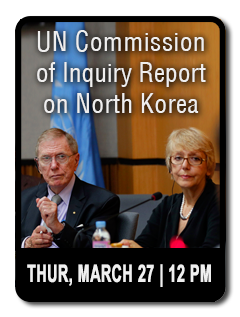
UN Commission of Inquiry Report on North Korea
Thursday, March 27, 2014 | 12:00 PM- About the Speaker Title: UN Commission of Inquiry Report on North Korea
- Event Name: Members $10 | Guests $20 |
- Event Time: ../tickets/2014/2014_03_27__un-commision__ticket.html
- Event Content: itms://itunes.apple.com/us/podcast/commission-inquiry-report/id210903888?i=287390720&mt=2
- Event Link: <p dir="ltr" style="text-align: justify;"><span style="color: #000000;"><span style="font-weight: bold;">Frank Jannuzi</span> is the Deputy Executive Director of Advocacy, Policy and Research and Head of Washington, DC office. Frank Jannuzi has executive responsibility for the four organizational units in Amnesty International USA's Advocacy, Policy and Research Department. He also serves as Head of the Washington, DC office and is the focal point-person for decision-making on how we engage in policy discussions in Washington and how we respond to developments that are influenced by U.S. foreign policy.</span></p> <p dir="ltr" style="text-align: justify;"><span id="docs-internal-guid-54b79bbb-46e3-f1d9-5e32-89c3fa0c047c" style="color: #000000;"><br />Prior to AIUSA, Frank served as Policy Director for East Asian and Pacific Affairs for the Democratic staff of the Senate Foreign Relations Committee, advising Senator John Kerry on policy options, drafting legislation authorizing U.S. diplomatic operations, security assistance, and foreign aid, and representing Senator Kerry in discussions with the American public as well as with foreign government officials and the media. His Senate service has included work on human rights legislation as well as field investigations into human rights conditions in numerous East Asian hotspots. Frank has worked as the East Asia regional political-military analyst for the Bureau of Intelligence and Research and was the founding editor-in-chief of the State Department's journal on multilateral peacekeeping and humanitarian operations. Frank holds a Bachelor of Arts degree in History from Yale University and Master's degree in Public Policy from the John F. Kennedy School of Government, Harvard University.</span></p> <p dir="ltr" style="text-align: justify;"><span style="color: #000000;"> </span></p>
- Custom HTML field content: About the Speaker
- Third Tab: http://traffic.libsyn.com/koreasociety/2014-03-27_UNCommissionOfInquiryReportOnNorthKorea.mp3
- Registration Form: Studio Korea @ The Korea Society
- Summit External URL: <p><img src="images/icons/2013/studio_korea-logo.jpg" width="238" height="142" alt="studio korea-logo" /></p> <p>Be part of a live audience for special recording sessions. Delve into the day’s headlines, dialogue with special guests from policy, finance, research, academe, international organizations, and the media, and determine new trends, priorities, and approaches in and toward East Asia and the Korean Peninsula.</p>
Amnesty International’s Frank Jannuzi discusses the release of the United Nations Commission of Inquiry (COI) report of North Korean human rights violations. The report follows an extensive year-long review, including testimony by victims of the regime. Frank Jannuzi, Deputy Executive Director of Advocacy, Policy and Research and Head of Washington, DC Office of Amnesty International In conversation with Dr. Stephen Noerper, Senior Vice President of The Korea... Read More