
North Korea
-
Joint Declaration in Commemoration of the 60th Anniversary of the Alliance
Tuesday, May 7, 2013 | 3:00 PM- Event Content: https://itunes.apple.com/podcast/the-korea-society/id210903888
- Event Link: <p style="text-align: justify;"><span style="color: #000000;"><strong>For Immediate Release</strong><span style="font-weight: bold;"></span></span></p> <p style="text-align: justify;"><span style="color: #000000;"><strong>May 07, 2013 </strong></span></p> <p style="text-align: justify;"><span style="color: #000000;"><strong> </strong></span></p> <p style="text-align: justify;"><span style="color: #000000; font-size: 14pt;"><strong>Joint Declaration in Commemoration of the 60th Anniversary of the Alliance between the Republic of Korea and the United States of America</strong></span></p> <p style="text-align: justify;"><span style="color: #000000; font-size: 14pt;"><strong> </strong></span></p> <p style="text-align: justify;"><span style="color: #000000;"><strong>For six decades, the U.S.-ROK Alliance has served as an anchor for stability, security, and prosperity on the Korean Peninsula, in the Asia-Pacific region, and increasingly around the world. President Barack Obama of the United States of America and President Park Geun-hye of the Republic of Korea, meeting in Washington, D.C. onMay 7, 2013, present this Joint Declaration in celebration of sixty years of bilateral partnership and shared prosperity. The two leaders affirm that the Alliance is well-placed to address the opportunities and challenges of the future.</strong></span></p> <p style="text-align: justify;"><span style="color: #000000;"><strong>The U.S.-ROK Alliance, forged in the Korean War and founded on the 1953 United States-Republic of Korea Mutual Defense Treaty, has evolved into a comprehensive strategic alliance with deep cooperation extending beyond security to also encompass the political, economic, cultural, and people-to-people realms. The freedom, friendship, and shared prosperity we enjoy today rest upon our shared values of liberty, democracy, and a market economy.</strong></span></p> <p style="text-align: justify;"><span style="color: #000000;"><strong>Building on the past sixty years of stability on the Korean Peninsula, we continue to strengthen and adapt our Alliance to serve as a linchpin of peace and stability in the Asia-Pacific and to meet the security challenges of the 21st century. The United States remains firmly committed to the defense of the Republic of Korea, including through extended deterrence and the full range of U.S. military capabilities, both conventional and nuclear.</strong></span></p> <p style="text-align: justify;"><span style="color: #000000;"><strong>This year also marks another milestone for our two nations - the first anniversary of the entry into force of the U.S.-Korea Free Trade Agreement (KORUS FTA). This agreement embodies the positive evolution of our partnership and demonstrates how deeply the United States and the Republic of Korea are committed to a shared future of growth and prosperity. We are pleased to note the positive results of the KORUS FTA, including increased trade and investment between our two countries, and recognize its potential for expanding bilateral cooperation and business opportunities, including in the energy sector. Our two countries will fully implement the KORUS FTA to ensure that the agreement serves as an economic growth engine in both our countries.</strong></span></p> <p style="text-align: justify;"><span style="color: #000000;"><strong>We are pleased with the significant progress made in realizing the 2009 Joint Vision for the Alliance of the United States of America and the Republic of Korea, which lays out a blueprint for the future development of our strategic Alliance. We pledge to continue to build a better and more secure future for all Korean people, working on the basis of the Joint Vision to foster enduring peace and stability on the Korean Peninsula and its peaceful reunification based on the principles of denuclearization, democracy and a free market economy. In this context, the United States and the Republic of Korea will continue to work through the Alliance to bring North Korea in to compliance with its international obligations and promote peace and prosperity on the Korean Peninsula, including through the trust-building process initiated by President Park.</strong></span></p> <p style="text-align: justify;"><span style="color: #000000;"><strong>We share the deep concern that North Korea's nuclear and ballistic missiles programs and its repeated provocations pose grave threats to the peace and stability of the Korean Peninsula and Northeast Asia. Both the United States and the Republic of Korea are determined to achieve the peaceful denuclearization of North Korea and are working with other Six-Party Talks partners and the international community to insist that North Korea adheres to its international obligations and commitments. While we invite North Korea to take the path that leads out of isolation and to join the community of nations as a responsible member, we are resolved to continue to defend our citizens against North Korea's provocations by strengthening our comprehensive, interoperable, and combined defense capabilities, to include shared efforts to counter the missile threat posed by North Korea and integrated intelligence, surveillance, and reconnaissance systems. Because both the United States and the Republic of Korea share a deep concern for the well-being of the North Korean people, we encourage North Korea to invest in, and improve, the conditions for its citizens and to respect their basic human rights.</strong></span></p> <p style="text-align: justify;"><span style="color: #000000;"><strong>The peace and prosperity of both our nations are inextricably linked to regional and global security and economic growth. Based on the solid U.S.-ROK Alliance, we are prepared to address our common challenges and seek ways to build an era of peace and cooperation in Northeast Asia. The U.S.-ROK Alliance is an increasingly global partnership, and the United States welcomes the Republic of Korea's leadership and active engagement on the world stage, including in international fora. We will strengthen our efforts to address global challenges such as climate change and to promote clean energy, energy security, human rights, humanitarian assistance, development assistance cooperation, counter-terrorism, peaceful uses of nuclear energy, nuclear safety, non-proliferation, cybersecurity, and counter-piracy.</strong></span></p> <p style="text-align: justify;"><span style="color: #000000;"><strong>Our sixty years of partnership and shared prosperity have demonstrated that the strength of our Alliance stems from the close relationships between our peoples. The large Korean-American community in the United States not only serves as a significant link between our two countries, but also makes countless contributions to the strength and vitality of American society. We pledge to continue programs and efforts to build even closer ties between our societies, including cooperation among business, civic, academic, and other institutions.</strong></span></p> <p style="text-align: justify;"><span style="color: #000000;"><strong>As allies and Asia-Pacific nations, we look forward to shaping together the future of Asia for generations to come.</strong></span></p>
- Custom HTML field content: THE OFFICIAL JOINT DECLARATION
- Custom HTML field 2 title: <p style="text-align: justify;"><strong style="line-height: 1.3em;">STEPHEN NOERPER:</strong></p> <p dir="ltr" style="text-align: justify;">Welcome to Studio Korea First Take, a rapid reaction report, and welcome to The Korea Society. I am Stephen Noerper, senior vice president.</p> <p dir="ltr" style="text-align: justify;">For reflections on the historic May summit between Presidents Park Geun-hye and Barack Obama, we are joined by Scott Snyder, senior fellow for Korea studies and director of the program on US-Korea policy at the Council on Foreign Relations. Welcome, Scott. I'm delighted to have you back.</p> <p style="text-align: justify;"> </p> <p dir="ltr" style="text-align: justify;"><strong>SCOTT SNYDER:</strong></p> <p dir="ltr" style="text-align: justify;">Good to be here, Steve.</p> <p style="text-align: justify;"> </p> <p dir="ltr" style="text-align: justify;"><strong>STEPHEN NOERPER:</strong></p> <p dir="ltr" style="text-align: justify;">Scott, your thoughts on the meeting between Presidents Park and Obama and the atmospherics conveyed.</p> <p style="text-align: justify;"> </p> <p dir="ltr" style="text-align: justify;"><strong>SCOTT SNYDER:</strong></p> <p dir="ltr" style="text-align: justify;">Well, this was the first in-person meeting for both presidents. I thought that both of them worked hard to project messages of assurance to each other on the basis of close cooperation and shared common interests. President Obama, I think, indicated clearly the US security and defense commitments to South Korea. He also cited in his remarks that President Park is a cool and seasoned crisis manager who has [already] shown her strong leadership qualities in office.</p> <p style="text-align: justify;"> </p> <p dir="ltr" style="text-align: justify;"><strong>STEPHEN NOERPER:</strong></p> <p dir="ltr" style="text-align: justify;">And how does the Joint Declaration between the two [countries] hold up against the 2009 Joint Statement?</p> <p style="text-align: justify;"> </p> <p dir="ltr" style="text-align: justify;"><strong>SCOTT SNYDER:</strong></p> <p dir="ltr" style="text-align: justify;">This is the 60th anniversary of the US-Korea alliance [and] this Joint Declaration was released in that context. It draws on many elements of the June, 2009 Joint Vision that was released when President Lee visited President Obama, but there are a couple of differences.</p> <p dir="ltr" style="text-align: justify;">One is that the challenge of dealing with North Korea was elevated in the statement. [Secondly], this statement is much more focused on the Peninsula than on global cooperation; although global cooperation is included in the statement as a shared objective. A third aspect is that it talks about President Park's own desire to build trust with North Korea; but it clearly places that trust-building process in the context of the objective of trying to bring North Korea into compliance with its international obligations.</p> <p dir="ltr" style="text-align: justify;">I think it's a strong statement. It very much shows that this is a comprehensive strategic alliance. It shows a measure of progress compared to where we were in 2009; but I think it's much more focused on the joint sense of purpose in trying to respond to the challenge posed by North Korea.</p> <p style="text-align: justify;"> </p> <p dir="ltr" style="text-align: justify;"><strong>STEPHEN NOERPER:</strong></p> <p dir="ltr" style="text-align: justify;">Scott, what do you think will be the reaction in Pyongyang?</p> <p style="text-align: justify;"> </p> <p dir="ltr" style="text-align: justify;"><strong>SCOTT SNYDER:</strong></p> <p dir="ltr" style="text-align: justify;">I think that both presidents delivered a strong and stern message that the leadership in Pyongyang [will probably not enjoy hearing]. At the same time, the North Koreans do tend to view public statements of this sort as propaganda. They also have propaganda that they release. I think that with regards to their ongoing efforts to evaluate Park Geun-hye, [the missing element] is probably that we don't see yet (and perhaps won't see for a period of time) whether or not, or how, the South Korean government positions itself in terms of any private messages that it tries to deliver to North Korea; and whether North Korea can find a way to respond.</p> <p dir="ltr" style="text-align: justify;">Certainly President Park's approach seems a little bit more open in terms of trying to engage North Korea, but it also has a lot of elements of commonality with the approach of President Lee. It's going to be very interesting to see whether North Korea is willing to pick up on the positive elements, or whether they move into a more confrontational approach as they try to manage the inter-Korean relationship.</p> <p style="text-align: justify;"> </p> <p dir="ltr" style="text-align: justify;"><strong>STEPHEN NOERPER:</strong></p> <p style="text-align: justify;">Scott Snyder of the Council on Foreign Relations. Thank you.</p> <p style="text-align: justify;"> </p>
- Custom HTML field 2 content: SNYDER ON THE PARK-OBAMA SUMMIT
- Third Tab: http://traffic.libsyn.com/koreasociety/2013-05-07_ScottSnyderOnTheObama-ParkSummit.mp3
-
Joint Press Conference with President Barack Obama and Republic of Korea President Park Geun-hye
Tuesday, May 7, 2013 | 3:00 PM- Event Content: https://itunes.apple.com/podcast/the-korea-society/id210903888
- Event Link: <p style="text-align: justify;"><span style="color: #000000;"><strong>PRESIDENT BARACK OBAMA:</strong></span></p> <p style="text-align: justify;"><span style="color: #000000;">Good afternoon, everybody. Please have a seat. Let me begin by saying it is a great pleasure to welcome President Park and our friends from the Republic of Korea. Madam President, we are greatly honored that you've chosen the United States as your first foreign visit. This of course reflects the deep friendship between our peoples and the great alliance between our nations, which is marking another milestone. I'm told that in Korea, a 60th birthday is a special celebration of life and longevity, "Hwangab." (Laughter.) Well, this year we're marking the 60th anniversary of the defense treaty between our nations.</span><br /><span style="color: #000000;">Yesterday President Park visited Arlington National Cemetery and our memorial to our Korean War veterans. Tonight she's hosting a dinner to pay tribute to the generation of American veterans who have served in the defense of South Korea. And tomorrow she'll address a joint session of Congress -- an honor that is reserved for our closest of friends.</span></p> <p style="text-align: justify;"><span style="color: #000000;">And in this sense, this visit also reflects South Korea's extraordinary progress over these six decades. From the ashes of war to one of the world's largest economies, from a recipient of foreign aid to a donor that now helps other nations develop. And of course, around the world people are being swept up by Korean culture, the Korean wave. And as I've mentioned to President Park, my daughters have taught me a pretty good "Gangnam Style." (Laughter.)</span></p> <p style="text-align: justify;"><span style="color: #000000;">President Park, in your first months in office, South Korea's faced threats and provocations that would test any nation, yet you've displayed calm and steady resolve that has defined your life.</span></p> <p style="text-align: justify;"><span style="color: #000000;">Like people around the world, those of us in the United States have also been inspired by your example as the first female president of South Korea. And today I've come to appreciate the leadership qualities for which you are known -- your focus and discipline and straightforwardness. And I very much thank you for the progress that we've already made together.</span></p> <p style="text-align: justify;"><span style="color: #000000;">Today we agreed to continue the implementation of our historic trade agreement, which is already yielding benefits for both our countries. On our side, we're selling more exports to Korea, more manufactured goods, more services, more agricultural products. Even as we have a long way to go, our automobile exports are up nearly 50 percent. And our big three -- Ford, Chrysler and GM -- are selling more cars in Korea.</span></p> <p style="text-align: justify;"><span style="color: #000000;">And as President Park and I agreed to make sure that we continue to fully implement this agreement, we believe that it's going to make both of our economies more competitive, it will boost U.S. exports by some $10 billion in support of tens of thousands of American jobs, and obviously it'll be creating jobs in Korea as they are able to continue to do extraordinary work in expanding their economy and moving it further and further up the value chain.</span></p> <p style="text-align: justify;"><span style="color: #000000;">We agreed to continue the clean energy partnerships that help us to enhance our energy security and address climate change. Given the importance of a peaceful nuclear energy industry to South Korea, we recently agreed to extend the existing civilian nuclear agreement between our two countries, but we also emphasized in our discussions the need to continue to work diligently towards a new agreement. As I told the president, I believe that we can find a way to support South Korea's energy and commercial needs, even as we uphold our mutual commitments to prevent nuclear proliferation.</span></p> <p style="text-align: justify;"><span style="color: #000000;">We agreed to continuing modernizing our security alliance. Guided by our joint vision, we're investing in the shared capabilities and technologies and missile defenses that allow our forces to operate and succeed together.</span></p> <p style="text-align: justify;"><span style="color: #000000;">We are on-track for South Korea to assume operational control for the alliance in 2015, and we're determined to be fully prepared for any challenge or threat to our security. And obviously, that includes the threat from North Korea.</span></p> <p style="text-align: justify;"><span style="color: #000000;">If Pyongyang thought its recent threats would drive a wedge between South Korea and the United States or somehow garner the north international respect, today is further evidence that North Korea has failed again. President Park and South Koreans have stood firm with confidence and resolve. The United States and the Republic of Korea are as united as ever, and faced with new international sanctions, North Korea is more isolated than ever. In short, the days when North Korea could create a crisis and elicit concessions -- those days are over.</span></p> <p style="text-align: justify;"><span style="color: #000000;">Our two nations are prepared to engage with North Korea diplomatically and, over time, build trust. But as always, and as President Park has made clear, the burden is on Pyongyang to take meaningful steps to abide by its commitments and obligations, particularly the denuclearization of the Korean peninsula. And we discussed that Pyongyang should take notice of events in countries like Burma, which, as it reforms, is seeing more trade and investment and diplomatic ties with the world, including the United States and South Korea.</span></p> <p style="text-align: justify;"><span style="color: #000000;">For our part, we'll continue to coordinate closely with South Korea and with Japan. And I want to make clear that the United States is fully prepared and capable of defending ourselves and our allies with the full range of capabilities available, including the deterrence provided by our conventional and nuclear forces. As I said in Seoul last year, the commitment of the United States to the security of the Republic of Korea will never waver.</span></p> <p style="text-align: justify;"><span style="color: #000000;">More broadly, we agreed to continue expanding our cooperation globally. In Afghanistan, where our troops serve together and where South Korea is a major donor of development assistance, we're on track to complete the transition to Afghan-led operations by the end of next year.</span></p> <p style="text-align: justify;"><span style="color: #000000;">We discussed Syria, where both our nations are working to strengthen the opposition and plan for a Syria without Bashir Assad. And I'm pleased that our two nations and our Peace Corps have agreed to expand our efforts to promote development around the world.</span></p> <p style="text-align: justify;"><span style="color: #000000;">Finally, we're expanding the already-strong ties between our young people. As an engineer by training, President Park knows the importance of education. Madam President, you've said, and I'm quoting you: We live in an age where a single individual can raise the value of an entire nation. I could not agree more, so I'm pleased that we're renewing exchange programs that bring our students together. And as we pursue common-sense immigration reform here in the United States, we want to make it easier for foreign entrepreneurs and foreign graduate students from countries like Korea to stay and contribute to our country, just as so many Korean-Americans already do.</span></p> <p style="text-align: justify;"><span style="color: #000000;">So again, thank you, President Park, for making the United States your first foreign trip. In your inaugural address, you celebrated the can-do spirit of the Korean people. That is a spirit that we share. And after our meeting today, I'm confident that if our two nations continue to stand together there's nothing that we cannot do together.</span></p> <p style="text-align: justify;"><span style="color: #000000;">So, Madam President, welcome to the United States.</span></p> <p style="text-align: justify;"><span style="color: #000000;"> </span></p> <p style="text-align: justify;"><span style="color: #000000;"><strong>PRESIDENT PARK GEUN-HYE: </strong></span></p> <p style="text-align: justify;"><span style="color: #000000;">(Through interpreter.) Let me start by thanking President Obama for his invitation and his gracious hospitality. During my meeting with the president today, I was able to have a heart-to-heart talk with him on a wide range of common interests. I found that the two of us have a broad common view about the vision and roles that should guide the Korea-U.S. alliance as it moves forward. And I was delighted to see this.</span><br /><span style="color: #000000;">First of all, the president and I share the view that the Korea- U.S. alliance has been faithfully carrying out its role as a bulwark of peace and stability on the Korean Peninsula and in Northeast Asia and that the alliance should continue to serve as a linchpin for peace and stability on the Korean Peninsula and in Asia. In this regard, I believe it is significant that the joint declaration on the 60th anniversary of our alliance we adopted spells out the direction that our comprehensive strategic alliance should take.</span></p> <p style="text-align: justify;"><span style="color: #000000;">Next, the president and I reaffirmed that we will by no means tolerate North Korea's threats and provocations, which have recently been escalating further, and that such actions would only deepen North Korea's isolation. The president and I noted that it is important that we continue to strengthen our deterrence against North Korea's nuclear and conventional weapons threats and shared the view that in this respect, the transition of wartime operational control should also proceed in a way that strengthens our combined defense capabilities and preparations be made -- (inaudible) -- as well.</span></p> <p style="text-align: justify;"><span style="color: #000000;">We also shared the view that realizing President Obama's vision of a world without nuclear weapons should start in the Korean Peninsula, and he stated that we could continue to strongly urge North Korea, in close concert with the other members of the six-party talks and the international community, to faithfully abide by its international obligations under the September 19th joint statement and the relevant Security Council resolutions.</span></p> <p style="text-align: justify;"><span style="color: #000000;">Korea and the U.S. will work jointly to induce North Korea to make the right choice through multifaceted efforts, including the implementation of the Korean Peninsula trust-building process that I spelled out and take this opportunity to once again send a clear message: North Korea will not be able to survive if it only clings to developing its nuclear weapons at the expense of its people's happiness.</span></p> <p style="text-align: justify;"><span style="color: #000000;">Concurrently pursuing nuclear arsenals and economic development can by no means succeed. This is the shared view of the other members of the six-party talks and the international community. However, should North Korea choose the path to becoming a responsible member of the community of nations, we are willing to provide assistance together with the international community.</span></p> <p style="text-align: justify;"><span style="color: #000000;">We also had meaningful discussions on the economy and ways to engage in substantive cooperation. The president and I welcome the fact that the Korea-U.S. Free Trade Agreement, which went into effect one year ago, is contributing to our shared prosperity. We also said we will make efforts to enable our people to better feel the benefits of our free trade agreement for them.</span></p> <p style="text-align: justify;"><span style="color: #000000;">I highlighted the importance of securing high-skilled U.S. work visas for Korean citizens and asked for executive branch support, to the extent possible, to see to it that the relevant legislation is passed in the U.S. Congress. Moreover, we arrived at the view that the Korea-U.S. Civil Nuclear Energy Cooperation Agreement should be revised into an advanced and mutually beneficial successor agreement. We said we would do our best to conclude our negotiations as soon as possible.</span></p> <p style="text-align: justify;"><span style="color: #000000;">The president and I also had in-depth discussions on ways to enhance our global partnership. First, we noted together that Northeast Asia needs to move beyond (conflict and divisions ?) and open a new era of peace and cooperation, and that there would be synergy between President Obama's policy of rebalancing to Asia and my initiative for peace and cooperation in Northeast Asia as we pursue peace and development in the region.</span></p> <p style="text-align: justify;"><span style="color: #000000;">We share the view about playing the role of co-architects to flesh out this vision.</span></p> <p style="text-align: justify;"><span style="color: #000000;">Furthermore, we decided that the Korea-U.S. alliance should deal not just with challenges relating to the Korean Peninsula and Northeast Asia but confronting the broader international community.</span></p> <p style="text-align: justify;"><span style="color: #000000;">I and very delighted that I was able to build personal trust with President Obama through our summit meeting today and to have laid a framework for cooperation. Thank you.</span></p> <p style="text-align: justify;"><span style="color: #000000;"> </span></p> <p style="text-align: justify;"><span style="color: #000000;"><strong>PRESIDENT OBAMA:</strong></span></p> <p style="text-align: justify;"><span style="color: #000000;">All right. We've got a couple of questions from each -- each side. So we'll start with Stephen Collinson of AFP.</span><br /> <br /><span style="color: #000000;">Q: Thank you, Mr. President. Does the United States have a core national security interest in stopping the slaughter in Syria, or merely a strong moral desire to see the violence end? And at what point does the cost of not intervening in a more direct way than you have done so far outweigh the cost of doing so?</span><br /> <br /><span style="color: #000000;">And if I may ask President Park, President Obama's critics have warned that failing to act on perceived violations of U.S. red lines in Syria could embolden U.S. enemies elsewhere, including in North Korea. Are you convinced that Kim Jong Un has taken the U.S. and South Korean warnings seriously? And do you see the withdrawal of two missiles from a test site as a sign that he's willing to de-escalate the situation?</span></p> <p style="text-align: justify;"><span style="color: #000000;"> </span></p> <p style="text-align: justify;"><span style="color: #000000;"><strong>PRESIDENT OBAMA:</strong></span></p> <p style="text-align: justify;"><span style="color: #000000;">Well, Stephen, I think that we have both a moral obligation and a national security interest in, A, ending the slaughter in Syria but, B, also ensuring that we've got a stable Syria that is representative of all the Syrian people and is not creating chaos for its neighbors.</span><br /><span style="color: #000000;">And that's why, for the last two years, we have been active in trying to ensure that Bashar Assad exits the stage and that we can begin a political transition process. That's the reason why we have invested so much in humanitarian aid; that's the reason why we are so invested in helping the opposition and why we've mobilized the international community to isolate Syria. That's why we are now providing nonlethal assistance to the opposition, and that's why we're going to continue to do the work that we need to do.</span></p> <p style="text-align: justify;"><span style="color: #000000;">And in terms of the costs and the benefits, I think there'd be severe costs in doing nothing. That's why we're not doing nothing. That's why we are actively invested in the process. If what you're asking is, are there continuing re-evaluations about what we do, what actions we take in conjunction with other international partners to optimize the day when -- or to hasten the day when we can see a better situation in Syria -- we've been doing that all along and will continue to do that.</span></p> <p style="text-align: justify;"><span style="color: #000000;">I think that understandably, there's a desire for easy answers. That's not the situation there, and my job is to constantly measure our very real and legitimate humanitarian and national security interests in Syria, but measuring those against my bottom line, which is, what's in the best interests of America's security, and making sure that I'm making decisions not based on a hope and a prayer but on hard-headed analysis in terms of what will actually make us safer and stabilize the region.</span></p> <p style="text-align: justify;"><span style="color: #000000;">I would note, not to answer the question that you lobbed over to President Park, that you suggested even in your question a perceived crossing of a red line. The operative word there, I guess, Steven (sp), is perceived. And what I've said is that we have evidence that there has been the use of chemical weapons inside of Syria.</span></p> <p style="text-align: justify;"><span style="color: #000000;">But I don't make decisions based on perceived. And I can't organize international coalitions around perceived. We've tried that in the past, by the way, and it didn't work out well. So we want to make sure that, you know, we have the best analysis possible. We want to make sure that we are acting deliberately.</span></p> <p style="text-align: justify;"><span style="color: #000000;">But I would just point out that there have been several instances during the course of my presidency where I said I was going to do something, and it ended up getting done. And there were times when there were folks on the sidelines wondering why hasn't it happened yet and what's going on and why didn't it go on tomorrow. And -- but in the end, whether it's bin Laden or Gadhafi, if we say we're taking a position, I would think at this point, the international community has a pretty good sense that we typically follow through on our commitments.</span></p> <p style="text-align: justify;"><span style="color: #000000;">With regard to actions towards Syria, what kind of message would that communicate to North Korea?</span><br /><span style="color: #000000;">That was the question. And recently North Korea seems to be de- escalating its threats and provocations. What seems to be behind that? You asked these two questions.</span></p> <p style="text-align: justify;"><span style="color: #000000;">In fact, North Korea is isolated at the moment. So it's hard to find anyone that could really actually fathom the situation in North Korea. But it's actually -- they're also very unpredictable. And whether the Syrian situation would have an impact is hard to say, for sure. Why is North Korea appearing to de-escalate its threats and provocations? There is no knowing for sure, but what is clear and what I believe for sure is that the international community, with regard to North Korea's bad behavior and its provocations -- (inaudible) -- one choice: a firm message -- and consistently send a firm message that they will not (stand ?) and that North Korea's actions in breach of international norms will be met with so-and-so sanctions and measures by the international community. At the same time, if it goes along the right way, there will be a so-and-so reward.</span></p> <p style="text-align: justify;"><span style="color: #000000;">So if we consistently send that message to North Korea, I feel that North Korea will be left with no choice but to change. But instead of just hoping to see North Korea change, the international community must also consistently send that message with one voice to compel them communicate to them that they have no choice but to change and to shape an environment where they are left with no choice but to make the strategic decision to change. And I think that's the effective and important way.</span></p> <p style="text-align: justify;"><span style="color: #000000;"> </span></p> <p style="text-align: justify;"><span style="color: #000000;"><strong>Q:</strong></span></p> <p style="text-align: justify;"><span style="color: #000000;">(Through interpreter.) My question goes to President Park. You just mentioned that North Korea -- in order to induce North Korea to abandon its nuclear weapons, what is most important is the concerted action of the international community.</span><br /><span style="color: #000000;">With regard to this, during your meeting with President Obama today, what was said and the views that you shared? And with regard to with Russia and China, the role that they're playing in terms of getting North Korea to abandon its nuclear weapons, how do you feel about that?</span></p> <p style="text-align: justify;"><span style="color: #000000;">My next question is for President Obama. Regarding the young leader of North Korea, Kim Jong Un, I would appreciate your views about leader of North Korea. And if you were to send a message to him today, what kind of message would you send to him?</span></p> <p style="text-align: justify;"><span style="color: #000000;"> </span></p> <p style="text-align: justify;"><span style="color: #000000;"><strong>PRESIDENT PARK:</strong></span></p> <p style="text-align: justify;"><span style="color: #000000;">With regard to the North Korea issue, we and the United States, as well as the international community -- the ultimate objective that all of us should be adopting is for North Korea to abandon its nuclear weapons and to induce them to become a responsible member of the International community. It serves the interest of peace on the Korean Peninsula and the world, and it also serves the interest of North Korea's own (development in the ?) world. That is my view.</span><br /><span style="color: #000000;">And so in order to encourage North Korea to walk that path and change -- (inaudible) -- we have to work in concert. And in this regard, China's role, China's influence can be extensive. So China taking part in these endeavors is important, and we shared views on that.</span></p> <p style="text-align: justify;"><span style="color: #000000;">With regard to China and Russia's stance, I believe that China and Russia must make -- (inaudible) -- share the need for a denuclearized Korean Peninsula and are cooperating closely to engage North Korea to take the right path,</span></p> <p style="text-align: justify;"><span style="color: #000000;">In the case of China, with regard to North Korea's missile fire and nuclear testing, China has taken active part in adopting U.N. Security Council resolutions and is faithfully implementing those resolutions.</span></p> <p style="text-align: justify;"><span style="color: #000000;">And with regards to Russia, Russia is also firmly committed to the denuclearization of the Korean Peninsula. And with regard to the adoption of U.N. Security Council resolutions on North Korea, it has been very active in supporting them, and they've also sent a very -- and they've also worked very hard to include a stern message to North Korea in the joint statement of the G-8 foreign ministers' meeting.</span></p> <p style="text-align: justify;"><span style="color: #000000;">Such constructive efforts on the part of China and Russia are vital to sending a unified message to North Korea that their nuclear weapons will not stand and encouraging and urging North Korea to make the right decision.</span></p> <p style="text-align: justify;"><span style="color: #000000;"> </span></p> <p style="text-align: justify;"><span style="color: #000000;"><strong>PRESIDENT OBAMA:</strong></span></p> <p style="text-align: justify;"><span style="color: #000000;">Obviously I don't know Kim Jong Un personally. I haven't had a conversation with him, can't really give you an opinion about his personal characteristics.</span><br /><span style="color: #000000;">What we do know is the actions that he's taken that have been provocative and seemed to pursue a dead end. And I want to emphasize President Park and myself very much share the view that we are going to maintain a strong deterrent capability, that we're not going to reward provocative behavior, but we remain open to the prospect of North Korea taking a peaceful path of denuclearization, abiding by international commitments, rejoining the international community and seeing a gradual progression in which both security and prosperity for the people of North Korea can be achieved.</span></p> <p style="text-align: justify;"><span style="color: #000000;">You know, if what North Korea has been doing has not resulted in a strong, prosperous nation, then now's a good time for Kim Jong Un to evaluate that history and take a different path.</span></p> <p style="text-align: justify;"><span style="color: #000000;">And I think that should he choose to take a different path, not only President Park and myself would welcome it, but the international community as a whole would welcome it. And I think that China and Russia and Japan and other key players that have been participants in six-party talks have made that clear.</span></p> <p style="text-align: justify;"><span style="color: #000000;">But there's going to have to be changes in behavior. You know, we have an expression in English. You know, don't -- don't -- don't worry about what I say, watch what I do. And we're -- so far, at least, we haven't seen actions on the part of the North Koreans that would indicate they're prepared to -- to move in a different direction.</span></p> <p style="text-align: justify;"><span style="color: #000000;">Christi Parsons.</span></p> <p style="text-align: justify;"><span style="color: #000000;"> </span></p> <p style="text-align: justify;"><span style="color: #000000;"><strong>Q:</strong></span><br /><span style="color: #000000;">...(first part on non-relevant topic...DOD's sexual assault crisis) </span><br /> <br /><span style="color: #000000;">And if I may, President Park, I would ask you, yesterday you said that if North Korea does not change its behavior, we will make them pay. I wondered if you could elaborate on that comment a little bit. Thank you.</span></p> <p style="text-align: justify;"><span style="color: #000000;"> </span></p> <p style="text-align: justify;"><span style="color: #000000;"><strong>PRESIDENT OBAMA: </strong></span></p> <p style="text-align: justify;"><span style="color: #000000;">(long FIRM answer to a military sexual assault question)</span></p> <p style="text-align: justify;"><br /> <br /><span style="color: #000000;"><strong>PRESIDENT PARK:</strong></span></p> <p style="text-align: justify;"><span style="color: #000000;">(Through interpreter.) Regarding North Korea's provocations and bad behavior, we will make them pay. With regard to that, for instance, what I meant was that if they engage in military provocation and harm the lives of our people and the safety of our people, then naturally, as president who gives the top priority to ensuring the safety of our people, it is something that we cannot just pass over.</span><br /><span style="color: #000000;">So if North Korea engages in provocation, I will fully trust the judgment of our military. So if our military makes a judgment which they feel is the right thing, that they should act accordingly. And this is the instruction that I had made.</span></p> <p style="text-align: justify;"><span style="color: #000000;">And North Korea has to pay a price when it comes not only with regard to provocations but also with regard to the recent Kaesong industrial complex issue, where based on agreements between the two sides, companies had believed in the agreement that was made and actually went to invest in the Kaesong industrial complex. But they suddenly completely (dispensed with ?) and disregard this agreement overnight and deny various medical supplies and food supplies to Korean citizens left in that industrial complex, refusing to accept our requests to allow in those supplies, which is what prompted us to withdraw all of our citizens from that park.</span></p> <p style="text-align: justify;"><span style="color: #000000;">This situation unfolded in the full view of the international community. So who would invest -- (inaudible) -- Korean companies but also companies of other countries -- who would invest in North Korea, in a place that shows flagrant disregard for agreements? And how could they, under those circumstances, actually pull off economic -- (inaudible)? So I think in this regard, they're actually paying the price for their own misdeeds.</span></p> <p style="text-align: justify;"><span style="color: #000000;"> </span></p> <p style="text-align: justify;"><span style="color: #000000;"><strong>Q:</strong></span></p> <p style="text-align: justify;"><span style="color: #000000;">(Through interpreter.) I am -- (off mic) -- President Obama, President Park has been talking about the Korean Peninsula trust- building process as a way to promote peace on the Korean Peninsula. I wonder what you feel about this trust-building process on the Korean Peninsula.</span></p> <p style="text-align: justify;"><br /> <br /><span style="color: #000000;"><strong>PRESIDENT OBAMA:</strong></span></p> <p style="text-align: justify;"><span style="color: #000000;">Well, as I indicated before, President Park's approach is very compatible with my approach and the approach that we have been taking together for several years now. And as I (may ?) -- understand it, the -- the key is that we will be prepared for deterrence, that we will respond to aggression, that we will not reward provocative actions, but that we will maintain an openness to a -- an engagement process when we see North Korea taking steps that would indicate that it is following a different path. And that's exactly the right approach.</span><br /><span style="color: #000000;">All of us would benefit from a North Korea that transformed itself. Certainly the people of North Korea would benefit. South Korea would be even stronger in a less tense environment on the peninsula. All of the surrounding neighbors would welcome such a transition, such a transformation. But I don't think either President Park or I are naive about the difficulties of that taking place.</span></p> <p style="text-align: justify;"><span style="color: #000000;">And we've got to see action before, you know, we -- we can have confidence that that in fact is the path that North Korea intends to take.</span></p> <p style="text-align: justify;"><span style="color: #000000;">But the one thing I want to emphasize, just based on the excellent meetings and consultation that we had today as well as watching President Park over the last several months dealing with the provocative escalations that have been taking place in North Korea, what I'm very confident about is President Park is tough. I think she has a very clear, realistic view of the situation, but she also has the wisdom to believe that conflict is not inevitable and is not preferable. And that's true on the Korean Penisuala; that's true around the world.</span></p> <p style="text-align: justify;"><span style="color: #000000;">And we very much appreciate her visit and look forward to excellent cooperation, not only on this issue but on the more positive issues of economic and commerical ties between our two countries, educational exchanges, work on energy, climate change, helping other countries develop.</span></p> <p style="text-align: justify;"><span style="color: #000000;">You know, I've had a wonderful time every time I've visited the Republic of Korea. And what is clear is that the Republic of Korea is one of the great success stories of our lifetime. And you know, the Republic of Korea's leadership around the globe will be increasingly important. And what underpins that in part has been he extraordinary history of the alliance between the United States and the Republic of Korea. And we want to make sure that that remains a strong foundation for progress in the future.</span></p> <p style="text-align: justify;"><span style="color: #000000;">So thank you so much, Madam President.</span></p> <p style="font-weight: bold; text-align: justify;"> </p>
- Custom HTML field content: JOINT PRESS CONFERENCE
- Custom HTML field 2 title: <p><span style="color: #000000;"><strong style="color: #000000; line-height: 1.3em;"><span style="line-height: 1.3em;">STEPHEN NOERPER:</span></strong></span></p> <p> </p> <p dir="ltr"><span style="color: #000000;">Welcome to Studio Korea First Take, a rapid reaction report, and welcome to The Korea Society. I am Stephen Noerper, senior vice president.</span></p> <p><span style="color: #000000;"><strong style="color: #000000; line-height: 1.3em;"><b style="font-weight: normal;"> </b></strong></span></p> <p dir="ltr"><span style="color: #000000;">For reflections on the historic May summit between Presidents Park Geun-hye and Barack Obama, we are joined by Scott Snyder, senior fellow for Korea studies and director of the program on US-Korea policy at the Council on Foreign Relations. Welcome, Scott. I'm delighted to have you back.</span></p> <p><span style="color: #000000;"><strong style="color: #000000; line-height: 1.3em;"><b style="font-weight: normal;"> </b></strong></span></p> <p dir="ltr"><span style="color: #000000;"><strong>SCOTT SNYDER:</strong></span></p> <p> </p> <p dir="ltr"><span style="color: #000000;">Good to be here, Steve.</span></p> <p><span style="color: #000000;"><strong style="color: #000000; line-height: 1.3em;"><b style="font-weight: normal;"> </b></strong></span></p> <p dir="ltr"><span style="color: #000000;"><strong>STEPHEN NOERPER:</strong></span></p> <p> </p> <p dir="ltr"><span style="color: #000000;">Scott, your thoughts on the meeting between Presidents Park and Obama and the atmospherics conveyed.</span></p> <p><span style="color: #000000;"><strong style="color: #000000; line-height: 1.3em;"><b style="font-weight: normal;"> </b></strong></span></p> <p dir="ltr"><span style="color: #000000;"><strong>SCOTT SNYDER:</strong></span></p> <p> </p> <p dir="ltr"><span style="color: #000000;">Well, this was the first in-person meeting for both presidents. I thought that both of them worked hard to project messages of assurance to each other on the basis of close cooperation and shared common interests. President Obama, I think, indicated clearly the US security and defense commitments to South Korea. He also cited in his remarks that President Park is a cool and seasoned crisis manager who has [already] shown her strong leadership qualities in office.</span></p> <p><span style="color: #000000;"><strong style="color: #000000; line-height: 1.3em;"><b style="font-weight: normal;"> </b></strong></span></p> <p dir="ltr"><span style="color: #000000;"><strong>STEPHEN NOERPER:</strong></span></p> <p> </p> <p dir="ltr"><span style="color: #000000;">And how does the Joint Declaration between the two [countries] hold up against the 2009 Joint Statement?</span></p> <p><span style="color: #000000;"><strong style="color: #000000; line-height: 1.3em;"><b style="font-weight: normal;"> </b></strong></span></p> <p dir="ltr"><span style="color: #000000;"><strong>SCOTT SNYDER:</strong></span></p> <p> </p> <p dir="ltr"><span style="color: #000000;">This is the 60th anniversary of the US-Korea alliance [and] this Joint Declaration was released in that context. It draws on many elements of the June, 2009 Joint Vision that was released when President Lee visited President Obama, but there are a couple of differences.</span></p> <p><span style="color: #000000;"><strong style="color: #000000; line-height: 1.3em;"><b style="font-weight: normal;"> </b></strong></span></p> <p dir="ltr"><span style="color: #000000;">One is that the challenge of dealing with North Korea was elevated in the statement. [Secondly], this statement is much more focused on the Peninsula than on global cooperation; although global cooperation is included in the statement as a shared objective. A third aspect is that it talks about President Park's own desire to build trust with North Korea; but it clearly places that trust-building process in the context of the objective of trying to bring North Korea into compliance with its international obligations.</span></p> <p><span style="color: #000000;"><strong style="color: #000000; line-height: 1.3em;"><b style="font-weight: normal;"> </b></strong></span></p> <p dir="ltr"><span style="color: #000000;">I think it's a strong statement. It very much shows that this is a comprehensive strategic alliance. It shows a measure of progress compared to where we were in 2009; but I think it's much more focused on the joint sense of purpose in trying to respond to the challenge posed by North Korea.</span></p> <p><span style="color: #000000;"><strong style="color: #000000; line-height: 1.3em;"><b style="font-weight: normal;"> </b></strong></span></p> <p dir="ltr"><span style="color: #000000;"><strong>STEPHEN NOERPER:</strong> <span class="Apple-tab-span"> </span></span></p> <p> </p> <p dir="ltr"><span style="color: #000000;">Scott, what do you think will be the reaction in Pyongyang?</span></p> <p><span style="color: #000000;"><strong style="color: #000000; line-height: 1.3em;"><b style="font-weight: normal;"> </b></strong></span></p> <p dir="ltr"><span style="color: #000000;"><strong>SCOTT SNYDER:</strong></span></p> <p> </p> <p dir="ltr"><span style="color: #000000;">I think that both presidents delivered a strong and stern message that the leadership in Pyongyang [will probably not enjoy hearing]. At the same time, the North Koreans do tend to view public statements of this sort as propaganda. They also have propaganda that they release. I think that with regards to their ongoing efforts to evaluate Park Geun-hye, [the missing element] is probably that we don't see yet (and perhaps won't see for a period of time) whether or not, or how, the South Korean government positions itself in terms of any private messages that it tries to deliver to North Korea; and whether North Korea can find a way to respond.</span></p> <p><span style="color: #000000;"><strong style="color: #000000; line-height: 1.3em;"><b style="font-weight: normal;"> </b></strong></span></p> <p dir="ltr"><span style="color: #000000;">Certainly President Park's approach seems a little bit more open in terms of trying to engage North Korea, but it also has a lot of elements of commonality with the approach of President Lee. It's going to be very interesting to see whether North Korea is willing to pick up on the positive elements, or whether they move into a more confrontational approach as they try to manage the inter-Korean relationship.</span></p> <p><span style="color: #000000;"><strong style="color: #000000; line-height: 1.3em;"><b style="font-weight: normal;"> </b></strong></span></p> <p dir="ltr"><span style="color: #000000;"><strong>STEPHEN NOERPER:</strong></span></p> <p><span style="color: #000000;"><strong style="color: #000000; line-height: 1.3em;"><b id="docs-internal-guid-3b196759-80ec-844b-9255-32b3031ba81a" style="font-weight: normal;">Scott Snyder of the Council on Foreign Relations. Thank you.</b></strong></span></p>
- Custom HTML field 2 content: SNYDER ON THE PARK-OBAMA SUMMIT
- Third Tab: http://traffic.libsyn.com/koreasociety/2013-05-07_ScottSnyderOnTheObama-ParkSummit.mp3
-
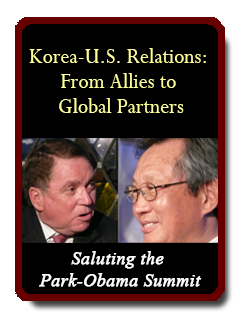
Korea-U.S. Relations: From Allies to Global Partners with Ambassador YJ Choi & Ambassador Hubbard
Thursday, April 18, 2013 | 6:00 PM- Event Content: http://traffic.libsyn.com/koreasociety/2013-04-18_DenverBrownChoiHubbard.mp3
- Podcast URL: <p dir="ltr" style="text-align: justify;"><span style="font-weight: bold; color: #000000;">Korea-U.S. Relations: From Allies to Global Partners</span></p> <p style="text-align: justify;"><span style="color: #000000;"><b style="font-weight: normal;"><br /><span style="font-weight: bold;"></span></b></span></p> <p dir="ltr" style="text-align: justify;"><span style="font-weight: bold; color: #000000;">Thursday, April 18, 2013</span></p> <p style="text-align: justify;"><span style="color: #000000;"><b style="font-weight: normal;"><br /><span style="font-weight: bold;"></span></b></span></p> <p dir="ltr" style="text-align: justify;"><span style="color: #000000;"><span style="font-weight: bold;">His Excellency Choi Young-jin</span>, Ambassador of the Republic of Korea to the United States</span></p> <p dir="ltr" style="text-align: justify;"><span style="color: #000000;"><span style="font-weight: bold;">Ambassador Thomas Hubbard</span>, Chairman of The Korea Society</span></p> <p dir="ltr" style="text-align: justify;"><span style="color: #000000;">Introduction by Ambassador Mark Minton, President of The Korea Society</span></p> <p style="text-align: justify;"><span style="color: #000000;"><b style="font-weight: normal;"> </b></span></p> <p dir="ltr" style="text-align: justify;"><span style="font-weight: bold; color: #000000;">AMBASSADOR MINTON:</span></p> <p dir="ltr" style="text-align: justify;"><span style="color: #000000;">It is my pleasure to introduce this evening's main speakers for a discussion about Korea's growing global role as well as its current relationship with the United States. We are honored to have with us the Ambassador of the Republic of Korea to the United States, His Excellency Choi Young-jin. We are especially honored to have Ambassador Choi with us tonight as President Park Geun-hye is visiting Washington in just a few weeks. All of us who have been in diplomatic service know that one has little extra time in the month before such an event. Ambassador Choi assured us he would attend this evening, and we are very grateful to have him here.</span></p> <p dir="ltr" style="text-align: justify;"><span style="color: #000000;">Ambassador YJ Choi has had a long and distinguished forty-year career as an international statesman and diplomatic representative of his country. His Excellency served in the Francophone countries of France, Senegal, and the Democratic Republic of the Congo and graduated from the Sorbonne (University of Paris) with masters and doctorate degrees in international political science. He held an important position as deputy executive director of the Korean Peninsula Energy Development Organization here in New York City, charged with implementing the Agreed Framework between the DPRK, the United States and the Republic of Korea along with the involvement of Japan. His Excellency served as South Korea's ambassador to Austria and Slovenia. He has served as an assistant secretary-general at the United Nations and as his country's ambassador to the United Nations. He served in Seoul as a vice foreign minister and currently, of course, holds the assignment of Ambassador to the United States.</span></p> <p dir="ltr" style="text-align: justify;"><span style="color: #000000;">His interlocutor tonight is Ambassador Thomas C. Hubbard, Chairman of The Korea Society. Ambassador Hubbard was my boss in Seoul when I was his deputy. He served as ambassador to the Philippines as well as to the Republic of Korea. He is currently with McLarty Associates of Washington, DC and holds the title of senior director for Asia with that consultancy. Of course, his major role is as chairman of The Korea Society. Ambassador Hubbard is one of the most knowledgeable career diplomats on Japan and has deep experience in the U.S.-Japan relationship. He served in other Asian countries, as well. Please help me in welcoming both Ambassador Choi and Ambassador Hubbard to the stage. [Applause]</span></p> <p dir="ltr" style="text-align: justify;"><span style="font-weight: bold; color: #000000;">AMBASSADOR HUBBARD:</span></p> <p dir="ltr" style="text-align: justify;"><span style="color: #000000;">Thank you very much, Mark, for your kind introduction. I'd like to thank all of you for joining Ambassador Choi and me tonight as we discuss important aspects of the US-Korea relationship. I also wish to thank our gracious hosts here in Denver. WorldDenver is a wonderful organization, and we appreciate the support of the Denver World Trade Center, as well.</span></p> <p dir="ltr" style="text-align: justify;"><span style="color: #000000;">I am particularly pleased to also have our sponsors from McKenna Long & Aldridge with us this evening. My relationship with McKenna Long has been with the Atlanta and Washington offices, and I have worked very closely with partners Song Jung and Andy Park as they’ve built their practice in Seoul. Song Jung is a valuable member of our board at The Korea Society. I'm sorry he couldn't be with us tonight but am very pleased to see Lino and all the rest of you here this evening.</span></p> <p dir="ltr" style="text-align: justify;"><span style="color: #000000;">I don't have any prepared remarks, but Congresswoman DeGette covered just about everything I planned to say (which usually happens to me) about the valuable relationship between the United States and the Republic of Korea. As part of our broader presence in Asia, we have a very significant presence on the Korean Peninsula and a lot in common with the South Koreans.</span></p> <p dir="ltr" style="text-align: justify;"><span style="color: #000000;">Just a few weeks ago, Mark and I had the great pleasure of attending the inauguration of President Park Geun-hye. I would have told anyone even five years ago that they were crazy if they believed South Korea would elect a female president before the United States did likewise. As it turns out, South Korea has a very able female president. Mark and I are very pleased to know her and to have had the chance to be at her inauguration. [Applause]</span></p> <p dir="ltr" style="text-align: justify;"><span style="color: #000000;">Going back twenty or thirty years, I don't think anyone would have forecast South Korea's extraordinary success as a vibrant democracy and major economic world player, or that it would successively elect different parties to the presidency along with having a female president. Going back twenty to thirty years ago, I don't think any of us could have imagined South Korea as one of the world's top twelve to fifteen economies with an even higher rating in per capita income.</span></p> <p dir="ltr" style="text-align: justify;"><span style="color: #000000;">We enjoy excellent relations with South Korea as an ally, as a security partner and additionally as a valuable free trade partner. After I retired from government service eight years ago, I became actively involved in ensuring the successful movement of the Free Trade Agreement through Congress (with much thanks to people like Congresswoman DeGette). We even solved the beef problem so important to Colorado. Your state is, once again, a major exporter of beef to the Republic of Korea. This beneficial relationship is well reflected in statements and speeches by President Obama and other senior US officials, including Secretary of State John Kerry during his visit to Korea at the end of last week. In partnership with the United States, global Korea is now a major economic and cultural player on the world stage with an increasing role solving global problems.</span></p> <p dir="ltr" style="text-align: justify;"><span style="color: #000000;">It is no accident that the Secretary General of the UN is Korean. A Korean-born Korean-American is the President of the World Bank. Korea is reaching out to lead the world community and to help solve the world's economic problems by encouraging broad-based inclusive growth around the world and dealing with the environmental problems stemming from global warming. South Korea has been and continues to be a wonderful and welcome partner.</span></p> <p dir="ltr" style="text-align: justify;"><span style="color: #000000;">Unfortunately, a lot of what we see on the news is about the other Korea—North Korea—a closed dictatorship with a regime neglecting the needs of its people and focused on the production of nuclear weapons and missiles. North Korea's leadership is spreading bombast through the news cycle in a manner we haven't heard for years. Russell Kemp told me that his eleven-year-old daughter recently turned on the television and was frightened to learn that Kim Jong Un was targeting Colorado Springs with nuclear weaponry. The good news is we're sure he can't hit Colorado Springs with anything close to a nuclear weapon. He probably can't hit Guam either. Over the medium to long-term, however, the North Korean weapons program is a problem which will have to be dealt with.</span></p> <p dir="ltr" style="text-align: justify;"><span style="color: #000000;">The tension emanating from the Korean Peninsula is a big problem today and in some ways detracts from the success we see elsewhere in Korea. Representative DeGette has already covered this very interesting topic and I am pleased to have Ambassador Choi here to talk about this, as well. And so without further adieu, I'd like to ask Ambassador Choi to share his opening remarks.</span></p> <p dir="ltr" style="text-align: justify;"><span style="font-weight: bold; color: #000000;">AMBASSADOR CHOI:</span></p> <p dir="ltr" style="text-align: justify;"><span style="color: #000000;">Thank you, Ambassador Hubbard and Ambassador Minton, for inviting me here this evening. Ever since I attended some ball games played by the Colorado Rockies, the Denver Broncos and the Denver Nuggets, I have dreamed that one day I would be able to come to Denver, and here I am. [Applause] When I saw this evening's menu of Korean dishes, such as naengmyeon noodles, kimchi and bulgogi, I felt really at home. Denver is a city whose culture of hospitality is just like that of Korea's, and I thank you for that.</span></p> <p dir="ltr" style="text-align: justify;"><span style="color: #000000;">Let me start by talking about the special relationship between the United States and Korea. Sixty years ago, the Korean War ended, yet the alliance between our countries continues. This year we celebrate the 60th anniversary of the armistice. Let us go back sixty years and talk about what Korea was like at that time. Sixty years ago, Korea was much like every other underdeveloped country in the world—one of extreme poverty with very little hope for the future. During the last sixty years, Korea has come of age on every account with the adoption of democracy, through the development of economic growth and by sharing Korean culture around the globe.</span></p> <p dir="ltr" style="text-align: justify;"><span style="color: #000000;">Korea's democracy produced the first female leader ever in the East Asian Confucian part of the world, and her arrival in Washington in three weeks is testimony that Korea's democratic form of government has come of age in only two generations. Three years ago, Korea surpassed the $1 trillion mark in terms of its trade volume and national GDP. Only seven other countries have accomplished this, and today Korea is ranked within the top ten to twelve economies in the world. Of course culturally we have "Gangnam Style" YouTube videos. Even before that there were Korean dramas, Korean songs and Korean movies spreading rapidly beyond Asia. All of this has been possible because of America's friendship and alliance with South Korea.</span></p> <p dir="ltr" style="text-align: justify;"><span style="color: #000000;">I ran a nine-nation peacekeeping operation in Africa for three years. A president of [one] African country asked me for the secret that led to the success of South Korea. When that African country became independent six years ago, their per capita income and prospects were much better than Korea's. Now most African countries import cell phones, cars, air conditioners, TV sets and almost all of our industrial products rather than exporting these products to Korea. This has become possible because of the extraordinary relationship between the United States and Korea. People in Korea never forget, and they believe that the success story derived from the U.S.-Korea relationship has been America's most successful engagement in history. None of Korea's rivals have benefitted as Korea has through its engagement abroad.</span></p> <p dir="ltr" style="text-align: justify;"><span style="color: #000000;">Korea learned from America and established a relief program like the Peace Corps. No other country in the world does that. For the Peace Corps members, we have a program which invites them to observe the difference they have made in Korea so they can be proud of what they have done. In reference to the FTA, Korea has the most Free Trade Agreements. The US-Korea FTA serves as a model for other FTA agreements being negotiated in the world today, including the TPP (Trans-Pacific Partnership), the Korea-China free trade agreement negotiations, and Korea-China-Japan free trade negotiations.</span></p> <p dir="ltr" style="text-align: justify;"><span style="color: #000000;">Korea has a very special relationship with the United States. This year we'll be celebrating the sixtieth anniversary of the Korean War armistice in July. We will have ceremonies concurrently in Washington and Seoul, and will then have the opportunity to take stock of where we are now and to also envision how we can make this special relationship relevant well into the twenty-first century. [Applause]</span></p> <p style="text-align: justify;"><span style="color: #000000;"><b style="font-weight: normal;"> </b></span></p> <p dir="ltr" style="text-align: justify;"><span style="font-weight: bold; color: #000000;">THOMAS HUBBARD:</span></p> <p dir="ltr" style="text-align: justify;"><span style="color: #000000;">Thank you very much, Ambassador. I talked a bit about Korea's increasing role with international institutions. Could you perhaps elaborate on your new government's view towards Korea's ongoing role around the globe?</span></p> <p style="text-align: justify;"><span style="color: #000000;"><b style="font-weight: normal;"> </b></span></p> <p dir="ltr" style="text-align: justify;"><span style="font-weight: bold; color: #000000;">CHOI YOUNG-JIN:</span></p> <p dir="ltr" style="text-align: justify;"><span style="color: #000000;">Korea is a very old country. During dinner, we discussed that the establishment of Seoul, the capital of South Korea, dates back over 2000 years. As Korea was confined to the small geographic region of the Peninsula, it remained a parochial country for most of its history—until America came to open our doors. As our economy develops, Korea is becoming increasingly regional while contributing to peace and stability in the region, including Northeast Asia. Recently, the slogan global Korea has become the watchword for the citizenry as well as for the Korean government.</span></p> <p dir="ltr" style="text-align: justify;"><span style="color: #000000;">Korea is the very first country, on record, to transform itself from a recipient country to a donor country, and this is one of Korea's strengths as it develops into a global country. Korea is very keen on developing itself internationally because otherwise it cannot thrive or perhaps even survive. We depend heavily on our trade with other countries. We have virtually no natural resources. We only have the human resource of brain power. Should we not go global, our future is not very promising at all.</span></p> <p dir="ltr" style="text-align: justify;"><span style="color: #000000;">It is for this reason that we have become a donor country. We are expanding our relationship with Africa as well as North America. We have hosted many international conferences including the APEC Summit, the Nuclear Security Summit and the G20 Summit meeting in order to link Korea with the outside world. The importance of trade and investment to our international growth means we must be very visible on the world stage, as without a healthy state of competitiveness, Korea will only stagnate. We are determined to go global, and America is our best partner for moving forward.</span></p> <p dir="ltr" style="text-align: justify;"><span style="color: #000000;">Diplomatically, we are on the same page with America when it comes to the difficult issues posed by places like Afghanistan, Iran, Iraq, Syria, Libya, and even Somalia. This proves that Korea is determined to go global by developing its economic strength along with the indispensable partnership of the United States.</span></p> <p dir="ltr" style="text-align: justify;"><span style="font-weight: bold; color: #000000;">THOMAS HUBBARD:</span></p> <p dir="ltr" style="text-align: justify;"><span style="color: #000000;">Thank you, Ambassador Choi. I'd like to make note that among Korea's other distinctions, they have the first company, Samsung, capable of challenging Apple. That is surely a symbol of Korea's industrial creativity and of your growing success in the world. After such a positive discussion, I hesitate to bring up the subject of North Korea. You did mention that South Korea and the United States have been successfully collaborating, dealing with issues such as Somalia, Iran and Afghanistan. How can the United States and South Korea collaborate to resolve the issue closest to the hearts of all South Koreans—that of North Korea? How would you suggest we improve the situation on the Korean Peninsula?</span></p> <p dir="ltr" style="text-align: justify;"><span style="font-weight: bold; color: #000000;">CHOI YOUNG-JIN:</span></p> <p dir="ltr" style="text-align: justify;"><span style="color: #000000;">To explain the issue of North Korea, I like to introduce the concept of American exceptionalism. Early in the last century, when East Asia was opening up, European powers came to our region and brought the paradigm of colonialism and military raids. America, unlike the old colonial powers, came to our region with the paradigm of trade and an open-door policy. That made all the difference.</span></p> <p dir="ltr" style="text-align: justify;"><span style="color: #000000;">As you know, Japan's economic growth came first. The Four Dragons of East Asia (South Korea, Taiwan, Hong Kong and Singapore) followed suit. Now China is with us, and other East Asian and South Asian countries are registering phenomenal economic growth. The basis for this was, in part, made possible because of American exceptionalism; that is, America is a different country from Eastern European countries whose philosophies are based on colonialism, expansionism, war and military might. We must acknowledge that, that trade paradigm is the key to understanding what's happening in the East Asia and Pacific region.</span></p> <p dir="ltr" style="text-align: justify;"><span style="color: #000000;">North Korea is the only country in the entire East Asian region which has yet to accept the trade paradigm. The best reference to understanding North Korea is the Soviet Union, clinging onto the old paradigm of military raids and colonialism, along with the building of heavy weapons and weapons of mass destruction while making the military the focus of their citizenry. This is the Soviet style. The North Korean problem can only be resolved once the country comes in from the cold to join the paradigm of trade with other countries in the region, increase interdependence with us and engage in trade and investment.</span></p> <p dir="ltr" style="text-align: justify;"><span style="color: #000000;">What's happening in North Korea today is the same pattern we have seen for the last twenty years. They test their nuclear weapons or they declare that they have a nuclear weapons program. They test fire some missiles, heighten tension, and then right at the climax they de-escalate and ask us to negotiate. We have cooperated three times in the past. I believe this current phase of escalation is either reaching its peak or near there, because we are still waiting to see whether North Korea will test fire their medium-range Musudan missiles. I predict that de-escalation will come very soon, and North Korea will again ask to negotiate with us.</span></p> <p dir="ltr" style="text-align: justify;"><span style="color: #000000;">I think North Korea is mistaken this time, because unlike the past twenty years, neither Washington nor Korea will reward their unacceptable behavior. If they use the same pattern as they have done over the last twenty years, this time it cannot possibly work. So, the future is not very bright, because a negotiation will not easily take place. Even if it does takes place, it must be preceded by North Korea demonstrating that things are different this time in approaching normalization.</span></p> <p dir="ltr" style="text-align: justify;"><span style="color: #000000;">The one silver lining is China, because China is accepting the trade paradigm. They are increasingly on the same page with America, Korea and Japan. That means North Korea is becoming more of a problem and a liability for China, and Beijing will increasingly see that the future lies with us. Last year, China's combined trade with the US, Japan and Korea exceeded $1 trillion. We are talking to China with an increased understanding that we must work together on the problem of North Korea in order to make that country come in from the cold and abandon the Soviet-style nuclear paradigm, adopt the Chinese style or even the South Korean style of a trade paradigm, and get rid of their weapons of mass destruction.</span></p> <p dir="ltr" style="text-align: justify;"><span style="color: #000000;">Barring any unacceptable conflict taking place, I am not too worried about the current rhetoric or hyperbolic words coming from North Korea, because it will de-escalate. I expect negotiations will come and go; but in the end, the nuclear weapons problem is linked to the North Korean problem itself. We have to tackle these issues together. The solution is to make North Korea come in from the cold.</span></p> <p style="text-align: justify;"><span style="color: #000000;"><b id="docs-internal-guid-6efc1724-5c5d-578b-6c56-8dc26c70470f" style="font-weight: normal;">[End]</b></span></p>
- Third Tab: http://traffic.libsyn.com/koreasociety/2013-04-18_DenverBrownChoiHubbard.mp3
His Excellency YJ Choi, South Korea’s Ambassador to the United States, and Ambassador Thomas Hubbard, The Korea Society Chair, dialogued on the remarkable relationship between Korea and the United States, and Korea’s rise globally. Korea and the U.S. share a common security and vibrant business relations. Korea figures as a growing investor in the United States and a vibrant actor on economic, political and cultural stages. The Korea-U.S. (KORUS) Free Trade Agreement implementation has seen new opportunities and... Read More -
Global Korea with Ambassador Hill and Ambassador Minton
Thursday, April 18, 2013 | 12:30 PM- Youtube Video:
Korbel School Dean, Ambassador Christopher Hill and The Korea Society President Ambassador Mark Minton, addressed Korea's rising regional and global influence. From the Seoul G20 and Nuclear Security Summit to the 2018 Winter Olympics, Korea has come of its own as regional host and hub. A harbinger of democracy, Korea supports international peacekeeping and leads in green growth. Korea is an Asian cultural leader--from film to KPop. From UN Secretary General Ban Ki-Moon to World Bank President Jim Yong Kim, Koreans and... Read More -
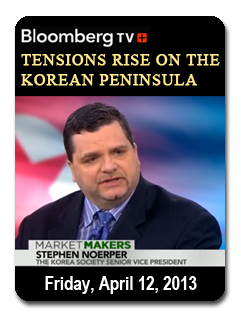
TKS on Bloomberg/Tensions Rise On The Korean Peninsula
Friday, April 12, 2013 | 12:00 PM- Custom HTML field content: About the Speaker
Tensions Rise On The Korean PeninsulaApril 12 (Bloomberg) -- Stephen Noerper, Senior Vice President at The Korea Society, discusses the mounting tensions between the U.S., South Korea and North Korea. He speaks on Bloomberg Television's "Market Makers." (Source: Bloomberg) WATCH HERE: http://bloom.bg/10UWbw9 Download the FREE Bloomberg TV+ iPad app fromhttp://itunes.apple.com/app/bloomberg-tv/id460459302&mt=8 Of interest: N. Korea Needs to Save Face in De-Escalation:... Read More -

North Korean History and Culture
Thursday, April 4, 2013 | 9:15 AM- Custom HTML field content: About the Speaker
North Korean History and CultureApril 4, 2013 (C-SPAN) -- Thomas Hubbard talked about North Korean leader Kim Jong-un, as well as the culture and history of North Korea and its relationship with South Korea, and other topics. He also responded to telephone calls and electronic communications. (Source: C-SPAN | Washington Journal) WATCH HERE: http://www.c-spanvideo.org/program/311901-5# Read More -
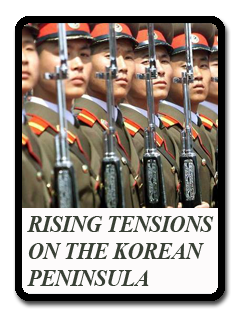
Rising Tensions on the Korean Peninsula: The Latest with John Park
Friday, March 29, 2013 | 12:00 PMJohn Park, Stanton Foundation Junior Faculty Fellow at MIT and an associate at the Belfer Center for Science and International Affairs at Harvard University, analyzes the rising tensions on the Korean Peninsula, the uptick in provocations and threats from North Korea and security implications for the region with The Korea Society's Senior Vice President, Dr. Stephen Noerper. Related News: North Korea threats predictable but Kim Jong Un is not, analysts say Read More -
China-North Korea Relations: Parties, Politics and New Perspectives
Thursday, March 28, 2013 | 5:30 PMJohn S. Park, an associate at Harvard Univerty’s Belfer Center for Science and International Affairs and MIT faculty fellow, speaks to progress and new developments in the relations between the DPRK and PRC. Dr. Park speaks to upticks in party relations, Kim Jong Un’s leadership and ties to China’s new leaders, growth in trade with and Chinese-style special economic zones in North Korea, and other changes. + - Transcript Click to collapse... Read More -
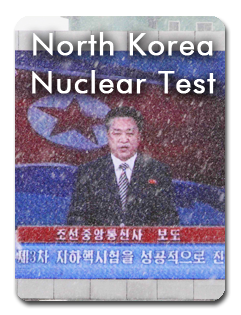
North Korean Nuclear Test - Rapid Reaction 2013
Tuesday, February 12, 2013 | 10:00 AM- Event Content: itms://itunes.apple.com/us/podcast/corporate-views-on-korea-from/id210903888?i=132582412#
- Custom HTML field content: About the Speaker
- Third Tab: http://traffic.libsyn.com/koreasociety/2013-02-12_DPRK_Nuclear_Test.mp3
On February 12, 2013, North Korea conducted its third nuclear test in a show of defiance to the international community and the nuclear non-proliferation regime. President of the Institute for Science and International Security (ISIS), David Albright; Executive Director of the Ploughshares Fund, Phillip Yun; and the Senior Director of the Asia-Pacific Security Program at the Center for New American Security, Patrick Cronin addressed the significance of this nuclear test, North Korean nuclear advancement, and... Read More -
Perilous Passages: North Korea, Human Trafficking and the Underground Railroad
Thursday, February 7, 2013 | 5:30 PM- About the Speaker Title: Perilous Passage: North Korea, Human Trafficking and the Underground Railroad
- About the Speaker: 2013-02-07 17:30:00
- Event Name: Members FREE | Non-members $10
- Event Time: ../tickets/2013/2013_02_07__perilous-passage__ticket.html
- Event Content: itms://itunes.apple.com/us/podcast/corporate-views-on-korea-from/id210903888?i=132195928#
- Event Link: <p style="text-align: justify;"><strong>Melanie Kirkpatrick</strong> is a writer-journalist based in Connecticut and a senior fellow at the Hudson Institute. She contributes reviews and commentary to various publications, including the opinion pages of The Wall Street Journal, for which she worked from 1980 until mid-2009. Her book, Escape from North Korea: The Untold Story of Asia’s Underground Railroad, is published by Encounter Books.</p> <p style="text-align: justify;">At The Wall Street Journal, Melanie was deputy editor of the editorial page from 2006-2009 and a longtime member of the editorial board. As a deputy editor, she was responsible for the editorial page’s coverage of international issues and oversaw the opinion pages of the Wall Street Journal in Asia and Europe, the Far Eastern Economic Review and the U.S. columnists on foreign affairs. She wrote editorials and op-ed articles on foreign affairs.</p> <p style="text-align: justify;">Melanie spent 10 years in Asia, working for The Wall Street Journal Asia in Hong Kong and, prior to that, for a division of Time-Life Books in Tokyo. She received the 2001 Mary Morgan Hewett Award for Women in Journalism from the Friends of the East-West Center in Honolulu. The annual award recognizes a journalist who has demonstrated commitment, hard work and expanding influence throughout her career.</p> <p style="text-align: justify;">She received a bachelor’s degree from Princeton University and a master’s degree in English from the University of Toronto. She was a Gannett Newspaper Foundation Fellow in Asian studies at the University of Hawaii. She is a member of the Council on Foreign Relations; a trustee of Princeton in Asia, an internship program in Asia for young graduates of American universities; and a director of the America for Bulgaria Foundation.</p> <p style="text-align: justify;">Ms. Kirkpatrick is married to Jack David, who is a senior fellow and trustee of the Hudson Institute.</p> <p style="text-align: justify;"> </p> <p style="text-align: justify;"> </p> <p style="text-align: justify;"><strong>Steven Kim</strong> is the founder of 318 Partners, a U.S.-based nonprofit dedicated to rescuing trafficked women in China. It’s named after Article 318 of the Chinese criminal code, the law under which Kim was arrested in September 2003 for trying to send nine North Korean refugees to South Korea through Vietnam. Mr. Kim is also the author of Fearless Passage, an autobiography about his time working with North Korean refugees in China.</p>
- Custom HTML field content: About the Speakers
- Third Tab: http://traffic.libsyn.com/koreasociety/2013-02-07_Perilous_Passage_.mp3
North Koreans escaping regime repression employ escape channels similar to those used by Harriet Tubman to help American slaves, says author Melanie Kirkpatrick. Explore the network of ethnic Koreans, brokers and missionaries who seek to aid those fleeing the North with Kirkpatrick and human rights advocate and U.S. businessman Steven Kim, founder of 318 Partners, an effort to rescue North Korean women trafficked to China. Chinese-North Korean Children North Korean Bride... Read More