


Korea’s Compressed Modernity and Its Risks

Join us for our second conversation with Seoul National University sociology Professor Chang Kyung-Sup who will discuss various challenges posed by South Korea’s “compressed modernity.” He writes that the same strategies and conditions that enabled explosive development and modernization in South Korea and other Asian societies also produced “existentially hazardous consequences in virtually all areas of public and private life, and seemingly insurmountable obstacles to sustained advances in the future.” And he argues that South Korea’s dynamism flows from the methods that it utilizes to overcome such challenges. This program is a collaboration with the Society’s Policy Department and the Education Department. 

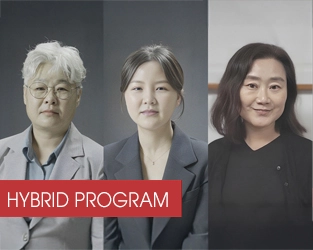
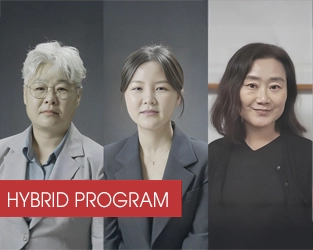
Professor Chang is joined in conversation with education senior advisor Linda Tobash, policy director Jonathan Corrado, and policy program officer Chelsie Alexandre. 

Paperback copies of Professor Chang’s newest book, The Risk of Compressed Modernity, are available for purchase online at a 20% discount using the code 20KSC. You can view our first discussion with Professor Chang in 2023 here. 

This program is made possible by the generous support of our individual and corporate members and the Korea Foundation. Promotional support for this program is provided by The Institute of Social Sciences at Seoul National University (SNU ISS). 


Korea’s Compressed Modernity and Its Risks

Wednesday, October 8, 2025 | 8 AM (EDT)


The Korea Society
350 Madison Avenue, 24th Floor
New York, NY 10017


About the Speaker:

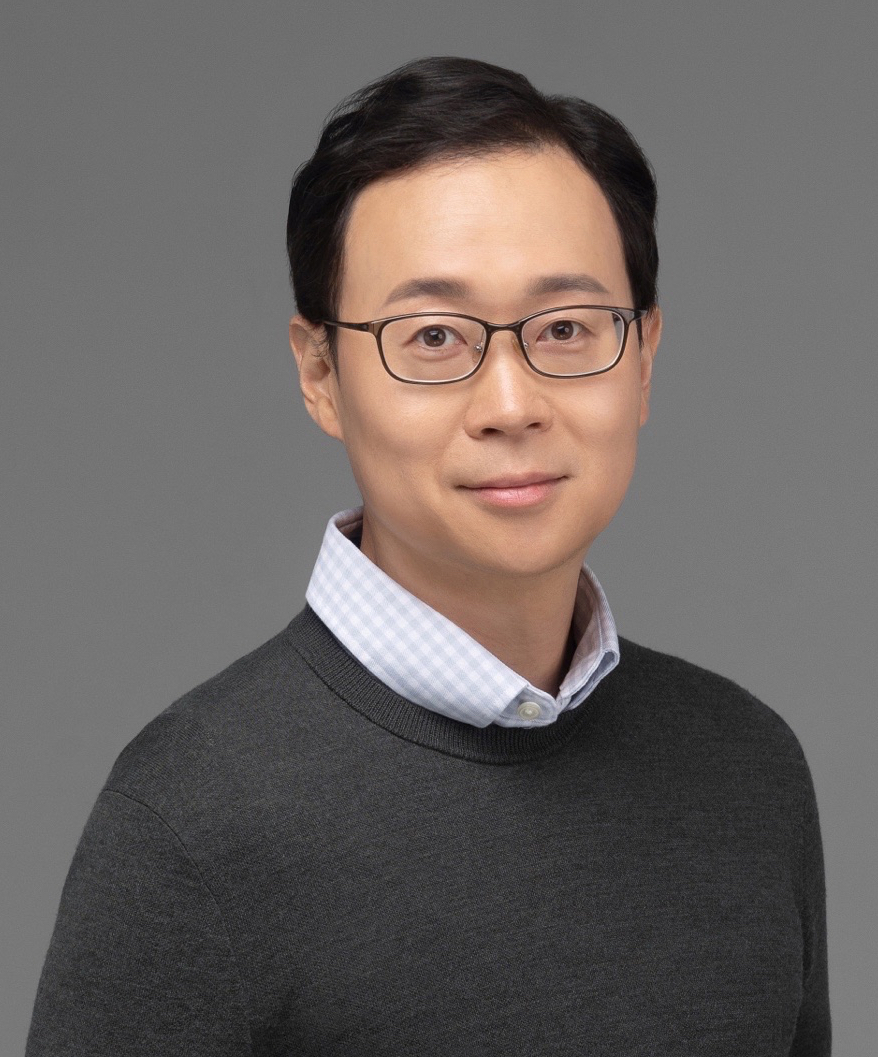
Chang Kyung-Sup is a SNU Distinguished Professor at Seoul National University, where he has taught sociology since 1991. His work has dealt with comparative development and modernity, Korean liberalism, Asian citizenship regimes, and Asian transnationalism. His authored books include: The Risk of Compressed Modernity (Polity, 2025); The Logic of Compressed Modernity (Polity, 2022); Transformative Citizenship in South Korea: Politics of Transformative Contributory Rights (Palgrave Macmillan, 2022); Developmental Liberalism in South Korea: Formation, Degeneration, and Transnationalization (Palgrave Macmillan, 2019); South Korea under Compressed Modernity: Familial Political Economy in Transition (Routledge, 2010); Asia In Itself: The Rise of a Continental Society (Polity, in progress). He is also a co editor of The Wiley Blackwell Encyclopedia of Social Theory, 5 Volumes (Wiley, 2017).


You May Also Enjoy:

Consequences of Korea’s Compressed Modernity How National Stories Shape Democracy in Asia Seeds of Mobilization: The Authoritarian Roots of South Korea’s Democracy Korea: The Politics of the Vortex

Mukja: Let’s Eat!

Photo Credit: Emli Bendixen

In Korean pop culture, as in Korean life, food plays a starring role. From Instagram-ready dalgona coffee to cheese-filled, sugar-sprinkled corndogs, Korean trends are taking over, both on-screen and in the kitchen. The groundbreaking global sensation KPop Demon Hunters dethroned the captivating survival drama Squid Game as Netflix’s most-watched title ever, with the film collaborating with Nongshim Shin Ramyun to release limited-edition instant noodles inspired by its characters. Watching idols savor their favorite dishes or drama characters gather around sizzling stews and late-night snacks stirs a craving—not just to taste the food, but to

bring the dishes into your own kitchen and relive the moment bite by bite. From jjajangmyeon shared over office lunches to fiery tteokbokki eaten on street corners and the now-famous jjapaguri from Parasite, the food in these stories has become just as unforgettable as the characters themselves, sparking the same reaction from viewers everywhere: what is that, and where can I get it?

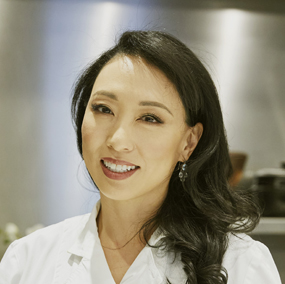
In MUJKA: LET’S EAT!: Fan-Favorite Recipes from K-Pop, K-Dramas & More, chef, restaurateur, television personality, and Korean cuisine expert Judy Joo recreates the dishes viewers keep spotting across Korean dramas, films, and the world of K-pop. With more than 80 recipes, Joo shows how to cook the foods they have been seeing on screen, from late-night noodle dishes and street food favorites to comforting stews, sizzling barbecue, and café sweets. Along the way, she opens up the building blocks of Korean cooking, introducing the ingredients and techniques that give these dishes their distinctive flavor, including staples like gochujang, doenjang, sesame oil, and kimchi. And MUJKA: LET’S EAT! is more than a collection of beloved, sought-after dishes: Judy brings the perspective of a chef who has spent her career championing Korean cuisine, guiding readers through the flavors, traditions, and everyday cooking that sit behind the scenes of the meals audiences keep noticing on screen and give rich cultural context to the food trends taking the world by storm. It’s a cookbook, yes, but it’s also a way into the meals that have become one of the most memorable parts of the Korean Wave.

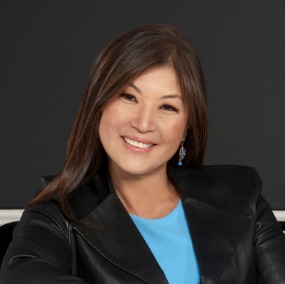
In her conversation with Juju Chang, an Emmy® Award-winning co-anchor of ABC News’ “Nightline,” Judy Joo will discuss her career and the latest book.


Speaker

Judy Joo

Judy Joo is a chef, restaurateur, author, entrepreneur, and television personality. A bestselling cookbook author, her titles include K-Quick, Judy Joo’s Korean Soul Food, and Korean Food Made Simple. She is a TV regular, dishing out culinary wisdom on The Today Show,  Good Morning America,  The Talk, and Food Network in the USA, while popping up on UK favorites like Saturday Kitchen,  Sunday Brunch, and James Martin’s Saturday Morning.  She has been featured in The New York Times, People, The Financial Times, Wall Street Journal, The Times, and Food & Wine magazine. 

Judy is CEO and co-founder of Seoul Bird, a London mainstay for Korean street food with locations in New York and Edinburgh, Judy was the first female Iron Chef in the UK and the second worldwide. Through her restaurants, media work, and writing, Judy has spent years introducing Korean food and culture to audiences around the world.


Moderator

Juju Chang

Juju Chang is an Emmy® Award-winning co-anchor of ABC News’ “Nightline.” She also reports regularly for “Good Morning America” and “20/20.” Chang’s decades-long career has been recognized with numerous awards, including multiple Emmy’s, Gracie’s, a DuPont, a Murrow and Peabody awards. In 2017, she was honored with the Lifetime Achievement Award at the Front Page Awards.


Presentations by Sherman Scholar Lecture Award Recipients

Geopolitical Affairs/Sherman Family Korea Emerging Scholar Lecture

Presentations by Sherman Scholar Award Recipients

Since 2017, The Korea Society has presented this annual award to stimulate and support the next generation of U.S. thought leadership on Korea.

Presented to scholars in the U.S. from a wide range of disciplines and backgrounds, the award has recognized pioneering and impactful scholarship in fields such as architecture, political economy, political science, poetry, national identity, medical science, maritime conflict, and technology.

The award recognizes both emergent talents and emerging topics. It enjoys the kind support of Mr. and Mrs. Philip Sherman and family.

20259th recipient
Dr. Peter Jongho Na

Reframing Suicide as a Shared Social Responsibility in Korea

Dr. Peter Jongho Na, Assistant Professor of Psychiatry, Yale School of Medicine

Dr. Na casts suicide not as an individual failure or “extreme choice (극단적 선택),” but as a systemic and cultural crisis requiring a coordinated national response. Drawing on his experience as a psychiatrist, public health researcher, and mental health advocate, he examines the scale and societal costs of suicide in Korea and analyzes key structural drivers such as academic and workplace pressures, poverty and isolation among older adults, and the pervasive stigma surrounding mental illness and treatment.

A central theme is how stigma has sustained silence, denial, and policy inertia. Dr. Na shares his efforts to challenge euphemistic language and foster open public dialogue, while proposing an interdisciplinary roadmap inspired by global models that integrate public health, education, and social welfare reforms. He also highlights the Korean diaspora’s potential role in breaking taboos and advancing cultural and policy change.

20248th recipient
Dr. David Krolikoski

The Politics of The Silence of Love in Colonial Korea

Dr. David Krolikoski, Assistant Professor, University of Hawaiʻi

Dr. Krolikoski examined The Silence of Love (Nim ŭi ch’immuk, 1926), the acclaimed collection of eighty-eight poems by Han Yong-un (1879–1944), a Buddhist monk and public intellectual. Although the book is commonly celebrated as a metaphor for colonial subjugation, he argued that its artistic significance lies in Han’s paradigm-shifting use of colonial poetry as a medium of communal expression during a time of national crisis.

He explored how Han used fiction and symbols to collapse the boundary between private and public address, transmuting the individual voice of his poetic speaker into a platform for a community, and placed the collection within the 1920s translation of foreign poetic forms into Korea, with a focus on how Han incorporated elements of the lyric and prose poem into his verse.

20237th recipient
Dr. Munseob Lee

The Return of Industrial Policy: Lessons from Korea

Dr. Munseob Lee, Assistant Professor, University of California San Diego

Industrial policy is making a comeback. Signs of government intervention in support of industry are visible not only in China, but in the U.S., Europe, and Asia. Drawing on Korea’s experience, Dr. Lee offers insights for today’s policymakers, including a close look at the government’s 1973 heavy and chemical industry drive. While that policy yielded positive outcomes for the targeted industries, it also resulted in higher concentration within those sectors.

Lee stresses the need for a thorough evaluation of costs and benefits before implementation, especially given current bipartisan support in the U.S. for major bills aimed at revitalizing industrial policy. As one reviewer stated, “At this critical time Lee revisits the effectiveness of Korean industrial policy during a high development phase to glean useful insights for Korea, U.S., and beyond.” Moderated by Thomas Byrne, then President and CEO of The Korea Society.

20226th recipient
Dr. Eunbin Chung

National Identity Affirmation and Trust in Korea, Japan and China

Dr. Eunbin Chung, Assistant Professor of Political Science, University of Utah

Legacies of conflict and distrust have made it difficult for East Asian countries to form regional institutions and overcome security dilemmas. Dr. Chung’s research questions two conventional wisdoms: that distrust among states can be overcome through cultural convergence and appeals to a shared identity, and that strong, inward-focused national identities exacerbate inter-state distrust and conflict. She advances the concept that trust can be built among nations when each affirms its own distinctive identity, and that this may be more effective than embracing common identities across countries.

Dr. Katrin Katz, the inaugural award recipient, described Chung’s argument as “breaking new ground in tackling some prevailing beliefs regarding the relationship between national identity and levels of inter-state trust and conflict.”

20215th recipient
Dr. Aram Hur

Korea’s Changing National Story and Democratic Future

Dr. Aram Hur, Assistant Professor and Co-Director, Institute for Korean Studies, University of Missouri

Dr. Hur addressed Korean nationalism, a “rapidly fragmenting and changing” national story, and the danger of democratic rollback. Senior director Stephen Noerper described her selection and address as “incredibly important given the costs of such fragmentation in Korea, but comparatively in the United States of late and by extension to a world seeing rollback in Myanmar, Thailand, Russia and elsewhere.”

20204th recipient
Melany Sun-Min Park

Architecture as Kisul in Postwar Korea: Building the Industrial Nation-State

Melany Sun-Min Park, Doctoral Candidate, Harvard University

Ms. Park addressed architecture’s relationship to state-led, large-scale industrial development in postwar Korea, framing architecture as kisul (science-technology). Carter Eckert, Yoon Se Young Professor of Korean History at Harvard University, described her effort as a “brilliantly conceived project combining…histories and cultural issues with an exploration of science/industrialism and aesthetics…in South Korea.” Harvard Professor Yukio Lippit hailed her original “use of archives never tapped for use in any language.”

20193rd recipient
Dr. Ivanna Sang Een Yi

P’ansori Mountain Pilgrimages: Land as Interlocutor in Contemporary Korean Oral Performance and Literature

Dr. Ivanna Sang Een Yi, Visiting Assistant Professor, University of Colorado Boulder

In a presentation both spoken and sung, Professor Yi conceptualized the contemporary practice of p’ansori san kongbu, mountain study, as a form of pilgrimage.

20182nd recipient
Dongsei Kim

Imagining the Impossible: The DMZ as a Productive Territory

Dongsei Kim, Architect and Assistant Professor, New York Institute of Technology

Professor Kim explored how architecture and landscape architecture investigate the Demilitarized Zone. Through the prism of spatial design and three concrete examples, he argued for reformulating exclusionary border conditions into inclusive spaces that become synergistic and productive for both Koreas.

2017Inaugural recipient
Dr. Katrin Katz

Maritime Conflict in Northeast Asia and Nationalism in Korea

Dr. Katrin Katz, Northwestern University

The Korea Society celebrated sixty years since its founding with a public and press presentation on September 27 by Dr. Katz, who served on the National Security Council in the George W. Bush administration. Her dissertation addresses maritime conflict in Northeast Asia and the dynamics of nationalism in Korea. Mr. Sherman, whose family supports the award, served as Citi’s representative in Korea in the early 1970s.

Apply for the next lecture

Ph.D. candidates, junior professors, researchers, and professionals are eligible.

Apply now

Become a member

Get access to exclusive programs and a network dedicated to U.S.–Korea relations.

Join The Korea Society

Get the newsletter

The latest programs, lectures, and news, once a month.

Subscribe

The Unseen Resilience of North Korean Female Defectors

North Korea’s Evolving Cyber Strategy

Join us for a discussion on the unseen resilience of North Korean female defectors. Kim Seonghui and Na Min-Hee provide powerful personal testimony, describing their life and experiences in North Korea, their escape, and their new life in South Korea. Human rights advocate and expert Kwon EunKyoung joins the discussion, which is moderated by policy director Jonathan Corrado.

This program is made possible by the generous support of our individual and corporate members and the Korea Foundation.


The Unseen Resilience of North Korean Female Defectors

Thursday, September 18, 2025 | 4 PM (EDT)

The Korea Society
350 Madison Avenue, 24th Floor
New York, NY 10017


About the Speakers:


Kim Seonghui fled North Korea in 2008 to give her daughter a life free from the violence and indignity she faced as a woman. In North Korea, Kim worked as a nurse, witnessing harrowing conditions caused by the absence of medicine, equipment, electricity, and basic supplies. Now in South Korea, she runs Hanadoga (“House of Unity”), a North Korean-style distillery brewing alcohol — as her mother once did — and leads volunteer efforts to support vulnerable people in her community.


Na Min-Hee is originally from Pyongyang. She was working in Malta as a state-dispatched overseas laborer when she first encountered the world outside of North Korea—and was struck by the freedom and dignity with which women lived abroad. Despite strict surveillance, she fled to Germany in 2015 and, eventually found refuge in South Korea. Now living in South Korea, Na is happily married and committed to reclaiming her voice and agency as a woman. She shares her story and perspectives openly through her YouTube channel with 162K subscribers, determined to speak not from fear or silence, but with strength and autonomy.


Kwon EunKyoung is the Director of the Network for North Korean Democracy and Human Rights (NK Net) and Secretary General of the International Coalition to Stop Crimes Against Humanity in North Korea (ICNK). She focuses on creating effective strategies to improve the quality of life for North Korean people and to raise their awareness of the values shared by the global community. She works to broaden channels that connect the world with the hearts and lives of the North Korean people.

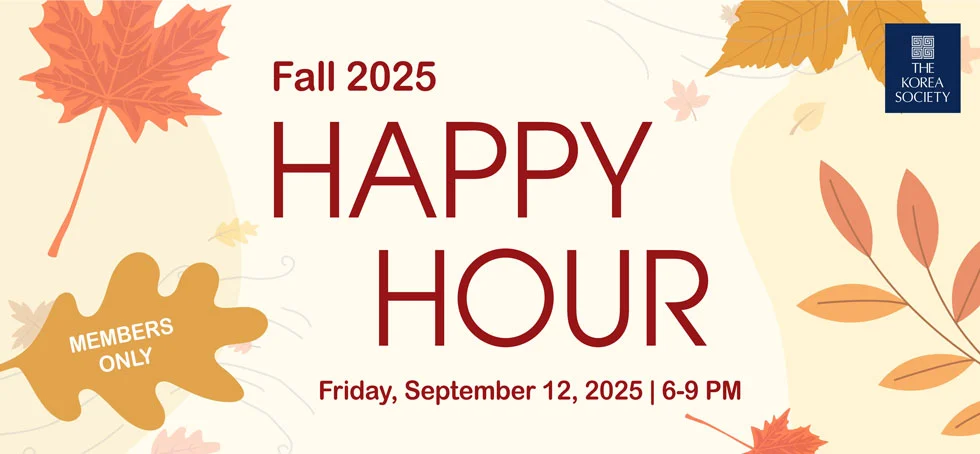
Fall 2025 Happy Hour

Join us for The Korea Society’s Fall 2025 Happy Hour!

Celebrate the new season with fellow members, partners, and friends at The Korea Society (350 Madison Ave, 24th Floor, New York, NY 10017) on Friday, September 12th at 6:00 PM. Enjoy drinks, good company, and crisp fall vibes on our beautiful outdoor terrace!

All attendees will receive two complimentary drink tickets, with refreshments generously provided by Asian- and Korean-owned small businesses.

Alcoholic beverages will be served only to guests 21 years of age or older.

Member Registration:

Reserve your spot by submitting the registration form below.

RSVP – Member Registration

Non-Member Registration:

Not a member yet? You can purchase a ticket below, and, if you decide to become a member during the event, we’ll apply your ticket cost toward your membership fee.

Tickets
 
 
Name
 
Email
 

Become a member or renew your membership today to join our community and stay up-to-date with our organization’s activities. Membership begins at the Individual Level ($50/year).


Our Sponsors


Jumo Soju

Makku

Yobo Spirit House

YOJU


The Korea Society
350 Madison Avenue, 24th Floor
New York, NY 10017


Riding the Momentum: How VCs Navigate Hype and Sustainable Growth

This edition of Startup Scene will explore one of venture capital’s most elusive forces: momentum. As the landscape rapidly shifts—from the rise and retreat of web3 and blockchain to today’s explosive AI wave—both founders and investors face a critical question: how do you tell the difference between short-lived hype and the kind of transformative momentum that drives lasting impact?

Join us for an exclusive presentation featuring three distinguished investors – Bryan Kim (Andreessen Horowitz), Mike Kim (Third Prime), and Karen Moon (Node Innovation Ventures) – as they each share their distinct investment philosophies and portfolio strategies. Together, their talk will offer a wide range of views into today’s ever-evolving startup landscape: from AI emerging technologies, to cross-border investments, and to innovations in consumer platforms. 

The conversation will be moderated by Danny Crichton (Lux Capital). 


This program is supported by Hanwha Life


Riding the Momentum: How VCs Navigate Hype and Sustainable Growth

Wednesday, September 3, 2025 | 6 PM (EDT)

The Korea Society
350 Madison Avenue, 24th Floor
New York, NY 10017


About the Speakers:


Bryan Kim (“BK”) is a partner at Andreessen Horowitz, where he invests primarily in consumer AI applications. He is particularly interested in how AI is reshaping consumer experiences across core themes such as productivity (ElevenLabs, Cluely, Raspberry), consumer health (Function Health, Slingshot AI), creation (Captions, Civit.ai, Glif, Viggle), and connection (BeReal, Partiful).

He is also actively exploring new categories and behaviors emerging at the frontier of consumer AI. BK serves on the boards of Captions and Partiful, and as a board observer at ElevenLabs and Function Health.

Prior to joining a16z, BK spent several years at Snap, where he helped scale the company through its hyper-growth and IPO. He built and led the growth and product operations teams, driving user expansion globally. He also scaled the finance team from zero to 70+ people and led several key milestones, including the IPO. As a founding member of the strategy team, he sourced and integrated major acquisitions such as Looksery (which powers Snap AR Lenses) and Bitmoji.

Earlier in his career, Bryan was CFO at Bungalow and a founding General Partner at Uncommon Projects, an operator-led seed fund. He began his career in investment banking at Credit Suisse, advising technology companies on M&A and capital markets transactions.

He holds a BA in Economics and International Relations from Carleton College and an MBA from Columbia Business School.


Mike Kim is a General Partner at Third Prime, where he primarily invests in vertical AI applications. He is particularly interested in the intersection of AI and various physical industries and has led investments across aerospace (Moonware), energy (Everstar), and advanced manufacturing (First Resonance). Prior to joining Third Prime, Mike was a partner and senior investment professional at Valinor Management, a multi-billion-dollar “Tiger Cub” investment firm, where he led investment activities across a number of industries including industrial technology. Prior to Valinor, Mike was a partner and senior investment professional at other leading, multi-billion-dollar, investment firms including UBS O’Connor, Suvretta Capital Management, and Trian Partners, originating and underwriting investments in public and private companies with a research-intensive, long-term orientation. Mike started his career as an investment banker in the Technology M&A group at Bank of America in New York, where he advised both public and private companies in the technology industry. Mike received his undergraduate degree, cum laude, from Georgetown University.


Karen Moon is a seasoned entrepreneur and investor with over 20 years of experience across retail and technology. Her expertise is at the intersection of data-driven consumer insights, AI, and human-centered design.

She is currently founding CCO at Spangle AI, an agentic AI startup optimizing shopping journeys for brands and retailers. Karen also co-founded, scaled, and sold a predictive analytics startup Trendalytics, which served industry-leading clients such as Revolve, Saks, Neiman Marcus, Shinsegae, Gap Inc., J.Crew, Levi’s, Urban Outfitters, Target, Ulta, Stitch Fix, Estée Lauder Companies, Zappos, and more. The company was also a Google Machine Learning Competition Finalist.

Karen has several years of experience as an investor and advisor in consumer brands and technology through Suttona Capital, Node, and Goode Partners. As an active advisor and investor, she has supported founders on go-to-market strategy, fundraising, hiring, and strategic partnerships. Her corporate advisory work with corporate executive teams and boards includes digital transformation and new business expansion opportunities. She began her career in Goldman Sachs’ TMT investment banking group, followed by roles in corporate strategy and new business development at Gap Inc. She holds an MBA from Harvard Business School and a BA from UCLA, where she graduated summa cum laude.


About the Moderator:

 
Danny Crichton analyzes science, technology, finance and the human condition as Partner, Research at Lux Capital, a venture capital firm investing in emerging and growth-stage science and technology ventures. Previously, he was managing editor at TechCrunch as well as a foreign correspondent based in Seoul, South Korea. He’s a Fellow at the Manhattan Institute in New York. For several years, he was an early-stage VC investor with General Catalyst in Palo Alto and Charles River Ventures in Boston and New York. After graduating Stanford with honors in Mathematical and Computational Sciences, he was awarded a Fulbright research scholarship to South Korea, where he investigated the country’s modern industrial policy for startup innovation. Danny is based in Brooklyn.


2026 Armistice Day Commemorative Reception

Program Brief

2026 Armistice Day Reception

In a reception commemorating the 73rd anniversary of the Korean War Armistice Agreement and celebrating the U.S.-ROK alliance, The Korea Society, in collaboration with the Korea Defense Veterans Association (KDVA) New York City Metro Area Chapter and the Consulate General of the Republic of Korea in New York, brought together veterans, policy leaders, and alliance supporters to honor the service and sacrifice of U.S. and Republic of Korea veterans.

The commemoration emphasized that the U.S.-ROK alliance extends far beyond diplomatic agreements, having been forged through shared sacrifice in the mud, snow, and blood of the battlefield. This relationship was historically exemplified by the partnership between Eighth Army Commander General James Van Fleet and General Paik Sun-yup, whose mutual respect laid the tactical and structural foundation for the modern Republic of Korea Army. As highlighted throughout the evening, the loss of thousands of American and Korean soldiers, including General Van Fleet’s own son, created an unbreakable bond.

Marking the anniversary of the Armistice Agreement signed on July 27, 1953, the evening reception provided an opportunity for reflection on the alliance’s historic achievements while reaffirming a shared commitment to its future.

This program was made possible by the generous support of the Korea Foundation, KDVA, the Consulate General of the Republic of Korea in New York, and The Korea Society’s individual and corporate members.

The program was covered by Voice of America. A video is available to view here. 

Key Takeaways

1. Peace Through Security and the Evolution of the Armistice

Consul General Sangho Kim framed the 1953 Armistice not as a permanent resolution, but as a provisional pause that granted South Korea the essential time required to rebuild from the ashes of war into a global democracy and economic powerhouse. While seven decades under a temporary ceasefire has carried immense economic burdens and persistent fears of renewed conflict, he argued that the responsibility of the present generation is to leverage the U.S.–ROK alliance, robust deterrence, and steady diplomacy to transition from mere containment toward a lasting treaty that permanently eliminates the fear of war on the Korean Peninsula.

2. The Frontline Reality and the Enduring Human Legacy of Combat

Korean War Marine veteran Jack Foley offered a grounded, personal perspective on the human cost and living legacy of the Korean War, recounting his 1951 deployment with the 1st Battalion, 5th Marines. Foley detailed the immediate, exhausting transition to frontline mountain combat, where troops endured months of constant vigilance without permanent shelter, paved roads, or basic amenities like clean uniforms. Beyond his battlefield service, Foley highlighted the profound personal bonds formed in the decades following the war. Serving in the New York City Police Department during the 1960s, his encounters with Korean immigrants routinely transformed into immediate, deep friendships rooted in mutual respect for his service which culminated in his upcoming official revisit to South Korea.

3. Preserving Memory and Mobilizing Modern Partnerships

Reflecting on the modern responsibilities of both nations, speakers from The Korea Society and KDVA framed veteran sacrifice as an ongoing “debt of duty” rather than a simple historical memory. General Chris Stockel and Korea Society Policy Director Jonathan Corrado noted that a strong US-ROK alliance remains essential for guaranteeing regional stability and economic growth in Northeast Asia. Honorably fulfilling the mission of Korean War veterans requires continuous, active coalition-building across government, veteran organizations, and civil society in both the United States and South Korea to ensure that historical courage continues to secure lasting peace and prosperity.


Korea Defense Veterans Association

Consulate General of the Republic of Korea in New York


Speaker

Sangho Kim

Consul General Sangho Kimof the Republic of Korea in New York. Consul-General Kim Sang Ho serves as the Consul-General of the Korean Consulate General in New York, a position he assumed in April 2026. Prior to his diplomatic appointment in New York, Consul-General Kim was actively involved in civic and national organizations, serving as a Board Member for the Citizen’s Coalition for Urban Future from 2024 to 2026 and as the Director General of the External Cooperation Bureau for the National Council for People’s Sovereignty from 2024 to 2025. From 2018 to 2022, he served as the Mayor of Hanam City in Gyeonggi Province. He served as the Vice Chair of the Policy Committee at the Central Headquarters of the Democratic Party of Korea from 2017 to 2018, which followed an eight-year tenure as an Advisor to a Member of the National Assembly for the Democratic Party of Korea from 2008 to 2016.

Speaker

Chris Stockel

Brigadier General (Ret.) Chris Stockel currently serves as the Korea Defense Veterans Association New York City Metro Chapter president. He is also the vice president of the Civil Affairs Association, senior U.S. civil military operations (CMO) advisor to the Korea Battle Simulation Center (KBSC). He commanded infantry, special forces, and civil affairs units, culminating at the one-star level as commanding general (CG) of the 351st Civil Affairs Command (CACOM) in Mountain View, CA and as the acting Combined Forces Command (CFC) C9 (civil affairs), Korea. As CG of the 351st, he was responsible for nearly all civil affairs operations in the INDO-PACIFIC. Previous to this, he was deputy commanding general, U.S. Army Civil Affairs & Psychological Operations Command (Airborne) and chief of staff (COS) of the 352nd CACOM. Before this, he was the commander of the civil military operations center (CMOC) and deputy COS strategic effects Operational Command Post (OCP) Third Army/ARCENT, Kuwait. He deployed twice to Iraq – once as a CA officer and later as the PAO for CJSOTF-AP. Other assignments included interagency duty with State counter-terrorism at Main State in the CT bureau, formerly S/CT, a joint assignment with USSOCOM, and Special Operations USEUCOM (SOCEUR). His training assignments, tours, and deployment postings included numerous European, Asian, Central American, Caribbean, East African, and Middle Eastern countries (including Egypt, Iraq, UAE, Jordan, Bahrain, Qatar, Lebanon, and Kuwait). He spoke at the Council on Foreign Relations focused on China, at AUSA LANPAC in Hawaii on HADR, and testified about Iraq before Congress to the House committee on State and Foreign Operations. Stockel earned a BA in Mathematics/Computer Science with a minor in German from Trenton State College including a year abroad at the Goethe University Frankfurt am Main, Germany and a Master’s Strategic Studies from the U.S. Army War College. He is a life member of the Council of Foreign Relations. While in uniform he held DoD language ratings in German, Arabic, and Spanish. He is ranger and special forces qualified. His numerous awards and decorations include the Distinguished Service Medal, Legion of Merit, Bronze Star Medal, Meritorious Service Medal, German Parachute Badge, Latvian Special Forces Parachute Badge, Indonesian Parachute Badge, and Cote d’Ivoire Parachute Badge.

Speaker

Jack Foley

Jack Foley enlisted in the United States Marine Corps following his graduation from high school in March 1951 at the age of 17. Jack completed recruit training at Parris Island before being transferred to Camp Pendleton in California for advanced infantry instruction. The training included rigorous Mountain Warfare exercises in the Sierra Nevada Mountains in preparation for deployment to Korea. Upon his return home in late November 1952, he was promoted to the rank of Marine Sergeant in the USMC and assigned to the 2nd Marine Division at Camp LeJeune, NC serving with the Weapons Company, 2nd Battalion, 2nd Marine Regiment. In May 1953, Jack was reassigned to Marine Corps Base Quantico, VA where he served as a Weapons instructor at the Officer Candidate School. Following this assignment, he returned to Camp LeJeune where he completed his service and was honorably discharged.

After Jack’s honorable discharge from active duty in 1955, he was accepted into the New York City Police Department where he began his career in law enforcement. Concurrently, he rejoined the Marine Corps as a reservist, ultimately serving a total of 25 years and retiring with the rank of Master Sergeant. During that time, he participated in specialized training programs including Desert Warfare training in the Mojave Desert, Jungle Warfare School in Panama, and Cold Weather training in Norway. In 1990, Jack continued his commitment to public service by joining the Lee County Sheriff’s Office in Fort Myers, Florida. He served proudly as a Deputy Sheriff and later retired with the rank of Police Sergeant.

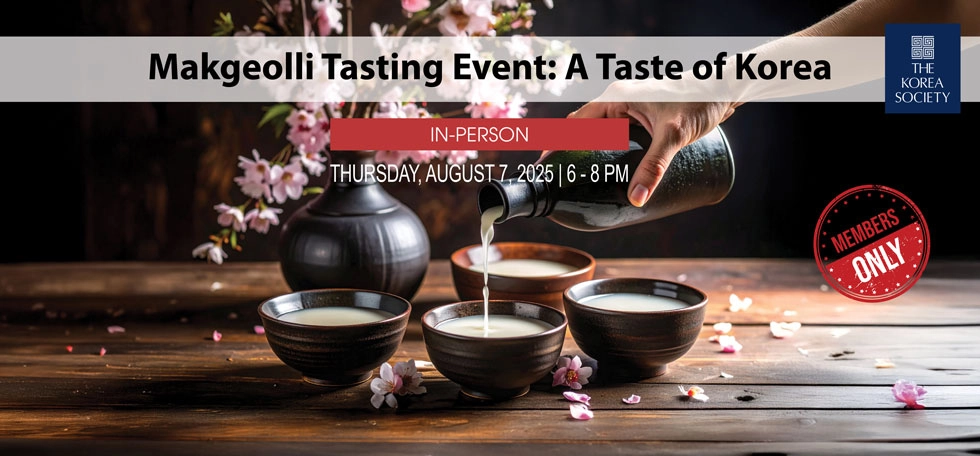
Makgeolli Tasting Event: A Taste of Korea

Join us at The Korea Society for a special evening celebrating makgeolli, Korean traditional rice wine, with tastings from some of New York’s leading makgeolli brands. Led by a certified makgeolli sommelier, this event will introduce the basic history of makgeolli, explore its unique varieties, and guide you through a curated tasting experience.

This event is open to guests 21+ only.

This event is at capacity and is no longer accepting registrations. 

Registration for Members

Become a member or renew your membership today to join our community and stay up-to-date with our organization’s activities. Membership begins at the Individual Level ($50/year).

If you are not a member of The Korea Society and would like to purchase tickets to attend this event, please click the box below. If you decide to become a member at this event, the cost of your ticket will be applied towards your membership fee.


Speakers


Paul Lee

Paul Lee Bio
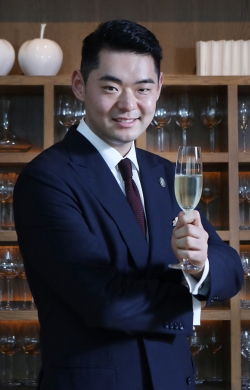
Paul is an award winning Sommelier with over 10 years’ experience managing and directing beverage programs for restaurants in Korea and the US. He is an Advanced Sommelier with the Court of Master Sommeliers and currently finishing his Master Sommelier Diploma, having passed the theory and practical portions of the exam. He was the 2019 Best Young Sommelier of Korea and also placed 4th place in the International Young Sommelier Competition. Paul is currently working as one of the Beverage Directors at Grill 23 & Bar, which has been awarded the Wine Spectator Grand Award (one of only 97 in the world) since 2017.

 
Paul is passionate about Korean food and Korean traditional spirits and has featured tasting menu pairings that highlight the unique flavors that they bring. 


Makku

Carol Pak Bio
Carol Pak started Sool (parent company of Makku) in 2017 with a mission to globalize Korean alcoholic beverages. Prior to Makku, she worked at ZX Ventures, a subsidiary of Anheuser Busch InBev – the largest beer company in the world, to lead the launch of a new alcoholic beverage brand in China. Carol is native New Yorker, with a Bachelor’s degree from the University of Michigan and an MBA from Columbia Business School. She was named by Food & Wine as 1 of 9 Drinks Innovators of 2023.

Makku Brand Intro
Founded in 2017, Makku is America’s first craft makgeolli, a traditional Korean alcohol made from rice. Brewed in Gapyeong, Korea, with all natural ingredients, Makku has a smooth and creamy body with soft bubbles and a hint of sweetness. Makku is gluten-free and vegan, with 6% alcohol. Available in 5 flavors: Original, Mango, Blueberry, Passion Fruit, Strawberry


Hana Makgeolli

Alice Jun Bio
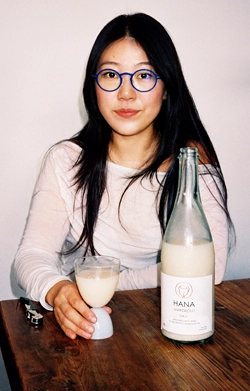
Alice Jun is a Korean American brewer and dedicated advocate for authentic Korean sool. She founded Hana Makgeolli to honor the dry and strong style of sool passed down to her by her father. Her work is grounded in the belief that traditional sool has the depth, in its history, artistry, and flavor, to be a globally respected and celebrated category.

Hana Makgeolli Brand Intro
Established in 2020, Hana Makgeolli was the first traditional Korean sool brewery in the US. Our journey began with a simple mission: to revive the artistry of traditional Korean brewing. From our Brooklyn brewery, we embrace time-honored methods, allowing each batch to ferment naturally over long periods and without interventions. Every pour is a testament to our passion for craftsmanship and culture.


SWRL

Inji Kim Bio
Inji Kim founded SWRL with a mission to reimagine Korean alcohol for a new generation of drinkers around the world. She studied classical music at Seoul National University and began her career in global marketing at Cheil Worldwide (Samsung), where she developed a deep understanding of creative development and consumer insight. Inspired by the untapped potential of Korea’s traditional drinks, she set out to create something entirely new. Through her work, she invites people to discover that the unexpected often tastes better—when they follow their curiosity.

SWRL Brand Intro
SWRL is the world’s first makgeolli seltzer—where Korea’s cloudiest drink meets modern sparkle.
Brewed traditionally in Yeongwol, Korea, and finished with a clean, modern twist, SWRL is a naturally fermented rice drink that’s zero sugar, gluten-free, 89 calories, and 3.7% ABV. It’s light and easy, with a touch of fizz and the creamy depth of rice at the bottom—yes, you swirl before drinking.

SWRL isn’t about preserving tradition as-is. It’s about asking, why not try something different? Because form matters—sometimes, changing it is what opens the door.


NY Makgeolli 

Heeyung & JuHo Kim Bio
Heeyung and JuHo Kim are the husband and wife team behind NY Makgeolli. Originally from a small farm in Miryang, JuHo grew up watching his grandmother brew makgeolli by hand, developing a lifelong connection to Nongju, the “Farmer’s Drink”. After immigrating to the US the couple opened a farm-to-table restaurant upstate NY, “Kim’s Farm Resort,” where they began making Makgeolli in-house as a part of the meal. 

Over the years they traveled to korea, refining their process through quiet exchanges between friends, family, and master brewers. Their brewing is guided by tradition, not in strict rules, but by “손맛”, the touch that gives things more than just flavor, but feeling.


NY Makgeolli Brand Intro
For over 10 years, NY Makgeolli has been brewing Saeng Makgeolli the traditional way, by hand in small batches, only using rice, water, and nuruk. Established in 2012, NY Makgeolli was the first commercial Makgeolli brewery in New York state, obtaining one of the earliest microbrewery and distillery licenses in the state. What began as an in-house brew, our saeng makgeolli reflects its rural Korean roots and farmer’s drink heritage – now carried into the fresh air, water, and soil of upstate New York. Our Makgeolli is still made the same way it began, as a quiet commitment to keeping tradition alive.  


South Korea’s New President and Prospects for U.S.-Korea Relations: A View From Former Ambassadors

 
Former U.S. ambassadors to South Korea and members of the board at The Korea Society were featured in a prominent discussion about South Korea’s newly elected president Lee Jae-myung for the Korea Economic Institute of America (KEI). Ambassadors Philip Goldberg (2022–2025), Harry Harris (2018–2021), and Board Chair Kathleen Stephens (2008–2011) analyzed the outcome of the election amidst deep political polarization and implications for the future of the U.S.-Korea alliance.


Unpacking South Korea’s Snap Presidential Election

Join us for a rapid reaction analysis of South Korea’s 2025 Presidential election. This snap election was triggered by the impeachment of South Korea’s 13th democratically elected president, Yoon Suk-yeol, after he declared martial law last December. This conversation unpacks the issues, the candidates, the voters, and the results, seeking to understand the domestic political undercurrents and consequences of a 60 day race occurring at a pivotal moment for Korea and U.S.-Korea relations. It features Dr. Aram Hur, the Kim Koo Chair in Korean Studies and Assistant Professor of Political Science at the Fletcher School, Tufts University, and Timothy W. Martin, the Korea bureau chief for The Wall Street Journal in Seoul, in conversation with Korea Society policy director Jonathan Corrado and policy program officer Chelsie Alexandre.

The Korea Society thanks our corporate sponsors and individual members and the Korea Foundation for their generous support, which has made this program possible.


Unpacking South Korea’s Snap Presidential Election

Wednesday, June 4, 2025 | 8 AM (EDT)


The Korea Society
350 Madison Avenue, 24th Floor
New York, NY 10017


About the Speakers:


Aram Hur is the Kim Koo Chair in Korean Studies and Assistant Professor of Political Science at the Fletcher School, Tufts University. Her research focuses on nationalism and democracy, with special attention to issues of identity, integration, and democratic support in East Asia. Professor Hur is the author of Narratives of Civic Duty: How National Stories Shape Democracy in Asia (Cornell University Press, 2022), which won the 2023 Robert A. Dahl Award for best book on democracy by an untenured scholar from the American Political Science Association. Her research appears in leading disciplinary journals such as the British Journal of Political Science, Comparative Politics, and Comparative Political Studies and is widely cited in domestic and international media. She was selected as the 2021 Sherman Emerging Scholar by The Korea Society, a 2018-19 CSIS US-Korea NextGen Scholar, and is the recipient of the 2023 Gold Chalk Award for Teaching from the University of Missouri. She holds a Ph.D. in Politics from Princeton University, an M.P.P. from the Harvard Kennedy School, and a B.A. with honors from Stanford University.


Timothy W. Martin is the Korea bureau chief for The Wall Street Journal in Seoul, overseeing the Journal’s coverage of North and South Korea.He previously wrote about Samsung from Seoul, but in prior stints at the Journal’s New York, Atlanta and Chicago offices, he covered Wall Street’s biggest buyers, painkiller addiction, airlines and food.