
New Thinking on Korea’s
Aging, Shrinking Society

Program Brief

New Thinking on Korea’s Aging, Shrinking Society

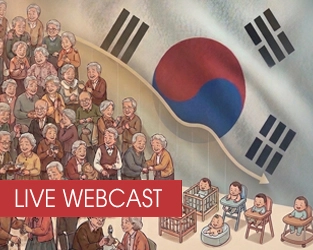
In a discussion on South Korea’s low birth rate and aging society, Professor Youngtae Cho, Director of the Population Policy Research Center (PPRC) at Seoul National University, challenged conventional narratives surrounding South Korea’s demographic decline. Rather than viewing a shrinking population as a critical crisis, Professor Cho reframed it as a unique window of opportunity to strategically build a more sustainable and resilient future.

This program was made possible by the generous support of the Korea Foundation and our individual and corporate members.

Key Takeaways

1. Hypercentralization in Seoul as a Fundamental Driver of Low Fertility

From an evolutionary perspective, Dr. Cho explained that when competition for resources becomes unsustainably intense, an organism’s instinct for individual survival overrides its instinct for reproduction. In South Korea, this survival trigger is directly tied to hypercentralization. More than 50 percent of the national population is concentrated in the Seoul metropolitan area, where economic opportunities are clustered. Coupled with the fact that 77 percent of 30-year-olds hold a college degree—the highest in the world—metropolitan areas have become dense, high-pressure environments where young people face a brutal daily battle for survival, leaving them with no financial or psychological capacity to marry or have children.

2. Quality Over Quantity

Dr. Cho refuted Elon Musk’s claim that South Korea’s low fertility rate would allow North Korea to easily invade by simply “walking across” the DMZ within three generations. He revealed through recent demographic simulations that North Korea’s population is facing its own severe, unmanaged decline; its annual births sit around 220,000 to 230,000, roughly equal to South Korea’s 250,000 births last year. Furthermore, Dr. Cho argued that assessing a nation’s future strictly by headcount is reductionist. South Korea’s historic post-war transformation into a global economic powerhouse was driven by massive leaps in individual human capability and resilience, qualities that numbers alone cannot capture. Dr. Cho encouraged a perspective that looks beyond the population number to additionally consider “APC,” which means age, period, and cohort.

3. The Extreme Reality of Social Aging and Shifting Median Age

Dr. Cho emphasized that a shifting age structure fundamentally transforms a nation into an entirely different world, an evolution best captured by the relentless rise of South Korea’s median age. Historically, this metric dictated the baseline for cultural maturity; in 1994, the median age was a youthful 29, meaning that turning 30 marked a sudden, high-pressure threshold into full adult responsibility. Today, that midpoint has skyrocketed to 46 and by 2054, the median age in Korea will be around 60 years old. This unprecedented shift means institutions, legal frameworks, and economic systems must be completely reinvented to function in a society where the statistical average age shifts substantially.

4. Demographic Solutions for Corporate Talent Pipelines

Dr. Cho asserted that treating population decline as an automatic economic death sentence is a mistake. By looking at demographics through the multi-dimensional “APC” lens (Age, Period, Cohort), businesses can uncover massive expanding global markets and pivot their strategies. In a notable case study, one company faced high resignation rates among its newly recruited elite workforce despite offering top-tier salaries and welfare benefits. Dr. Cho’s research identified a distinct demographic mismatch: 49% of Koreans born in 1990 and 51% born after 2003 are Seoul natives, thus structurally addicted to the capital’s infrastructure. Forcing them to work consecutive years at regional plants hours away created an exhausting, unsustainable weekend travel loop. Acting on Dr. Cho’s advice, the company introduced a bi-weekly 4-day work week in 2024, reversing attrition rates among their young talent.


Speaker

Dr. Youngtae Cho

Dr. Youngtae Cho is a professor of demography at the Graduate School of Public Health, Seoul National University, and director of the SNU Population Policy Research Center. He received his Ph.D. in sociology (specialized in demography) from the University of Texas at Austin in 2002. His research focuses on fertility transitions, demographic change, and their impacts on social and economic structures in East and Southeast Asia. He is the author of several books for general public and has played a leading role in enhancing population literacy in Korea. Through media, public speaking, and policy consultation, Cho reframes demographic shifts not as crises, but tools for building a more sustainable and proactive future.
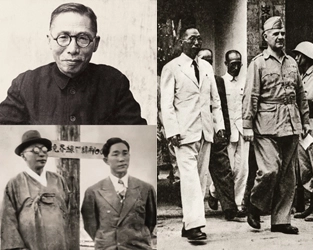
Commemorating the 150th Anniversary of Kim Koo’s Birth: Exhibition Opening & Presentation

Program Brief

Commemorating the 150th Anniversary of Kim Koo’s Birth

UNESCO officially commemorated 2026 as the 150th anniversary of the birth of Kim Koo, honoring his foundational conviction that culture is the ultimate engine of national development, human happiness, and international peace. To mark this significant milestone, The Korea Society, in partnership with the Association of Commemorative Service for Patriot Kim Koo and the Kim Koo Foundation, hosted a landmark presentation and exhibition opening titled “Kim Koo: Dreaming of Peace through the Power of Culture.” This momentous occasion brought together senior policy and civic leaders to celebrate Kim Koo’s enduring legacy and reflect on the growing maturity of the U.S.–Republic of Korea (ROK) alliance.

The event also celebrated the 11th anniversary of the Kim Koo Professional Series at The Korea Society. Over the past decade, this impactful initiative has empowered a network of over 200 fellows spanning policy, corporate industry, media, nonprofits, and academia to strengthen U.S.-Korea relations and promote peace and prosperity in Northeast Asia.

This program was produced in partnership between The Korea Society and The Association of Commemorative Service for Patriot Kim Koo and made possible by the support of the Kim Koo Foundation.

Key Takeaways

1. The Boundless Power of Culture as a Global Engine

Kim Koo wrote in his seminal essay My Wish: “The one thing I desire without limit is the power of a great culture. For the power of culture makes us happy and goes on to bring happiness to others.” Speakers highlighted how this profound vision has dynamically materialized in the modern era. From the global dominance of K-Pop and multi-Tony Award-winning Broadway adaptations like Maybe Happy Ending to Netflix chart-toppers, Korea’s soft power has emerged as a universal bridge for cultural exchange and lasting international peace.
2. Historical Precursors to the Modern ROK-U.S. Alliance

Beyond his revolutionary leadership within the Provisional Government of Korea, Kim Koo’s legacy resonates deeply as a visionary diplomat. His historical foresight led to early, critical collaborations with the U.S. Office of Strategic Services (OSS) on the “Eagle Project.” This initiative served as a vital foundational precursor to the formal institutionalization of the modern ROK-U.S. alliance, which has now matured into a comprehensive strategic partnership encompassing defense, trade, cutting-edge technology, and shared values of freedom and the rule of law.

3. Diplomatic Equality, Dignity, and National Unity

Kim Koo long advocated for bilateral relations rooted strictly in mutual dignity, a sentiment captured in a handwritten calligraphy scroll gifted to the late diplomat and scholar Gregory Henderson that reads: “Let Korea and the United States help one another in friendship and as equals.” His sacrifice and courage established a roadmap proving that a nation’s true strength is not merely measured by military or raw economic might, but by the character, resilience, and unified purpose of its people. This vision underpins the modern democratic advancements that allow contemporary leaders to address global challenges from a position of equal partnership and mutual respect.


Congratulatory Remarks:

Her Excellency Kang, Kyung-wha, Ambassador Extraordinary and Plenipotentiary of the Republic of Korea to the United States of America

Kang, Kyung-wha was appointed Ambassador Extraordinary and Plenipotentiary of the Republic of Korea to the United States of America by President Lee, Jae Myung in October, 2025. Prior to her appointment, Ambassador Kang served as Minister of Foreign Affairs from 2017-2021 under President Moon, Jae-in. Between April, 2024 and September, 2025 she served as President and Chief Executive Officer of Asia Society in New York. During her varied and distinguished career in public service, Ambassador Kang served as Secretary for International Relations in the Office of the Speaker of the Korean National Assembly and as Senior Advisor and Principal Speechwriter to the Foreign Minister and Principal Interpreter to the President of Korea. She was also Director-General for International Organizations at the Ministry of Foreign Affairs and Trade of the Republic of Korea. At the United Nations, she was Deputy High Commissioner at the Office of the High Commissioner for Human Rights, Deputy Emergency Relief Coordinator and Assistant Secretary-General at the United Nations Office for the Coordination of Humanitarian Affairs, Chief of the Transition Team for the 9th United Nations Secretary-General-elect and later his Senior Advisor on Policy. Earlier in her career, Ambassador Kang worked for the English Section of Radio Korea International of the Korean Broadcasting System (KBS), served as Assistant Professor at Cleveland State University in Cleveland, Ohio and was active in several women’s organizations in Korea. She was affiliated with Ewha Women’s University as Distinguished Professor Emeritus (Sept. 2022 – Feb. 2023) and is Honorary Professor at the Institute for Global Engagement and Empowerment at Yonsei University since September, 2023. Ambassador Kang has a Bachelor’s Degree in Political Science and International Studies from Yonsei University, and both a Master’s Degree and Doctorate in International/Intercultural Communication from the University of Massachusetts at Amherst. She is married with three children.

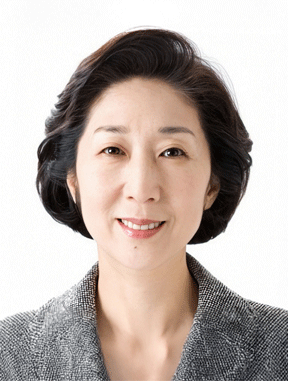
Dr. Kim Mee is a distinguished Korean philanthropist and civic leader. She currently serves as Chairperson of the Kim Koo Foundation, established to honor the legacy of her grandfather, Kim Koo—one of Korea’s most revered independence leaders. The Foundation advances educational and cultural initiatives both in Korea and internationally, continuing Kim Koo’s lifelong commitment to public service and national identity. Dr. Kim has dedicated her career to advocating for social equity and civic engagement. Her work spans a range of critical issues, including women’s rights, child welfare, healthcare access, education, the arts, and civil diplomacy. Dr. Kim is a board director for The Korea Society. She previously served as Chairperson of Women’s News, a leading Korean newspaper focused on women’s issues and social justice. She also holds board positions at the Fletcher School at Tufts University, Midwest Young Artists, and Lake Forest Academy, where she is a Life Trustee. Dr. Kim is the granddaughter of Kim Koo, Premier of the Korean Provisional Government (KPG) and a central figure in Korea’s independence movement. She is also the daughter of General Kim Shin, a pioneering military leader and a senior government official. Dr. Kim is married to Kim Ho Youn, Chairman of Binggrae Co., Ltd., a leading Korean food and beverage company.

Presenter:

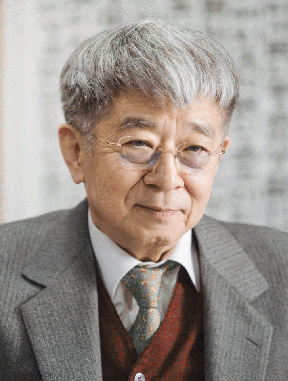
Dr. Han Kyung-Koo was the Secretary-General of the Korean National Commission for UNESCO from December 2020 to December 2024. As a cultural anthropologist trained at Seoul National University (M.A.) and Harvard University (Ph.D.), Dr. Han taught anthropology at Kangwon National University and helped develop the Division of International Studies at Kookmin University as its dean. In 2009, he joined the newly founded College of Liberal Studies of Seoul National University and served as its dean. Dr. Han also served as a member of the Korean National Commission for UNESCO, the Policy Planning Committee of the Korean Federation for the Environmental Movement, and the Presidential Commission on Sustainable Development. He has also served on the editorial boards of the Korea Journal, Sahoewa Yeoksa (Society and History), and Cross-Currents: East Asian History and Culture Review. He was also the Editor of Hanguk Munhwa Inryuhak (Korean Cultural Anthropology) and the Korean Social Science Journal. Dr. Han was President of the Korean International Migration Studies Association, the Korean Society of Education for International Understanding, and the Association for the Studies of Korean abroad, as well as Vice President of the Korean Society for Cultural Anthropology, and the Korean Association for Environmental Sociology.

The Promised Republic:

Program Brief

The Promised Republic

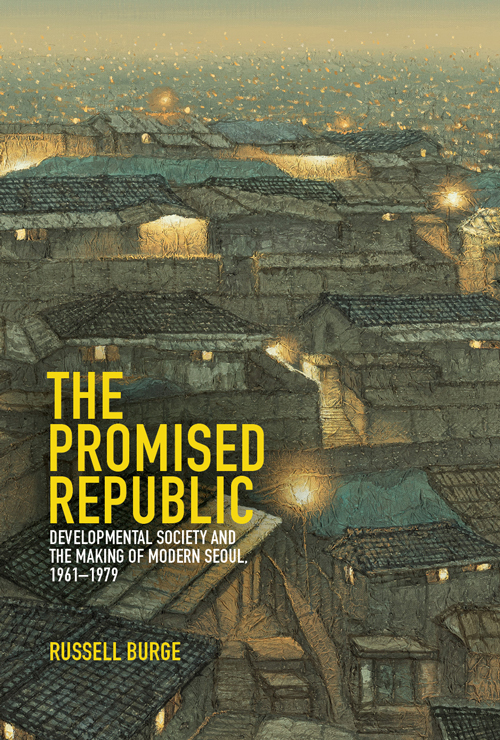
During a discussion of his book, The Promised Republic: Developmental Society and The Making of Modern Seoul, 1961-1971, Dr. Russell Burge challenged elite-driven narratives of South Korea’s “Miracle on the Han” by demonstrating how the urban poor in Seoul’s shantytowns (panjachon) actively shaped developmental politics through a rich archive of memoirs, interviews, and photographs.

This program was hosted by the Korea Society as part of the Kim Koo Professional Series.

Key Takeaways

1. Bottom-up Agency Versus the Elite-Driven Narrative

Dr. Burge observed that the prevailing understanding of South Korea’s economic miracle overlooks the marginalized communities that helped drive developmental politics. Focusing on the urban poor in Seoul’s panjachon, or shantytowns, his research revealed that mass urban migration was primarily driven by the structural fallout of post-colonial land reform, rather than simple wartime instability. Land reform failures shattered the traditional rural safety net, pushing millions into cities as they faced heavy state taxes and plummeting grain prices driven by imports. These urban migrants became day laborers who physically built the nation’s infrastructure while actively resisting state efforts to demolish their homes.

2. The Political Weaponization of Populist Promises

A central dynamic of Korean urban politics in the 1960s and 1970s was the tension between populist and disciplinary developmentalism. During election cycles, the ruling party secured votes from shantytown residents by appealing to populist sentiments and using extra-legal promises, such as Mayor Kim Hyonok’s 1967 housing amnesty pledge. When the state backtracked, shantytown communities mobilized around these broken pledges, weaponizing the state’s own populist rhetoric to claim a moral right to their land and extract structural concessions.

3. Joint Redevelopment and the Division of Owners and Renters

Under the authoritarian Yushin regime of the 1970s, the state shifted its tactics from targeting shantytowns for being illegal to condemning them as economically inefficient. This paved the way for the 1980s mechanism of joint redevelopment, a corporate model that successfully aligned the interests of the government, construction corporations, and local property owners into a cooperative profit-sharing system. This system successfully co-opted corporations and shanty owners, but systematically excluded propertyless renters, fracturing social cohesion and triggering intense urban resistance on the eve of the 1988 Seoul Olympics.


About the Speaker:

Russell Burge is Korea Foundation Assistant Professor of Korean History at Indiana University Bloomington. He holds a B.A. in Art History from UCLA, an A.M. in Regional Studies East Asia from Harvard, and a Ph.D. in History from Stanford. Prior to starting at IU Bloomington, he was a Council on East Asian Studies postdoctoral associate at Yale University.

Assessing North Korea’s
Developing Nuclear Program

Program Brief

Assessing North Korea’s Developing Nuclear Program

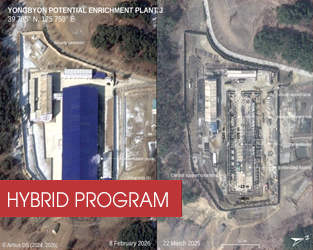
In our discussion assessing the latest developments of North Korea’s nuclear program, Open Nuclear Network (ONN) Senior Analyst Sarah Laderman challenged conventional wisdoms regarding the DPRK’s nuclear capabilities and described how the Kim Regime balances its fissile material supply against strategic weaponization demands.

This program was made possible by the generous support of the Korea Foundation and The Korea Society’s individual and corporate members.

Key Takeaways

1. North Korea Is Shifting Toward Routinized Force Development with a Projected Arsenal Expansion by 2034

Laderman noted that by the end of 2034, North Korea could produce between 23–47 strategic warheads using plutonium and 173–228 tactical warheads using highly enriched uranium. North Korea’s ambitious goals point to a posture that could exceed defensive needs. A number of factors, both technical and strategic, will affect the overall production. While uranium supplies remain plentiful for tactical weapons, plutonium remains highly prized for strategic miniaturization and sophisticated designs like multiple independently targetable reentry vehicles (MIRVs).

2. Remote Monitoring Has Advanced Through New Technology, but Weaponization Remains a Distinct “Black Box”

Advances in open-source intelligence (OSINT) have fundamentally transformed how we monitor North Korea’s nuclear capabilities, yet a critical verification gap remains. While commercial satellite technologies can now easily bypass weather and camouflage—using advanced radar to pierce cloud cover, thermal imagery to detect active reactor operations, and AI to map vehicle traffic patterns—this transparency stops short of the final weaponization phase. The resulting intelligence picture is highly uneven: the international community can track large, fixed infrastructures, but the actual assembly of nuclear warheads remains entirely opaque. Because the regime effectively utilizes nondescript buildings and extensive underground mountain tunnels, advanced satellite sweeps have failed to locate a single definitive site for plutonium or uranium pit production. Despite better visibility through open source tools overall, Pyongyang’s most valuable strategic assets remain successfully hidden from foreign observation.

3. To Take Advantage of Open Source Monitoring Tools, a Future Arms Control Policy Could Prioritize Plutonium Over Uranium

Laderman highlighted a core policy dilemma: some of the most strategically valuable assets to eliminate are the hardest to remotely verify. Because on-the-ground international inspections have not occurred in nearly two decades, any realistic opening salvo for an arms control agreement or selective freeze must rely on remote observation. According to Laderman, policymakers could therefore focus initial negotiation priorities on freezing plutonium production rather than highly enriched uranium (HEU). While HEU enrichment efficiency and locations are easily hidden, plutonium relies on distinct, fixed reactor profiles and reprocessing infrastructure, making it the most practical, monitorable, and strategically impactful target for containment.


About the Speaker:

Sarah Laderman is a Senior Analyst for Open Nuclear Network, a PAX sapiens programme, in Vienna, Austria, where she focuses on open-source and technical analyses of nuclear programmes. She is currently focused on the DPRK’s nuclear weaponisation capabilities. She has previously worked at the International Atomic Energy Agency, Lawrence Livermore National Laboratory and the US Department of Defense. Sarah received her MSc in Nuclear Engineering and Masters in Public Policy from the University of California, Berkeley, and her BSc in Nuclear Science and Engineering and Political Science from the Massachusetts Institute of Technology. She is currently a doctoral candidate in Political Science at the University of Vienna.

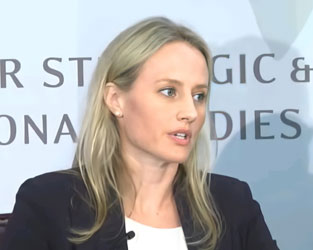
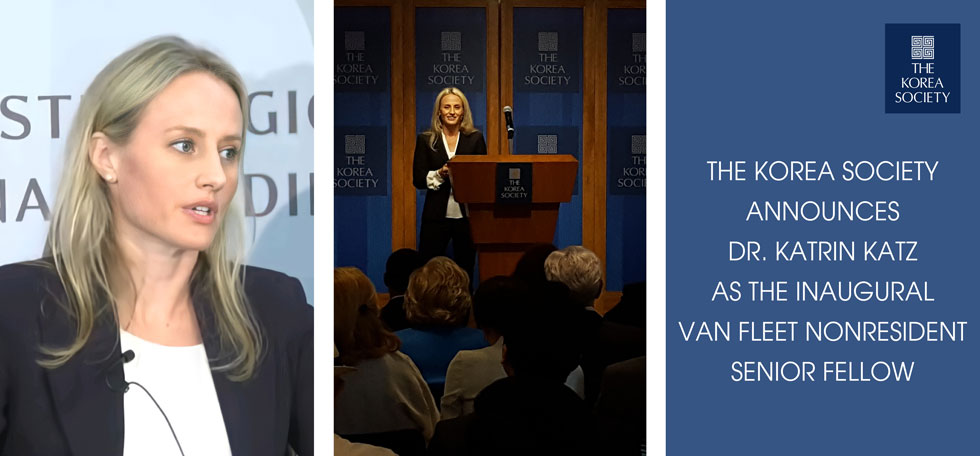
The Korea Society announces Dr. Katrin Katz as the inaugural Van Fleet Nonresident Senior Fellow

The Korea Society announces Dr. Katrin Katz as the inaugural Van Fleet Nonresident Senior Fellow

The Korea Society announces Dr. Katrin Katz as the inaugural Van Fleet Nonresident Senior Fellow

The Korea Society is proud to announce Dr. Katrin Katz as the inaugural Van Fleet Nonresident Senior Fellow. Dr. Katz was the inaugural recipient of the Sherman Family Korea Emerging Scholar Award in 2017, and has served as an expert speaker for the Kim Koo Professional Series and Korea Society public policy programs. With a wealth of practical policy experience and academic knowledge, Dr. Katz helps the Society to set a high bar as the very first Van Fleet Nonresident Senior Fellow. We warmly welcome her to our team.

The Korea Society
350 Madison Avenue, 24th Floor
New York, NY 10017


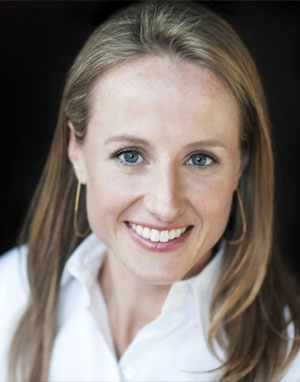
Dr. Katrin Fraser Katz is The Korea Society’s inaugural Van Fleet Nonresident Senior Fellow. Dr. Katz is a former director for Japan, Korea, and oceanic affairs on the staff of the National Security Council, where she served from 2007 to 2008. Previously, she was a special assistant to the assistant secretary for international organization affairs at the U.S. Department of State and an analyst at the Central Intelligence Agency. She currently also serves as an Adjunct Fellow (Non-resident) in the Office of the Korea Chair at the Center for Strategic and International Studies (CSIS) in Washington, DC. She was previously an Adjunct Assistant Professor in the Department of Political Science at Columbia University and has also taught at Georgetown University. In 2017, Dr. Katz received the inaugural Sherman Family Korea Emerging Scholar Lecture Series award from The Korea Society. Dr. Katz’s research, which has been supported by grants from the Korea Foundation and the Horowitz Foundation for Social Policy, explores the interplay of cooperation and conflict in East Asia’s political, economic, and security dynamics. She holds a Ph.D. in political science from Northwestern University; a master’s degree in East Asian and international security studies from the Fletcher School of Law and Diplomacy, where she was awarded the John C. Perry Scholarship for East Asian Studies; and a bachelor’s degree, magna cum laude, in international relations and Japanese from the University of Pennsylvania.


Privileged but Powerless:

Program Brief

Privileged but Powerless

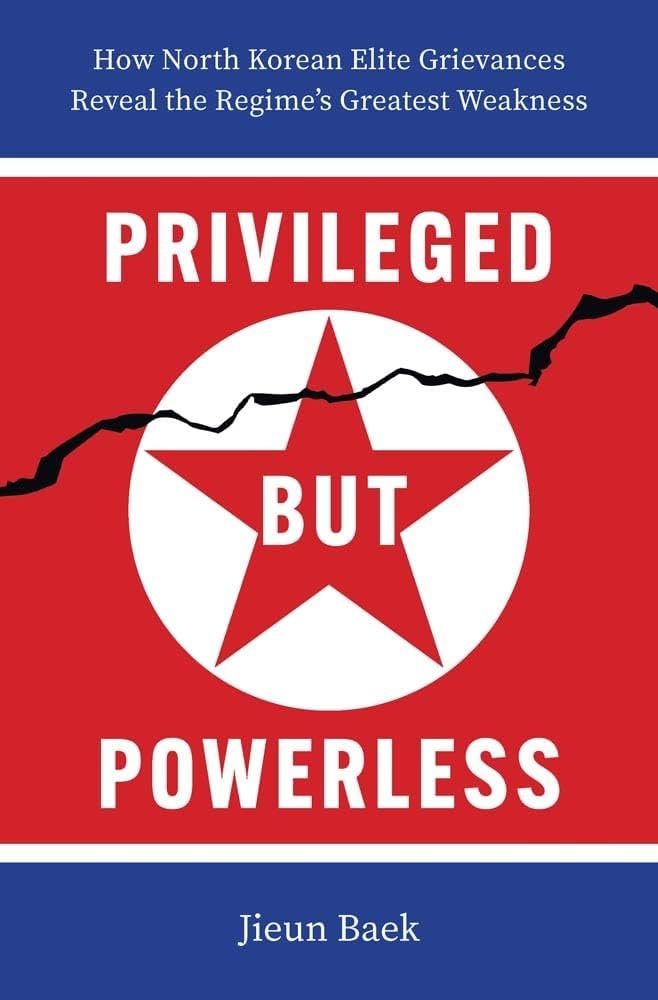
Dr. Jieun Baek described the complex psychological drivers impacting North Korea’s 100,000 political elites in a discussion of her new book, Privileged but Powerless: How North Korean Elite Grievances Reveal the Regime’s Greatest Weakness. Mobilizing hundreds of hours of interviews with high-level escapees, Dr. Baek argued that the elites’ performative loyalty is born out of fear, obscuring a critical vulnerability within the regime’s core support base. Ultimately, the very officials who seem most invested in preserving North Korea’s status quo may become its most dangerous disruptors—driven not by ideology, but by simmering resentment and vanishing alternatives.

This program was hosted by the Korea Society as part of the Kim Koo Professional Series.

Key Takeaways

1. Performative Loyalty as a Mask for Survival

Dr. Baek explained that North Korea’s elite face severe cognitive dissonance, masking deep internal doubts with outward performative loyalty. This hyper-vigilant behavior represents an extreme case of preference falsification, where the most outwardly compliant individuals are actually masking a volatile vulnerability born of fear and self-preservation. To handle the immense mental burden of maintaining this cognitive dissonance, some embrace escapist vices. Additionally, because expressing anger toward Kim Jong-un is fatal, elites psychologically cope with systemic failures by shifting the blame downward, venting their frustrations onto mid-ranking managers instead.

2. The Continuum of Action

According to Dr. Baek, when confronted with their grievances, North Korean political elites operate along a strict behavioral continuum ranging from passive compliance to radical change. The most common and rational choice for individual self-preservation is to simply do nothing and maintain the status quo, which can be accompanied by small acts of adjustment that introduce micro-variations into their daily lives while they maintain their required performative loyalty. For those who decide the pressure is completely intolerable, exit via defection provides a definitive escape, a phenomenon that has increased under Kim Jong-un’s regime. The most distant and difficult choice on the spectrum is to push for reform by attempting to lobby for incremental policy or economic changes from within, though this option remains the furthest from practical reality.

3. Structural Barriers to Collective Action and Individual Survival Tactics

Dr. Baek addressed why covert coups or mass uprisings fail to materialize, pointing to the regime’s engineering of total social atomization, which creates a pervasive culture of mutual distrust where elites never know who is incentivized to report on them. Because collective action is functionally impossible, she noted that the most rational choice for an elite member is to maintain the status quo or intentionally aim for a middle-ground professional tier. This “sweet spot” position is successful enough to provide foreign currency and market luxuries for their families, but quiet enough to avoid shining too brightly and attracting unwanted attention from ambitious rivals.


About the Speaker:

Jieun Baek is an adjunct faculty member at the University of Oxford’s Blavatnik School of Government and a nonresident senior fellow at the Atlantic Council. She is the author of North Korea’s Hidden Revolution and Privileged but Powerless, and researches elite discontent and regime instability in authoritarian states, particularly North Korea and Burma.

Korean Messiah

Program Brief

Korean Messiah

In the launch event for Korean Messiah, Wall Street Journal China Bureau Chief Jonathan Cheng challenged conventional thinking around North Korea and described the surprising, enduring influence of American Presbyterian Christianity on Kim Il Sung’s cult of personality.

This program was hosted in collaboration with The Center for Korean Research at the Weatherhead East Asian Institute at Columbia University.

Key Takeaways

1. Pyongyang’s Religious History as the “Jerusalem of the East”

Cheng revealed that before Pyongyang became the capital of the Democratic People’s Republic of Korea (DPRK), it was the epicenter of Christian missionary activity in Asia. Kim Il Sung was born and raised in a deeply religious environment, even serving as a Sunday school teacher and an organist in the church.

2. Kim Il Sung Utilized Elements of His Religious Upbringing to Build His Personality Cult

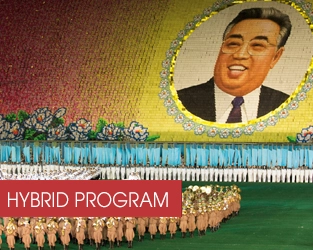
Cheng argued that although Kim Il Sung eventually became hostile toward organized religion, he was fundamentally shaped by his childhood in the church. The regime effectively repurposed Christian mythology, supernatural narratives, and organizational structures—such as mass study halls—to establish a personality cult that portrays the Kim family as messianic, divine figures to whom the population must show absolute devotion.

3. Historical Insights into the North Korean Regime’s “Otherness”

Both Cheng and author Barbara Demick, who joined for the conversation, emphasized that North Korea is often viewed as a hermetically sealed, incomprehensible “other.” However, by examining the historical roots—including the influence of American missionaries and the movement of people in Manchuria—the book demonstrates that the North Korean state is not a vacuum. It is a product of its history and global influences, highlighting the importance of understanding these origins to grasp the reality of life for the 25 million people living there today.

This program is co-hosted by The Center for Korean Research at the Weatherhead East Asian Institute at Columbia University.


About the Speakers:

Photo credit: Gilles Sabrie
Jonathan Cheng is the China bureau chief for The Wall Street Journal, and was previously the Korea bureau chief, running coverage of the Korean peninsula, including politics and society in both North and South Korea. A native of Toronto, he lives in Beijing. He has traveled to North Korea twice.
Barbara Demick is author of Nothing to Envy: Ordinary Lives in North Korea and Logavina Street: Life and Death in a Sarajevo Neighborhood and the recently released Eat the Buddha: Life and Death in a Tibetan Town, published by Random House in July 2020. She was bureau chief for the Los Angeles Times in Beijing and Seoul, and previously reported from the Middle East and Balkans for the Philadelphia Inquirer.

America’s Taiwan Dilemma:

Program Brief

America’s Taiwan Dilemma

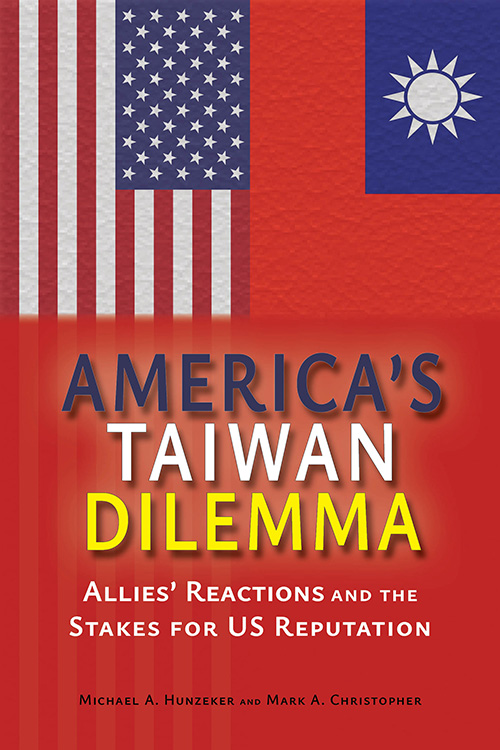
During a discussion regarding his newest book, America’s Taiwan Dilemma: Allies’ Reactions and the Stakes for US Reputation, Mark Christopher argued that Washington policymakers often project their own assumptions onto allies. For instance, U.S. officials believe that allies demand a military defense of Taiwan to preserve America’s reputation. However, through interviews with over 100 regional experts, Christopher challenged this narrative by detailing how South Korea, Japan, and Australia actually perceive Taiwan conflict risks and the reliability of US security commitments.

This program was hosted by the Korea Society as part of the Kim Koo Professional Series.

Key Takeaways

1. Reliability Matters More Than Reputation

Christopher observed that while U.S. policymakers prioritize defending Taiwan to preserve a “reputation” for resolve, regional allies focus primarily on “reliability.” He defines reputation as a backward-looking assessment of past actions, whereas reliability is a forward-looking measure based on current military capability. Allies fear that if a U.S. intervention in Taiwan exhausts American military resources or political will, Washington may become unable to fulfill specific treaty obligations to Japan or South Korea. U.S. involvement in Taiwan may actually weaken alliance reliability if it leaves the U.S. military less capable of providing protection elsewhere.

2. Regional “Realpolitik” and the Lack of Alternatives

Christopher’s research suggests that if China initiates a conflict, America’s allies will likely be pushed closer to the United States regardless of the immediate outcome. Interviewees described a stark power reality: allied nations like Japan and Korea do not wish to acquiesce to Chinese regional hegemony, but lack the individual capability to hold off China. Without a viable alternative, allies are left with no realistic choice but to maintain and strengthen the U.S. alliance, even if a Taiwan contingency results in anger or mistrust toward Washington.

3. South Korea’s Unique “Shrimp among Whales” Dilemma

Unlike Japan or Australia, South Korea does not view Taiwan as a core national security imperative because it faces the existential threat of North Korea. Experts in Seoul expressed concern that a Taiwan conflict would invite North Korean aggression or trigger Chinese economic and military retaliation on the Peninsula. Consequently, Seoul will likely “thread the needle,” seeking to maintain its alliance with the U.S. while avoiding direct combat operations in Taiwan to ensure its long-term coexistence with its permanent neighbor in close geographical proximity, China.

The book is available for sale here

Use the coupon code SAVE20 for a 20% discount on print editions.


About the Speaker:

Mark A. Christopher is an independent risk consultant and a nonresident fellow at the Taiwan Security Monitor. He holds a bachelor’s degree from the Georgetown School of Foreign Service and an MPA from the Princeton School of Public and International Affairs. He previously studied at Peking University, Nanjing University, and Taiwan National Chengchi University. His writing has appeared in Foreign Affairs, Foreign Policy, the Jamestown Foundation’s China Brief, Defense One, and the Wall Street Journal.

Spotlight: Resources on Korea and U.S.-Korea Relations

Join us for a virtual tour of archival resources about Korea and U.S.-Korea relations available for virtual and U.S.-based researchers. This discussion highlights a diverse array of both longstanding and emerging collections, providing a wide survey of available historical resources. How can educators, researchers, historians, writers, and students best take advantage of this treasure trove of materials? What stories await and what impact can they have? What are some tips and tricks from librarians, center directors, and archivists?

Participating resource centers include: the new Van Fleet Digital Archive, The University of Wisconsin-Madison Center for East Asian Studies U.S.-Korean Relations Collection, The Library of Congress Korean Collection, and The Harry S. Truman Library and Museum. This program is jointly produced by the Policy and the Education teams. Featuring: Dr. David Fields, Associate Director of the Center for East Asian Studies at University of Wisconsin-Madison, Joe McChristian, Jr. President of The Van Fleet Foundation, Dr. Sam Rushay, Supervisory Archivist at the Harry S. Truman Library and Museum, and Dr. Elli Kim, Korea Reference Librarian Asian Division at The Library of Congress.

This program is made possible by the generous support of the Korea Foundation and our individual and corporate members.


Spotlight: Resources on Korea and US-Korea Relations

Wednesday, April 8, 2026 | 8 AM (EDT)


CollectionsSpeakers


The University of Wisconsin-Madison Center for East Asian Studies: U.S.-Korean Relations Collection

This collection contains a digital facsimile of records held by the United States National Archives and Records Administration (NARA) related to relations between the United States and the Korean peninsula, 1882-1963. Most of the records in this collection come from Record Group 59, the Central Files of the United States Department of State, but Record Groups 43 and 333 are also represented. The records in this collection were selected on the basis that they had already been microfilmed by NARA and so could be digitized efficiently. While some of these records have been available at major universities on microfilm for decades, the goal of this collection was to make all of NARA’s Korea-related microfilm publications available in one place, and to all interested researchers, regardless of whether they had access to a major research library.


The Van Fleet Digital Archive

General James Alward Van Fleet was the Commander of all Allied Ground Forces in the Korean War, 14 April 1951 – 12 February 1953. Korea honors him as the Father of the Korea Military Academy and the Father of the Republic of Korea Army. He was a Founder & first President of the Korea Society. He loved Korea as his second home until his death at the age of 100 in 1992.

Throughout his life, General Van Fleet kept extensive personal records of correspondence, documents, photos and memorabilia, all of which he donated to the George C. Marshall Foundation. The collection of some 150,000 documents and several thousand photos occupies more than 80 feet of shelf space in their vaults. 

The Van Fleet Foundation has just completed a project to digitize this entire archive. It is now freely accessible over the Internet to anyone in the World for research at https://vanfleetfoundation.org/archive/#search.

We have developed proprietary artificial intelligence systems for both the storage of digital files and for the free form search and retrieval of information.

Queries can be submitted in English or in Korean. Answers to queries will be provided as a summary of available information with an attached bibliography of the original source files for the answer, ranked in order of relevance to the query. Queries in English will receive a summary answer in English. Those in Korean will get a summary answer in Korean. Source documents will be in their original languages. They can be downloaded and then translated.


The Library of Congress Korean Collection

The systematic collection of Korean materials at the Library of Congress began in earnest with the outbreak of the Korean War in 1950. Despite this relatively late start, the Library’s Korean collection is now the largest and most comprehensive outside of East Asia. The collection primarily comprises publications from the 20th century to the present but also holds a number of valuable pre–20th century publications in traditional formats. It covers all subject areas, from the arts and humanities to the social and natural sciences, and also includes Korean diaspora publications from around the world. The Library’s commitment to acquiring materials from North Korea has resulted in an internationally recognized collection that has served as a vital resource for researchers from various disciplines.


The Harry S. Truman Library and Museum

Harry Truman donated his Presidential papers to the American people to be preserved at the Truman Library. He envisioned this Library as a place where people of all ages could study the American Presidency and government. The Library’s collections continue to grow, with new acquisitions regularly added to the holdings. Researchers, curators, educators and others use materials including original documents, artifacts, films, and audio recordings to educate the public about the life and times of Harry Truman and the issues that shaped his presidency. Digital collections include: “Prelude to Conflict: United States Policy Toward Korea, 1945-1950.” This collection contains documents related to the relationship between the United States and Korea, and what became known as South Korea, before the outbreak of the Korean War. Supporting materials include photographs and oral history transcripts. It also includes: The Korean War and Its Origins, The Korean War: The Reaction of the United States to Chinese Intervention, December 1950, and The Korean War: President Truman’s Dismissal of General Douglas MacArthur.


Dr. David Fields is Associate Director of the Center for East Asian Studies at University of Wisconsin-Madison. He earned his PhD in history at the University of Wisconsin–Madison, specializing in US-Korean relations. He is the author of Foreign Friends: Syngman Rhee, American Exceptionalism, and the Division of Korea and the editor of The Diary of Syngman Rhee, 1904–34, 1944,  published by the National Museum of Korean Contemporary History. Since 2015, he has been the book review editor of the Journal of American-East Asian Relations. He has been published in the Washington Post, North Korea Review, Journal of American-East Asian Relations, SinoNK.com, Transactions of the Royal Asiatic Society-Korea Branch, and in the Working Papers Series of the Cold War International History Project. His research and analysis has been featured on National Public Radio, Wisconsin Public Radio, C-SPAN, and CNN.


Joe McChristian, Jr. serves as Founder and President The Van Fleet Foundation, with a mission to share the knowledge, wisdom and inspiration of General James Alward Van Fleet through the preservation of his archives, promotion of historical research, publication of relevant articles and books, and participation in compelling programs and events that celebrate and perpetuate his legacy. He is experienced in corporate start ups, turn-arounds of private manufacturing companies, and senior management of public corporations. He is also a decorated combat veteran, with Three Bronze Star Medals, the Air Medal, the Joint Service Commendation Medal, and the Army Commendation Medal.


Sam Rushay has worked at the National Archives and Records Administration for 32 years. He is the supervisory archivist at the Harry S. Truman Library and Museum in Independence, MO, where he worked as an archivist from 1993-1997. From 1997-2007, he was an archivist and subject matter expert at the Nixon Presidential Materials Staff at the National Archives in College Park, Maryland. Rushay has published articles about Richard Nixon and Harry Truman. A Columbus, Ohio, native, he earned a B.A. in U.S. History from Ohio State University and obtained a M.A. and Ph.D. in U.S. history from Ohio University. Rushay lives in Liberty, Missouri. 


Elli Kim is a historian of North Korea and a Korean studies specialist in the Asian Division at the Library of Congress. She received her Ph.D. in modern Korean history from the University of California, Los Angeles. She is currently completing her manuscript, Rituals of Decolonization: The Role of Inner-Migrant Intellectuals in North Korea, 1948–1967.

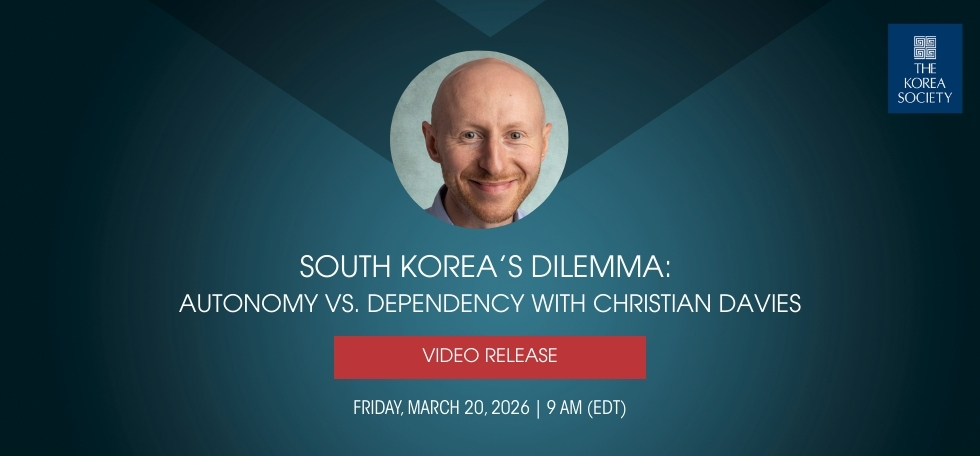
South Korea’s Dilemma: Autonomy vs. Dependency with Christian Davies

The Korea Society is pleased to host Financial Times correspondent Christian Davies for a discussion on “Korea’s Dilemma: Autonomy vs. Dependency.” Drawing on his recent tenure as the Financial Times’ Seoul bureau chief covering both North and South Korea, Davies will explore how Seoul navigates the competing imperatives of deepening economic and security ties with the United States while seeking greater strategic autonomy to buffer against heightened geopolitical uncertainty.

Expanding U.S-Korea trade and investment cooperation across semiconductors, shipbuilding, energy, and advanced manufacturing, offers significant opportunity but also heightened exposure to economic volatility. At the same time, Korea’s evolving security posture—including increased defense spending, advances in indigenous capabilities, and expanded alliance responsibilities—enables both greater contribution to the alliance and independence, raising fundamental questions about the alliance’s future trajectory. The discussion is moderated by policy director Jonathan Corrado.

This program was made possible by the generous support of the Korea Foundation and our individual and corporate members.


Sign Up Here to Receive the Viewing Link


The Korea Society
350 Madison Avenue, 24th Floor
New York, NY 10017


About the Speaker:


Christian Davies is the FT’s US industry correspondent, covering autos, aerospace and American manufacturing. Based in New York, he is responsible for the FT’s coverage of Boeing, Ford and General Motors, as well as the leading US airlines. He was previously FT bureau chief in Seoul, covering South and North Korea, and before that was based in Warsaw, Poland.