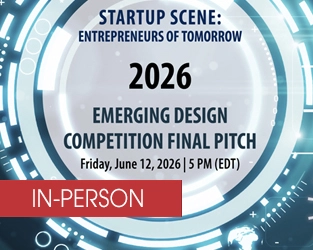
2026 Emerging Design Competition Final Pitch


The Korea Society invites you to the final pitching competition of Startup Scene: Emerging Design Competition — the most aspiring moment of Startup Scene: Entrepreneurs of Tomorrow, a program initiative dedicated to empowering the next generation of entrepreneurs across the US and South Korean startup ecosystems.

Come witness firsthand the creativity and drive of the next generation of Korean and Korean-American founders. After a half-year journey — from initial ideation to mentorship — our finalists are now one step away from taking home prizes of $5,000, $3,000, and $1,000. Each finalist will deliver a live pitch followed by a Q&A with the judging panel, showcasing ideas at the intersection of technology, design, and social impact that may very well shape tomorrow’s economy.

For any questions, please contact us at startupscene@koreasociety.org.


This program is proudly and exclusively supported by Hanwha Life


Finalists


2026 EMERGING DESIGN COMPETITION FINALISTS

We are excited to announce the finalists of the 2026 Emerging Design Competition:


Cuddles
Emory University
A screen-free AI plush companion that helps children build emotional and language skills while giving parents actionable insights to deepen their family connection


FOODIE
Iowa State University
A gamified fridge manager that notifies you 48 hours before your food expires


MyHearo
New York University/ School of Visual Arts
An AI agent for deaf and hard-of-hearing users that understands sound and context to support everyday awareness and action


SORVY
Washington State University/Arizona State University
Turning starfish waste into a self-regulating aquarium water cartridge


New Thinking on Korea’s
Aging, Shrinking Society

Program Brief

New Thinking on Korea’s Aging, Shrinking Society

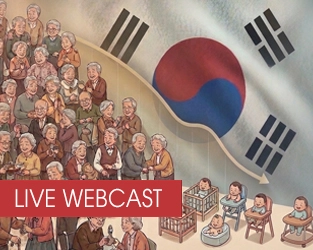
In a discussion on South Korea’s low birth rate and aging society, Professor Youngtae Cho, Director of the Population Policy Research Center (PPRC) at Seoul National University, challenged conventional narratives surrounding South Korea’s demographic decline. Rather than viewing a shrinking population as a critical crisis, Professor Cho reframed it as a unique window of opportunity to strategically build a more sustainable and resilient future.

This program was made possible by the generous support of the Korea Foundation and our individual and corporate members.

Key Takeaways

1. Hypercentralization in Seoul as a Fundamental Driver of Low Fertility

From an evolutionary perspective, Dr. Cho explained that when competition for resources becomes unsustainably intense, an organism’s instinct for individual survival overrides its instinct for reproduction. In South Korea, this survival trigger is directly tied to hypercentralization. More than 50 percent of the national population is concentrated in the Seoul metropolitan area, where economic opportunities are clustered. Coupled with the fact that 77 percent of 30-year-olds hold a college degree—the highest in the world—metropolitan areas have become dense, high-pressure environments where young people face a brutal daily battle for survival, leaving them with no financial or psychological capacity to marry or have children.

2. Quality Over Quantity

Dr. Cho refuted Elon Musk’s claim that South Korea’s low fertility rate would allow North Korea to easily invade by simply “walking across” the DMZ within three generations. He revealed through recent demographic simulations that North Korea’s population is facing its own severe, unmanaged decline; its annual births sit around 220,000 to 230,000, roughly equal to South Korea’s 250,000 births last year. Furthermore, Dr. Cho argued that assessing a nation’s future strictly by headcount is reductionist. South Korea’s historic post-war transformation into a global economic powerhouse was driven by massive leaps in individual human capability and resilience, qualities that numbers alone cannot capture. Dr. Cho encouraged a perspective that looks beyond the population number to additionally consider “APC,” which means age, period, and cohort.

3. The Extreme Reality of Social Aging and Shifting Median Age

Dr. Cho emphasized that a shifting age structure fundamentally transforms a nation into an entirely different world, an evolution best captured by the relentless rise of South Korea’s median age. Historically, this metric dictated the baseline for cultural maturity; in 1994, the median age was a youthful 29, meaning that turning 30 marked a sudden, high-pressure threshold into full adult responsibility. Today, that midpoint has skyrocketed to 46 and by 2054, the median age in Korea will be around 60 years old. This unprecedented shift means institutions, legal frameworks, and economic systems must be completely reinvented to function in a society where the statistical average age shifts substantially.

4. Demographic Solutions for Corporate Talent Pipelines

Dr. Cho asserted that treating population decline as an automatic economic death sentence is a mistake. By looking at demographics through the multi-dimensional “APC” lens (Age, Period, Cohort), businesses can uncover massive expanding global markets and pivot their strategies. In a notable case study, one company faced high resignation rates among its newly recruited elite workforce despite offering top-tier salaries and welfare benefits. Dr. Cho’s research identified a distinct demographic mismatch: 49% of Koreans born in 1990 and 51% born after 2003 are Seoul natives, thus structurally addicted to the capital’s infrastructure. Forcing them to work consecutive years at regional plants hours away created an exhausting, unsustainable weekend travel loop. Acting on Dr. Cho’s advice, the company introduced a bi-weekly 4-day work week in 2024, reversing attrition rates among their young talent.


Speaker

Dr. Youngtae Cho

Dr. Youngtae Cho is a professor of demography at the Graduate School of Public Health, Seoul National University, and director of the SNU Population Policy Research Center. He received his Ph.D. in sociology (specialized in demography) from the University of Texas at Austin in 2002. His research focuses on fertility transitions, demographic change, and their impacts on social and economic structures in East and Southeast Asia. He is the author of several books for general public and has played a leading role in enhancing population literacy in Korea. Through media, public speaking, and policy consultation, Cho reframes demographic shifts not as crises, but tools for building a more sustainable and proactive future.

Okdongsik

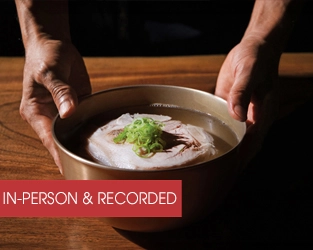
With a philosophy rooted in simplicity, precision, and balance, Chef Dongsik Ok has reframed traditional Korean comfort food through a minimalist and modern lens. His eponymous restaurant Okdongsik’s signature dish is an elegant yet deeply comforting pork broth, dwaeji gomtang.

Since its launch in Seoul’s Seogyo-dong neighborhood in 2017, Okdongsik has earned critical acclaim and recognition with the Michelin Guide Bib Gourmand distinction for eight consecutive years, establishing it as one of Seoul’s premier dining spots. Now an international brand, Okdongsik has expanded its presence beyond Seoul with locations in New York (Manhattan and Bayside), Honolulu, Tokyo, and Paris. The brand’s ongoing growth focuses on small, highly curated spaces that prioritize consistency, quality, and operational discipline, and the chef’s commitment and dedication is transforming Korean soul food into a globally recognized culinary category.

In his conversation with Vivian Lee, Chef Dongsik Ok shares his insights on his career, food philosophy, and the restaurant industry.

In this talk, Kim explores the recent popularity of Korean food in New York City by focusing on both transnational and domestic factors, leading to the new trend of commercialization of ethnic food, emphasis on authenticity, and rise of the omnivore society, by delivering the voices of ordinary people. While Koreatown’s authenticity has been largely defined by commercialized ethnic cuisine by local entrepreneurs, the Korean government, and franchises, Kim argues that Koreatown’s authenticity has represented the collective imaginations and narratives of various consumer groups–Korean nationals, Korean Americans, and non-Koreans.


Speaker

Chef Dongsik Ok

Chef Dongsik Ok is the founder and owner chef of Okdongsik. He holds a Bachelor’s degree in Culinary Science from Kyung Hee University and opened the first Okdongsik restaurant in Seoul’s Seogyo-dong neighborhood in 2017. The restaurant quickly gained critical acclaim and has been awarded the Michelin Guide Bib Gourmand distinction for eight consecutive years, establishing it as one of Seoul’s most respected dining destinations. Since entering the U.S. market, Okdongsik has grown into an international presence, with locations in New York (Manhattan and Bayside), Honolulu, Tokyo, and Paris. Chef Dongsik Ok gained broader international recognition following his appearance on Netflix’s Culinary Class Wars 2 (2025), where his culinary philosophy and signature dishes were introduced to a global audience.


Moderator

Vivian Lee Ok

Vivian Lee is an Emmy-winning TV journalist, public speaker, moderator and director/producer in New York. Currently a correspondent for the magazine show Asian American Life. CUNY-TV, Vivian garnered her third Emmy nomination this year for producing and hosting CUNY-TV’s special on the 70th anniversary of the Korean War armistice. She also co-hosts the podcast The 5 Of Us, which examines career and life issues affecting women at work. Vivian anchored, reported and hosted for NY1 Spectrum News between 2008 and 2020, covering stories of national and international importance, including the pandemic, social justice protests, and the 2020 general election. Vivian also hosted Spotlight New York, a weekly magazine show exploring the arts landscape of the five boroughs of NYC. She was awarded an Emmy in 2020 for her story on Manhattan’s iconic Joe’s Pub.

Closing the Korea Discount:

The Korea Society and the Korea Trade-Investment Promotion Agency (KOTRA) are pleased to present a timely discussion on South Korea’s capital market reforms. South Korea is undertaking its most ambitious capital market reform in years—an agenda to strengthen corporate governance, expand investor protections, and unlock deeper access to global capital. What does this moment mean for international investors, and what will it take to finally close the Korea discount?

Join Namuh Rhee, Chairman of the Korean Corporate Governance Forum and a leading voice behind Korea’s reform movement, for a keynote address, followed by a cross-border conversation with senior representatives from the Bank of Korea and two leading U.S. investment professionals on where the reforms stand, how Korea’s macro landscape is reshaping its appeal, and what global capital needs to see next.

Opening Remarks

Rak-gon Kim, Director General of KOTRA New York

Keynote Speaker 

Namuh Rhee, Chairman, Korea Corporate Governance Forum; Visiting Professor, Yonsei University

Panelists 

Young Woong Hwang Head, Money Market Team, Bank of Korea

Chiara Salghini Portfolio Manager, Senior Research Analyst, Vontobel

Jae Hyun Yoo Director, International Finance Division, Bank of Korea

A senior executive at a major Wall Street bank’s private investing arm

Moderated by Mark Kim President, Korea Finance Society


Brought together with
Contact image


About the Speakers

Young Woong Hwang
Head, Money Market Team, The Bank of Korea

Young Woon Hwang joined the Bank of Korea in 2003 and has since worked in the Monetary Policy Department, Financial Markets Department, Research Department, and Financial Stability Department, engaging in monetary policy as well as financial stability–related affairs.

Young Woong graduated with a BA in Economics from Korea University.
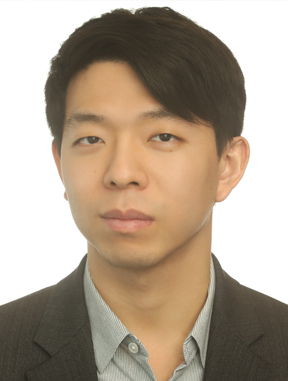
Mark Kim
Director at Anchorage Capital Advisors

Mark Kim is a Director at Anchorage Capital Advisors, a credit-oriented investment firm based in New York. At Anchorage, Mark is responsible for corporate credit investing across the capital structure, as well as business development and investor relations for Korea.

Before joining Anchorage, he worked at TPG Sixth Street Partners and started his career in the investment banking division at Bank of America Merrill Lynch in New York.

Mark serves as President of Korea Finance Society and received the Finance Excellence Award from the Korean Ministry of Economy and Finance for his contributions to the organization.

Mark holds a Bachelor of Science in Applied Mathematics from Columbia University.

Rakgon Kim
Director-General of KOTRA New York

Rakgon Kim is the Director-General of KOTRA New York, appointed in 2025. With nearly 30 years of experience at the Korea Trade-Investment Promotion Agency (KOTRA), he is a seasoned expert in global trade, export support, and strategic management.

Mr. Kim has held diverse leadership roles across KOTRA’s international network, previously serving as Director-General in Chicago (2023–2025) and Doha, and as Director in Auckland. At KOTRA headquarters, he led the Export Support and Human Resources Development teams and held multiple strategic positions within the Office of the President. He remains dedicated to strengthening economic ties between Korea and the global market through his extensive expertise in international trade.

Namuh Rhee
Chairman of the Korean Corporate Governance Forum

As Chairman of the Korean Corporate Governance Forum, Namuh Rhee is at the forefront of efforts to elevate corporate governance standards across the country, bringing nearly four decades of experience across Asia’s leading financial institutions. He has held senior leadership roles at Samsung Securities, Bank of America Merrill Lynch, and Nomura International, spanning Seoul, Hong Kong, and Singapore. Throughout his career he built a distinguished reputation as one of the foremost authorities on Korean equities.

His corporate governance credentials are underpinned by extensive board experience spanning financial services, media, start-up and chaebols, having served as a non-executive board member of BNK Financial Holdings, SBS, Hansol Holdings, Mando China Holdings, Korea Investment Trust, ABLBio, and Citibank Korea. Earlier in his career, he was appointed to the Finance Industry Development Review Committee of Korea’s Ministry of Finance and Economy, one of the government’s most senior advisory bodies. He holds an MBA from the University of Chicago and a BA in Economics from Seoul National University.

Chiara Salghini joined Vontobel in November 2023. She is Deputy Portfolio Manager and Senior Research Analyst within the Quality Growth boutique. In this role, she works as a generalist, focusing on emerging markets and researching investment opportunities with a particular emphasis on Latin America, Asia, and the EMEA region (Europe, Middle East and Africa).

Before joining Vontobel, from 2019 to 2023, she was a research analyst at Stone Forest Capital, where she focused on emerging-market equities. Prior to that, she covered emerging-market and international equities at Federated Hermes. Her previous experience in the finance industry includes working as an investment banker at Barclays in London and New York, and as a credit analyst at Moody’s. She started her career in 2005 at UBS in London as an investment banking analyst in the Mergers & Acquisitions department.

Chiara holds an MBA in Finance from The Wharton School, an MPA in International Economics and Public Policy from Harvard University, as well as degrees from The London School of Economics and Bocconi University.

Jae Hyun Yoo
Director, International Finance Division The Bank of Korea

Jae Hyun Yoo is Director of International Finance Division in The Bank of Korea. He has more than 25 years’ experience of working in a number of different roles associated with FX and financial markets department in the BOK. He has been deeply involved in the establishment and operation of Korea’s foreign exchange policies and regulations. He also served as a policy advisor to a member of the BOK’s Monetary Policy Committee from 2016~2018.

Jae Hyun graduated with a BA in Economics from Seoul National University.

Economic Outlook
Through a Glass, Darkly

The New York Korean Financial Forum was held on May 28, 2026 at The Korea Society, in partnership with Korea Investment Corporation (KIC) and the Consulate General of the Republic of Korea in New York, to discuss the current U.S. labor market and global economic outlook.

Michael S. Hanson, Senior Economist at J.P. Morgan Global Economic Research, presented a data-driven analysis of a labor market showing signs of stabilization amid persistent inflation driven by energy costs and trade tariffs, while highlighting the risks posed by oil supply shocks and geopolitical tensions in the Persian Gulf. Hanson’s forecast projections through 2027 painted a picture of a fragile recovery where resilient consumer spending continues to face pressure from rising costs and fiscal deficits.

The program brought together over 40 Korean and Korean-American finance professionals and concluded with a networking session, offering participants an opportunity to exchange professional insights and strengthen connections across New York’s financial community.  


Commemorating the 150th Anniversary of Kim Koo’s Birth: Exhibition Opening & Presentation

Program Brief

Commemorating the 150th Anniversary of Kim Koo’s Birth

UNESCO officially commemorated 2026 as the 150th anniversary of the birth of Kim Koo, honoring his foundational conviction that culture is the ultimate engine of national development, human happiness, and international peace. To mark this significant milestone, The Korea Society, in partnership with the Association of Commemorative Service for Patriot Kim Koo and the Kim Koo Foundation, hosted a landmark presentation and exhibition opening titled “Kim Koo: Dreaming of Peace through the Power of Culture.” This momentous occasion brought together senior policy and civic leaders to celebrate Kim Koo’s enduring legacy and reflect on the growing maturity of the U.S.–Republic of Korea (ROK) alliance.

The event also celebrated the 11th anniversary of the Kim Koo Professional Series at The Korea Society. Over the past decade, this impactful initiative has empowered a network of over 200 fellows spanning policy, corporate industry, media, nonprofits, and academia to strengthen U.S.-Korea relations and promote peace and prosperity in Northeast Asia.

This program was produced in partnership between The Korea Society and The Association of Commemorative Service for Patriot Kim Koo and made possible by the support of the Kim Koo Foundation.

Key Takeaways

1. The Boundless Power of Culture as a Global Engine

Kim Koo wrote in his seminal essay My Wish: “The one thing I desire without limit is the power of a great culture. For the power of culture makes us happy and goes on to bring happiness to others.” Speakers highlighted how this profound vision has dynamically materialized in the modern era. From the global dominance of K-Pop and multi-Tony Award-winning Broadway adaptations like Maybe Happy Ending to Netflix chart-toppers, Korea’s soft power has emerged as a universal bridge for cultural exchange and lasting international peace.

2. Historical Precursors to the Modern ROK-U.S. Alliance

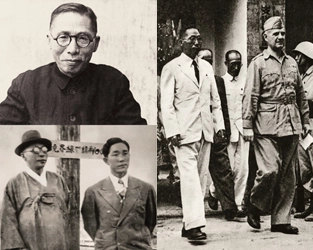
Beyond his revolutionary leadership within the Provisional Government of Korea, Kim Koo’s legacy resonates deeply as a visionary diplomat. His historical foresight led to early, critical collaborations with the U.S. Office of Strategic Services (OSS) on the “Eagle Project.” This initiative served as a vital foundational precursor to the formal institutionalization of the modern ROK-U.S. alliance, which has now matured into a comprehensive strategic partnership encompassing defense, trade, cutting-edge technology, and shared values of freedom and the rule of law.

3. Diplomatic Equality, Dignity, and National Unity

Kim Koo long advocated for bilateral relations rooted strictly in mutual dignity, a sentiment captured in a handwritten calligraphy scroll gifted to the late diplomat and scholar Gregory Henderson that reads: “Let Korea and the United States help one another in friendship and as equals.” His sacrifice and courage established a roadmap proving that a nation’s true strength is not merely measured by military or raw economic might, but by the character, resilience, and unified purpose of its people. This vision underpins the modern democratic advancements that allow contemporary leaders to address global challenges from a position of equal partnership and mutual respect.


Congratulatory Remarks:

Her Excellency Kang, Kyung-wha, Ambassador Extraordinary and Plenipotentiary of the Republic of Korea to the United States of America

Kang, Kyung-wha was appointed Ambassador Extraordinary and Plenipotentiary of the Republic of Korea to the United States of America by President Lee, Jae Myung in October, 2025. Prior to her appointment, Ambassador Kang served as Minister of Foreign Affairs from 2017-2021 under President Moon, Jae-in. Between April, 2024 and September, 2025 she served as President and Chief Executive Officer of Asia Society in New York. During her varied and distinguished career in public service, Ambassador Kang served as Secretary for International Relations in the Office of the Speaker of the Korean National Assembly and as Senior Advisor and Principal Speechwriter to the Foreign Minister and Principal Interpreter to the President of Korea. She was also Director-General for International Organizations at the Ministry of Foreign Affairs and Trade of the Republic of Korea. At the United Nations, she was Deputy High Commissioner at the Office of the High Commissioner for Human Rights, Deputy Emergency Relief Coordinator and Assistant Secretary-General at the United Nations Office for the Coordination of Humanitarian Affairs, Chief of the Transition Team for the 9th United Nations Secretary-General-elect and later his Senior Advisor on Policy. Earlier in her career, Ambassador Kang worked for the English Section of Radio Korea International of the Korean Broadcasting System (KBS), served as Assistant Professor at Cleveland State University in Cleveland, Ohio and was active in several women’s organizations in Korea. She was affiliated with Ewha Women’s University as Distinguished Professor Emeritus (Sept. 2022 – Feb. 2023) and is Honorary Professor at the Institute for Global Engagement and Empowerment at Yonsei University since September, 2023. Ambassador Kang has a Bachelor’s Degree in Political Science and International Studies from Yonsei University, and both a Master’s Degree and Doctorate in International/Intercultural Communication from the University of Massachusetts at Amherst. She is married with three children.

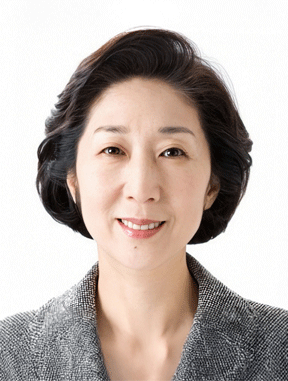
Dr. Kim Mee is a distinguished Korean philanthropist and civic leader. She currently serves as Chairperson of the Kim Koo Foundation, established to honor the legacy of her grandfather, Kim Koo—one of Korea’s most revered independence leaders. The Foundation advances educational and cultural initiatives both in Korea and internationally, continuing Kim Koo’s lifelong commitment to public service and national identity. Dr. Kim has dedicated her career to advocating for social equity and civic engagement. Her work spans a range of critical issues, including women’s rights, child welfare, healthcare access, education, the arts, and civil diplomacy. Dr. Kim is a board director for The Korea Society. She previously served as Chairperson of Women’s News, a leading Korean newspaper focused on women’s issues and social justice. She also holds board positions at the Fletcher School at Tufts University, Midwest Young Artists, and Lake Forest Academy, where she is a Life Trustee. Dr. Kim is the granddaughter of Kim Koo, Premier of the Korean Provisional Government (KPG) and a central figure in Korea’s independence movement. She is also the daughter of General Kim Shin, a pioneering military leader and a senior government official. Dr. Kim is married to Kim Ho Youn, Chairman of Binggrae Co., Ltd., a leading Korean food and beverage company.

Presenter:

Dr. Han Kyung-Koo was the Secretary-General of the Korean National Commission for UNESCO from December 2020 to December 2024. As a cultural anthropologist trained at Seoul National University (M.A.) and Harvard University (Ph.D.), Dr. Han taught anthropology at Kangwon National University and helped develop the Division of International Studies at Kookmin University as its dean. In 2009, he joined the newly founded College of Liberal Studies of Seoul National University and served as its dean. Dr. Han also served as a member of the Korean National Commission for UNESCO, the Policy Planning Committee of the Korean Federation for the Environmental Movement, and the Presidential Commission on Sustainable Development. He has also served on the editorial boards of the Korea Journal, Sahoewa Yeoksa (Society and History), and Cross-Currents: East Asian History and Culture Review. He was also the Editor of Hanguk Munhwa Inryuhak (Korean Cultural Anthropology) and the Korean Social Science Journal. Dr. Han was President of the Korean International Migration Studies Association, the Korean Society of Education for International Understanding, and the Association for the Studies of Korean abroad, as well as Vice President of the Korean Society for Cultural Anthropology, and the Korean Association for Environmental Sociology.

The Illusion of Pastness:
Hanbok on Screen

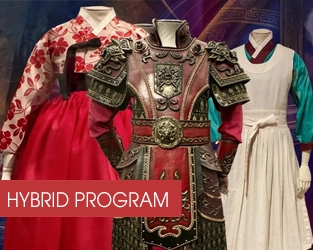
Korean visual entertainment—including films, K-dramas, and K-pop music videos—is the result of highly sophisticated planning and production. These productions captivate a global audience by synthesizing music, narrative, and styling to deliver striking visual aesthetics and compelling emotional narratives. Costume is central to this production system, and it plays an instrumental role in the aesthetic appeal and popularity of the media. For luxury brands, K-drama serves as a powerful niche marketing platform, while traditional dress (hanbok) is pivotal to nation branding.

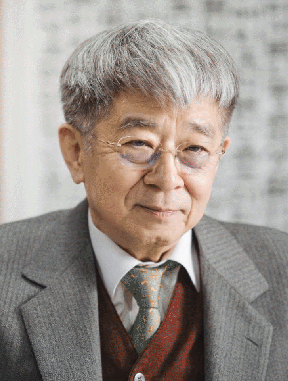
Dress historian Dr. Minjee Kim will offer fresh insights into Korean period costume as a visual and narrative language closely aligned with the development of plot and storyline. She will demonstrate how period costumes produce the “illusion of pastness” rather than the past itself, operating within a narrower range of sartorial possibilities, thereby negotiating historical accuracy, constructing stylized appearances, and translating dynamically into contemporary aesthetics.

This program is co-hosted by the Consulate General of the Republic of Korea in New York.


About the Speaker:


Minjee Kim is an adjunct professor at the Fashion Institute of Technology, where she teaches History of East Asian Dress. She earned her PhD from Seoul National University and is the co-editor of Dress History of Korea: Critical Perspectives on Primary Sources (Bloomsbury, 2023). Her research interests include the historiography of Korean dress and fashion, research methodology, fashion history pedagogy, and archival practices. www.kimminjee.com.


<

35th ANNUAL VAN FLEET MEMORIAL
GOLF TOURNAMENT

This year, The Korea Society returned to the renowned Baltusrol Golf Club to host the 35th Annual Van Fleet Memorial Golf Tournament on May 18, 2026.

We were delighted to welcome our sponsors, members, and friends for a lovely day of golf, networking, and competition. Throughout the tournament, participants enjoyed a beautiful day on the course while reconnecting with colleagues and strengthening ties within the Korea–U.S. community.

With thanks to our generous sponsors, in-kind donors, and partnership with the Korea Finance Society, we enjoyed a special celebration of the 35th anniversary of this longstanding tradition.

This year, Mr. Drew Pohalski received the Medalist Low Gross Van Fleet Memorial Award.

Congratulations to our full list of awardees below!

• Mr. Drew Pohalski (Medalist Low Gross Van Fleet Memorial Award)
• Mr. Michael Breed (Low Gross 2nd Place Van Fleet Memorial Award)
• Mr. Paul Kwaki (Low Gross 3rd Place Van Fleet Memorial Award)
• Mr. Jinho Lee (Low Net First Place Individual)
• Ms. Hyun Jung Je (Longest Drive Female)
• Mr. Sam Kang (Longest Drive Male)
• Ms. Carli Smith (Closest to the Pin Female)
• Mr. Drew Pohalski (Closest to the Pin Male)
• Mr. Scott Paris, Mr. Michael Breed, Ms. Mary Lou Bohn, Mr. Jay Hill (Low Gross Team)
• Mr. Jinho Lee, Ms. Haelim Shin, Mr. Seung Shik Lee, Mr. Seong Yong Yoon (Low Net First Place Team)
• Mr. Jon Ferency (Most Honest Golfer)

A special highlight of the day was our collaboration with the Mental Performance Golf Academy (MPGA), who hosted morning clinic sessions for guests to sharpen their skills with golf professionals.

We were also honored to welcome MPGA Founder, Dr. Mat Park, as the guest speaker for an evening Fireside Chat on Golf, Life, and the Pursuit of Happiness, moderated by The Korea Society President & CEO Dr. Abe Kim.

Check out a few photos capturing this special event in the below. Thank you to everyone who helped make this year’s tournament such a success, and we look forward to welcoming you again next year.

This year’s event is proudly presented in partnership with the Korea Finance Society.  


TOURNAMENT CO-CHAIRS

Gene Yoon
Chairman
Misto Holdings Corp. &  Acushnet Holdings Corp.


Michael Woods
Founder and President
Woods Capital, LLC


Schedule of EventsSPONSORSSPONSOR LEVELSTOURNAMENT FEES


SCHEDULE OF EVENTS

  9:30 AM   Registration / Brunch / Open Driving Range
  11:30 AM   Shotgun Tee Off
  4:30 PM   Cocktail Reception
  5:30 PM   Dinner, Awards Ceremony & Silent Auction
 

Please note that this is a walking course. Cart is available only for medical usage. 


SPONSOR LEVELS

GOLD SPONSOR: $25,000
• Two foursomes (8 golfers)
• Four additional invitations to the cocktail reception and dinner
• Reserved table at dinner & award ceremony
• Full-page acknowledgement in the tournament program
• Recognition from the podium during the dinner ceremony
• Two tee signs of company logo placed at the agreed upon tee box
• Company logo recognition on the event display board, website, tournament program, promotional emails, social media, and other print publications

SILVER SPONSOR: $15,000
• One foursome (4 golfers)
• Two additional invitations to the cocktail reception and dinner
• Full-page acknowledgement in the tournament program
• Recognition from the podium during the dinner ceremony
• One tee sign of company logo placed at the agreed upon tee box
• Company logo recognition on the event display board, website, tournament program, promotional emails, social media, and other print publications

CADDIE BIB SPONSOR: $10,000
• Company logo placed on caddie bibs (either front or back)
• Maximum of two sponsors
• Complimentary invitation for two golfers
• Half-page acknowledgement in the tournament program
• Company logo recognition on the event display board, website, tournament program, promotional emails, social media, and other print publications

TEE BOX SPONSOR: $1,500 per Tee
• Tee signs will be placed in one of the 18 holes on the golf course
• Company logo recognition on the event display board, website, and tournament program

ACKNOWLEDGEMENT
Full-page in the tournament program book – $5,000 (including complimentary invitation for one golfer)
Half-page in the tournament program book – $2,500

IN-KIND DONATION IS ALSO WELCOME
In-kind donors will be acknowledged on the event display board, website, and tournament program

Please confirm all corporate sponsorships by May 1 in order to be properly acknowledged in the programs and signs (Caddie Bib Sponsorship to be confirmed by April 23).


TOURNAMENT FEES

FOURSOME: $7,500 for Four Golfers
TWOSOME: $4,000 for Two Golfers
SINGLE: $2,100 per Golfer

• Green fees and complimentary range balls
• Caddie fees
• Use of locker room facilities
• Brunch
• Beverages & refreshments on the course
• Cocktail reception after golf
• Dinner – awards ceremony & silent auction
• Complimentary goodie bag

COCKTAIL RECEPTION & DINNER-ONLY GUEST: $700 per Person

RSVPs for individual golfers must be received via email or phone by May 8, including payment information. The tournament fee will not be refunded after May 10. Once we reach maximum capacity, we may not be able to accommodate additional RSVPs although it is submitted before the deadline.


Contact Jamie Joo for any inquiries or to register.


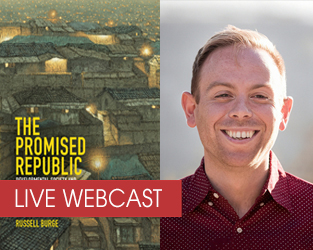
The Promised Republic:

Program Brief

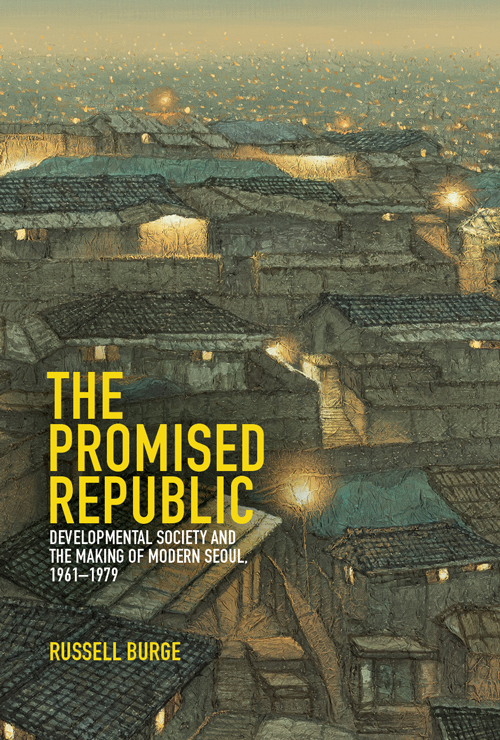
The Promised Republic

During a discussion of his book, The Promised Republic: Developmental Society and The Making of Modern Seoul, 1961-1971, Dr. Russell Burge challenged elite-driven narratives of South Korea’s “Miracle on the Han” by demonstrating how the urban poor in Seoul’s shantytowns (panjachon) actively shaped developmental politics through a rich archive of memoirs, interviews, and photographs.

This program was hosted by the Korea Society as part of the Kim Koo Professional Series.

Key Takeaways

1. Bottom-up Agency Versus the Elite-Driven Narrative

Dr. Burge observed that the prevailing understanding of South Korea’s economic miracle overlooks the marginalized communities that helped drive developmental politics. Focusing on the urban poor in Seoul’s panjachon, or shantytowns, his research revealed that mass urban migration was primarily driven by the structural fallout of post-colonial land reform, rather than simple wartime instability. Land reform failures shattered the traditional rural safety net, pushing millions into cities as they faced heavy state taxes and plummeting grain prices driven by imports. These urban migrants became day laborers who physically built the nation’s infrastructure while actively resisting state efforts to demolish their homes.

2. The Political Weaponization of Populist Promises

A central dynamic of Korean urban politics in the 1960s and 1970s was the tension between populist and disciplinary developmentalism. During election cycles, the ruling party secured votes from shantytown residents by appealing to populist sentiments and using extra-legal promises, such as Mayor Kim Hyonok’s 1967 housing amnesty pledge. When the state backtracked, shantytown communities mobilized around these broken pledges, weaponizing the state’s own populist rhetoric to claim a moral right to their land and extract structural concessions.

3. Joint Redevelopment and the Division of Owners and Renters

Under the authoritarian Yushin regime of the 1970s, the state shifted its tactics from targeting shantytowns for being illegal to condemning them as economically inefficient. This paved the way for the 1980s mechanism of joint redevelopment, a corporate model that successfully aligned the interests of the government, construction corporations, and local property owners into a cooperative profit-sharing system. This system successfully co-opted corporations and shanty owners, but systematically excluded propertyless renters, fracturing social cohesion and triggering intense urban resistance on the eve of the 1988 Seoul Olympics.


About the Speaker:

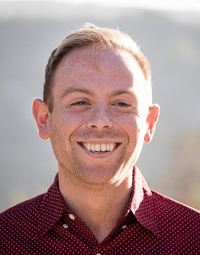
Russell Burge is Korea Foundation Assistant Professor of Korean History at Indiana University Bloomington. He holds a B.A. in Art History from UCLA, an A.M. in Regional Studies East Asia from Harvard, and a Ph.D. in History from Stanford. Prior to starting at IU Bloomington, he was a Council on East Asian Studies postdoctoral associate at Yale University.

Assessing North Korea’s
Developing Nuclear Program

Program Brief

Assessing North Korea’s Developing Nuclear Program

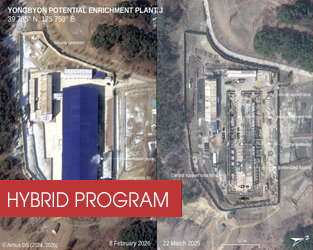
In our discussion assessing the latest developments of North Korea’s nuclear program, Open Nuclear Network (ONN) Senior Analyst Sarah Laderman challenged conventional wisdoms regarding the DPRK’s nuclear capabilities and described how the Kim Regime balances its fissile material supply against strategic weaponization demands.

This program was made possible by the generous support of the Korea Foundation and The Korea Society’s individual and corporate members.

Key Takeaways

1. North Korea Is Shifting Toward Routinized Force Development with a Projected Arsenal Expansion by 2034

Laderman noted that by the end of 2034, North Korea could produce between 23–47 strategic warheads using plutonium and 173–228 tactical warheads using highly enriched uranium. North Korea’s ambitious goals point to a posture that could exceed defensive needs. A number of factors, both technical and strategic, will affect the overall production. While uranium supplies remain plentiful for tactical weapons, plutonium remains highly prized for strategic miniaturization and sophisticated designs like multiple independently targetable reentry vehicles (MIRVs).

2. Remote Monitoring Has Advanced Through New Technology, but Weaponization Remains a Distinct “Black Box”

Advances in open-source intelligence (OSINT) have fundamentally transformed how we monitor North Korea’s nuclear capabilities, yet a critical verification gap remains. While commercial satellite technologies can now easily bypass weather and camouflage—using advanced radar to pierce cloud cover, thermal imagery to detect active reactor operations, and AI to map vehicle traffic patterns—this transparency stops short of the final weaponization phase. The resulting intelligence picture is highly uneven: the international community can track large, fixed infrastructures, but the actual assembly of nuclear warheads remains entirely opaque. Because the regime effectively utilizes nondescript buildings and extensive underground mountain tunnels, advanced satellite sweeps have failed to locate a single definitive site for plutonium or uranium pit production. Despite better visibility through open source tools overall, Pyongyang’s most valuable strategic assets remain successfully hidden from foreign observation.

3. To Take Advantage of Open Source Monitoring Tools, a Future Arms Control Policy Could Prioritize Plutonium Over Uranium

Laderman highlighted a core policy dilemma: some of the most strategically valuable assets to eliminate are the hardest to remotely verify. Because on-the-ground international inspections have not occurred in nearly two decades, any realistic opening salvo for an arms control agreement or selective freeze must rely on remote observation. According to Laderman, policymakers could therefore focus initial negotiation priorities on freezing plutonium production rather than highly enriched uranium (HEU). While HEU enrichment efficiency and locations are easily hidden, plutonium relies on distinct, fixed reactor profiles and reprocessing infrastructure, making it the most practical, monitorable, and strategically impactful target for containment.


About the Speaker:

Sarah Laderman is a Senior Analyst for Open Nuclear Network, a PAX sapiens programme, in Vienna, Austria, where she focuses on open-source and technical analyses of nuclear programmes. She is currently focused on the DPRK’s nuclear weaponisation capabilities. She has previously worked at the International Atomic Energy Agency, Lawrence Livermore National Laboratory and the US Department of Defense. Sarah received her MSc in Nuclear Engineering and Masters in Public Policy from the University of California, Berkeley, and her BSc in Nuclear Science and Engineering and Political Science from the Massachusetts Institute of Technology. She is currently a doctoral candidate in Political Science at the University of Vienna.